
Common red bottlebrush
Melaleuca citrina, family Myrtaceae
A hardy Australian shrub with bright red brush-like flowers
Melaleuca citrina is a shrub native to eastern Australia, known for its vivid red flower spikes that resemble bottle brushes. It grows near creeks and swamps and is widely planted in gardens for its long flowering season and adaptability.
- Flowers mainly November–December but can bloom most months
- Crushed leaves smell faintly of citrus
- Woody seed capsules stay closed until the branch dies
- Grown in England since the late 1700s
- Natural herbicide in roots inspired a commercial product
What does Common red bottlebrush look like?
This shrub typically reaches 1 to 3 metres in height and width, though it can grow up to 5 metres. Its bark is fibrous or papery, and young stems carry soft, silky hairs. The narrow, oval leaves are stiff and flat, with many visible oil glands. Bright red flower spikes appear at branch tips, each made of dozens of small flowers with red filaments and purple anthers.
Where does Common red bottlebrush come from?
First collected at Botany Bay in 1770 by Joseph Banks during Captain Cook’s first voyage, it was taken to England soon after. Originally named Metrosideros citrina, it was later reclassified as Callistemon citrinus and is now accepted as Melaleuca citrina. The name 'citrina' refers to the citrus-like scent of its crushed leaves.
When and how Common red bottlebrush blooms
It flowers in most months, peaking in November and December in Australia. After blooming, it forms woody, cup-shaped seed capsules that stay closed until the branch dies. It thrives in sunny spots, tolerates drought and frost, and grows in most soils. Propagation is easy from seed or cuttings.


How Common red bottlebrush is used
Widely grown in gardens across Australia and beyond, it is valued for its year-round colour and resilience. Its nectar feeds birds like honeyeaters, while rosellas eat its seeds. It has also contributed to agricultural science through a natural herbicide found in its roots.
Kinds of Common red bottlebrush
Several cultivated forms exist. 'Splendens' is compact with red blooms and holds an award from the Royal Horticultural Society. 'White Anzac' offers white flowers in a low, spreading shape. 'Firebrand' has deep crimson-pink flowers, and 'Demesne Rowena' blends red and pink tones.
What Common red bottlebrush means
One of the earliest Australian plants grown overseas, it appeared in English gardens by 1794. Though not a national emblem, it is a familiar sight in eastern Australian landscapes and horticulture. Its extended bloom period makes it useful for honey production and garden interest across seasons.
Where Common red bottlebrush is used and seen
 Australian National Botanic GardensAustralia’s largest living collection of native plants in Canberra
 Hòn non bộVietnamese miniature landscapes of mountains and islands in trays or basins
 Lisbon Tropical Botanical GardenA historic garden in Lisbon with tropical and subtropical plants from around the world
Questions people ask about Common red bottlebrush
Where does Melaleuca citrina come from?
It is native to eastern Australia, growing in coastal areas of New South Wales and Victoria, including the Blue Mountains and along rivers and swamps.
Why is it called lemon bottlebrush?
Its leaves release a light citrus-like fragrance when crushed, which inspired the species name 'citrina' and the common name 'lemon bottlebrush'.
How long does it flower?
In ideal conditions it can bloom in most months, with peak flowering in November and December in Australia, and useful nectar production from March to October.
Is it easy to grow?
Yes. It grows in most soils, prefers sun, tolerates drought and frost, and can be propagated easily from seed or cuttings.
What birds visit this plant?
Nectar-feeding birds such as eastern spinebills and honeyeaters visit the flowers, while crimson rosellas eat the seeds.
Good reading and sources
- Callistemon citrinusAustralian National Botanic Gardens, Article
- Callistemon citrinus 'Splendens'Royal Horticultural Society, Article
- NParksNational Parks Board, Singapore, Article
- Plants of the World OnlineRoyal Botanic Gardens, Kew, Plant database
- Where it has been recordedGBIF, Plant database
- Sightings and photos by naturalistsiNaturalist, Plant database
The facts on this page come from the Wikipedia article "Melaleuca citrina", written by its contributors and used under the CC BY-SA 4.0 licence, and from its Wikidata record (CC0). Phool rewrote the text in its own words, with AI assistance, and compares every page with the article to make sure no passage is copied. It may be reused under the same CC BY-SA 4.0 licence with a link back.
It may contain mistakes. It is not medical or foraging advice: many flowers are poisonous, and traditional uses are reported, not recommended. If something is wrong, tell us. Last refreshed 2026-10-03.
Others in the family Myrtaceae
The whole family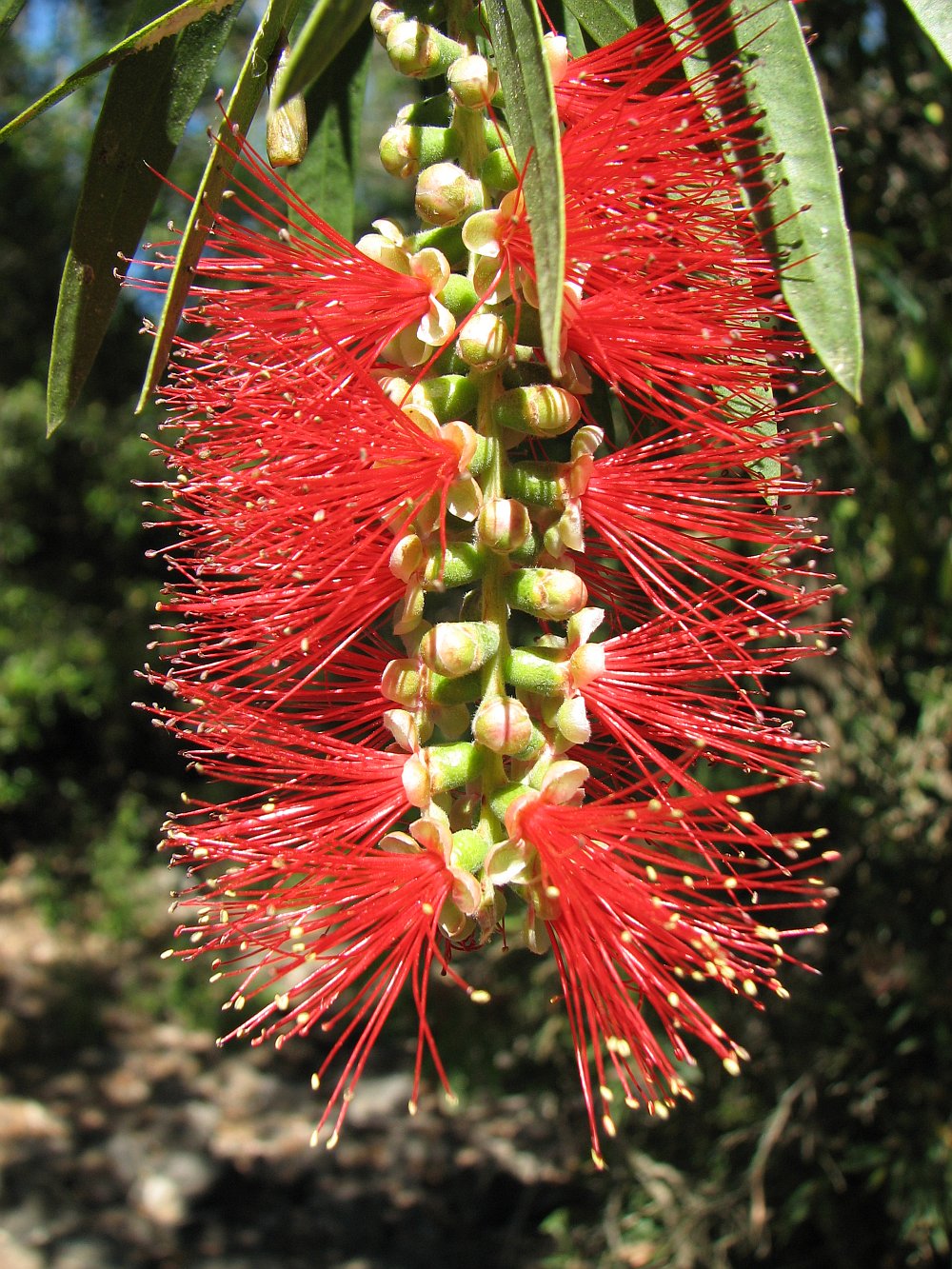 BottlebrushCallistemon
Shrubs with brush-shaped flowers native to Australia
🇦🇺 Australia · Flowering shrub
BottlebrushCallistemon
Shrubs with brush-shaped flowers native to Australia
🇦🇺 Australia · Flowering shrub
 Darwinia
Australian shrubs with bell-like flowers wrapped in colourful bracts
🇦🇺 Australia · Flowering shrub
Darwinia
Australian shrubs with bell-like flowers wrapped in colourful bracts
🇦🇺 Australia · Flowering shrub
 WaxflowerChamelaucium
Evergreen shrubs with waxy, aromatic flowers from Western Australia
🇦🇺 Australia and 1 more · Wildflower
WaxflowerChamelaucium
Evergreen shrubs with waxy, aromatic flowers from Western Australia
🇦🇺 Australia and 1 more · Wildflower
 Weeping bottlebrushMelaleuca viminalis
A red-flowered Australian tree with weeping branches and bottlebrush blooms
🇦🇺 Australia and 5 more · Flowering tree
Weeping bottlebrushMelaleuca viminalis
A red-flowered Australian tree with weeping branches and bottlebrush blooms
🇦🇺 Australia and 5 more · Flowering tree
More from Australia
All the flowers of Australia AlmondPrunus amygdalus
A Mediterranean tree grown for its fragrant spring flowers and edible seeds
🇮🇷 Iran and 6 more · Flowering tree
AlmondPrunus amygdalus
A Mediterranean tree grown for its fragrant spring flowers and edible seeds
🇮🇷 Iran and 6 more · Flowering tree
 FennelFoeniculum vulgare
A tall, aromatic herb with feathery leaves and yellow umbels, used for food and spice
🇨🇳 China and 7 more · Herb or useful flower
FennelFoeniculum vulgare
A tall, aromatic herb with feathery leaves and yellow umbels, used for food and spice
🇨🇳 China and 7 more · Herb or useful flower
 RosemarySalvia rosmarinus
A fragrant evergreen shrub with needle-like leaves and purple, blue, or white flowers
🇪🇸 Spain and 5 more · Flowering shrub
RosemarySalvia rosmarinus
A fragrant evergreen shrub with needle-like leaves and purple, blue, or white flowers
🇪🇸 Spain and 5 more · Flowering shrub
 Eucalyptus
The tall, aromatic trees and shrubs known as gum trees or eucalypts
🇦🇺 Australia and 7 more · Flowering tree
Eucalyptus
The tall, aromatic trees and shrubs known as gum trees or eucalypts
🇦🇺 Australia and 7 more · Flowering tree