
Rosemary
Salvia rosmarinus, family Lamiaceae
A fragrant evergreen shrub with needle-like leaves and purple, blue, or white flowers
Rosemary is a woody, aromatic shrub native to the Mediterranean, known for its needle-like evergreen leaves and clusters of purple, blue, pink, or white flowers. Widely grown for its culinary and ornamental value, rosemary is used in cooking, perfumes, and as a symbol of remembrance in various cultures.
- Rosemary is native to the Mediterranean region and Portugal.
- Its leaves are used in cooking and herbal teas.
- Sprigs are worn on ANZAC Day in Australia for remembrance.
- Flowers can be purple, blue, pink, or white.
- Rosemary oil is used in perfumes and cleaning products.
What does Rosemary look like?
Rosemary is a dense, woody shrub that can grow upright or trail along the ground, reaching up to 1.8 meters tall. Its leaves are evergreen, slender, and needle-like, dark green on top and white underneath with a woolly texture. The plant produces small flowers in clusters along the branches, which may be purple, blue, pink, or white. The leaves and stems are highly aromatic, giving off a strong pine-like scent.
Where does Rosemary come from?
Rosemary is native to the Mediterranean region, including Portugal and northwestern Spain. It thrives in coastal areas and was naturalized in China by the 3rd century CE. The plant was likely introduced to Britain by the Romans, but records of its cultivation there appear from the 8th century. Rosemary spread to the Americas with European settlers in the 17th century and is now grown worldwide. Its name comes from Latin words meaning 'sea-dew,' reflecting its preference for seaside habitats.
When and how Rosemary blooms
Rosemary flowers mainly in spring and summer in temperate climates, but can bloom year-round in warm areas. It is drought-tolerant and prefers well-drained soil and full sun. While it can be grown from seed, germination is slow and unreliable, so it is often propagated from cuttings. Rosemary is used in gardens for hedges, topiary, and groundcover, and can be grown in pots or as part of xeriscape landscaping.


How Rosemary is used
Rosemary leaves are widely used as a culinary herb, flavoring meats, stews, and teas. Its essential oil is found in perfumes, shampoos, and cleaning products. In Europe and Australia, rosemary is a symbol of remembrance, especially at funerals and war commemorations like ANZAC Day. Sprigs are worn or tossed into graves. In Danube Swabian culture, rosemary is used in celebrations such as christenings and weddings.
Kinds of Rosemary
There are many cultivated forms of rosemary, including upright and trailing types. Notable cultivars include 'Arp' (lemon-scented and cold-hardy), 'Benenden Blue', 'Miss Jessopp's Upright', and 'Severn Sea', all recognized for garden merit. Flower color varies by cultivar, with some having white, pink, or deep blue blooms, and some selected for golden or variegated leaves.
What Rosemary means
Rosemary has been valued since ancient times by Egyptians, Greeks, and Romans, and is mentioned in classic literature and herbals. It symbolizes remembrance and fidelity in love, appearing in Shakespeare's plays and in the language of flowers. In Australia, it is associated with ANZAC Day, and in Europe, with funerals and memorials. It is also used in traditional festivals and rituals.
Where Rosemary is used and seen
 Hanbury botanical gardensA historic Mediterranean botanical garden on the Italian Riviera
 NosegayA small hand-held bouquet with hidden meanings and a long history
 Laurel wreathA head or neck wreath made from laurel leaves, symbolizing victory
 Flower girlA young girl who scatters petals in a wedding procession
Traditions that use it
Days and festivals
Questions people ask about Rosemary
Where does rosemary come from?
Rosemary is native to the Mediterranean region, including Portugal and northwestern Spain. It has also been naturalized in other parts of the world, such as China and the Americas.
What does rosemary look like?
Rosemary is a woody, evergreen shrub with needle-like leaves that are dark green on top and white underneath. It produces small flowers in shades of purple, blue, pink, or white.
What is rosemary used for?
Rosemary is used as a culinary herb in cooking, for flavoring meats and stews, and in herbal teas. Its oil is found in perfumes and cleaning products. It is also a symbol of remembrance in cultural ceremonies.
What does rosemary symbolize?
Rosemary is a symbol of remembrance and fidelity in love. It is used in funerals, memorials, and commemorative events, especially in Europe and Australia.
Are there different types of rosemary?
Yes, there are many cultivars of rosemary, including upright and trailing forms, with various flower colors and leaf patterns. Some are selected for cold hardiness or ornamental foliage.
Good reading and sources
- Encyclopaedia BritannicaArticle
- Salvia rosmarinus (Angustifolia Group) 'Benenden Blue' (Ro)Royal Horticultural Society, Article
- Plants of the World OnlineRoyal Botanic Gardens, Kew, Plant database
- Where it has been recordedGBIF, Plant database
- Sightings and photos by naturalistsiNaturalist, Plant database
The facts on this page come from the Wikipedia article "Rosemary", written by its contributors and used under the CC BY-SA 4.0 licence, and from its Wikidata record (CC0). Phool rewrote the text in its own words, with AI assistance, and compares every page with the article to make sure no passage is copied. It may be reused under the same CC BY-SA 4.0 licence with a link back.
It may contain mistakes. It is not medical or foraging advice: many flowers are poisonous, and traditional uses are reported, not recommended. If something is wrong, tell us. Last refreshed 2026-10-03.
Others in the family Lamiaceae
The whole family Salvia
A vast group of aromatic herbs and shrubs known for their flowers and uses
Salvia · Wildflower
Salvia
A vast group of aromatic herbs and shrubs known for their flowers and uses
Salvia · Wildflower
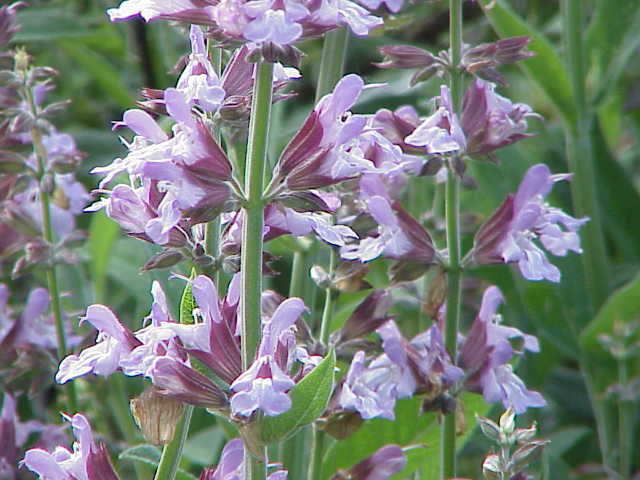 Common sageSalvia officinalis
A Mediterranean herb with grey-green leaves and blue to purple flowers
🇨🇳 China and 1 more · Herb or useful flower
Common sageSalvia officinalis
A Mediterranean herb with grey-green leaves and blue to purple flowers
🇨🇳 China and 1 more · Herb or useful flower
 Holy basilOcimum tenuiflorum
A fragrant herb central to Hindu worship and Southeast Asian cooking
🇲🇲 Myanmar and 6 more · Herb or useful flower
Holy basilOcimum tenuiflorum
A fragrant herb central to Hindu worship and Southeast Asian cooking
🇲🇲 Myanmar and 6 more · Herb or useful flower
 French lavenderLavandula stoechas
A Mediterranean lavender with purple bracts atop its flower spikes
🇪🇸 Spain and 2 more · Wildflower
French lavenderLavandula stoechas
A Mediterranean lavender with purple bracts atop its flower spikes
🇪🇸 Spain and 2 more · Wildflower
More from Spain
All the flowers of Spain PeachPrunus persica
A flowering fruit tree from China, grown for its pink blossoms and sweet fruit
🇨🇳 China and 7 more · Flowering tree
PeachPrunus persica
A flowering fruit tree from China, grown for its pink blossoms and sweet fruit
🇨🇳 China and 7 more · Flowering tree
 AlmondPrunus amygdalus
A Mediterranean tree grown for its fragrant spring flowers and edible seeds
🇮🇷 Iran and 6 more · Flowering tree
AlmondPrunus amygdalus
A Mediterranean tree grown for its fragrant spring flowers and edible seeds
🇮🇷 Iran and 6 more · Flowering tree
 ApricotPrunus armeniaca
A small fruit tree with early white to pink blossoms and golden-orange fruit
🇨🇳 China and 6 more · Flowering tree
ApricotPrunus armeniaca
A small fruit tree with early white to pink blossoms and golden-orange fruit
🇨🇳 China and 6 more · Flowering tree
 Narcissus
Spring-flowering bulbs with trumpet-shaped blooms in white, yellow, and orange
🇬🇧 United Kingdom and 7 more · Wildflower
Narcissus
Spring-flowering bulbs with trumpet-shaped blooms in white, yellow, and orange
🇬🇧 United Kingdom and 7 more · Wildflower