
Holy basil
Ocimum tenuiflorum, family Lamiaceae
A fragrant herb central to Hindu worship and Southeast Asian cooking
Holy basil is a strongly aromatic shrub grown for its religious, culinary, and traditional uses. Native to parts of Asia and Africa, it features green or purple leaves and whorls of small purple flowers. People use it in Hindu rituals, as herbal tea, and in dishes across Thailand and Indonesia.
- Holy basil is key in Hindu rituals and daily worship.
- Its leaves are used in Thai and Indonesian cooking.
- The plant has a strong, spicy aroma.
- Dried leaves are used to protect stored grains from insects.
- There are green and purple-leaved types grown for different uses.
What does Holy basil look like?
Holy basil is a bushy, upright plant reaching 30 to 60 cm in height, with many hairy stems. Its leaves can be green or tinged purple, oval in shape, and have a slightly toothed edge. The plant produces small, purplish flowers in tight clusters along long stalks. The leaves release a strong, spicy scent when crushed.
Where does Holy basil come from?
This plant grows wild in tropical and subtropical parts of Asia and Africa, including regions like Myanmar and Gabon. It has been cultivated widely across Southeast Asia and India, where it escaped gardens and now grows in the wild in many tropical places. Holy basil has a long history in Hindu homes and temples, and is also found in gardens for its aroma and use in food.
When and how Holy basil blooms
Holy basil thrives in warm climates and is usually grown from seed. It prefers moist, well-drained soil and plenty of sunlight. The plant is perennial in the tropics, producing leaves and flowers throughout the year. Leaves are harvested for cooking, tea, and rituals, and dried leaves are sometimes used to keep insects away from stored grains.


How Holy basil is used
In Hindu tradition, holy basil is kept in courtyards and used in daily worship, especially during the Kartik month and at festivals like Tulasi Vivaha. Its leaves are brewed as herbal tea and used in Ayurveda. In Thailand and Indonesia, the leaves flavor stir-fries and curries. Dried leaves are also placed with grains to deter insects.
Kinds of Holy basil
In India and Nepal, three main forms are grown: Ram tulsi with broad green leaves, Krishna or Shyama tulsi with darker, purplish foliage, and wild vana tulsi. In Thailand, both red and white types are used in cooking, with the red being more pungent.
What Holy basil means
Holy basil is deeply woven into Hindu practice, symbolizing purity and devotion. It is worshipped in many households and temples, and its leaves are worn by some Vaishnavites. The plant is central to rituals during the Kartik month and is honored in festivals like Tulasi Vivaha. It is also valued for its role in traditional medicine and cuisine.
Traditions that use it
Questions people ask about Holy basil
Where does holy basil come from?
Holy basil grows wild in tropical and subtropical regions of Asia and Africa, such as Myanmar and Gabon. It is also widely cultivated in India, Southeast Asia, and has naturalized in other tropical areas.
What is holy basil used for?
People use holy basil in Hindu worship, as an herbal tea, in traditional medicine, and to flavor dishes in Thai and Indonesian cuisine. Dried leaves are also placed with grains to repel insects.
What does the plant look like?
It is a bushy herb with hairy stems, oval leaves that are green or purple, and small purple flowers arranged in clusters along long stalks.
Are there different types of holy basil?
Yes, there are several forms, including Ram tulsi with green leaves, Krishna or Shyama tulsi with purplish leaves, and wild vana tulsi. In Thailand, both red and white types are used in cooking.
What does holy basil mean in Hinduism?
Holy basil is considered sacred by Hindus, symbolizing purity and devotion. It is grown in courtyards and used in daily rituals and special festivals like Tulasi Vivaha.
Good reading and sources
- Encyclopaedia BritannicaArticle
- USDA Plants DatabaseUS Department of Agriculture, Article
- Ocimum tenuiflorumRoyal Horticultural Society, Article
- Plants of the World OnlineRoyal Botanic Gardens, Kew, Plant database
- Where it has been recordedGBIF, Plant database
- Sightings and photos by naturalistsiNaturalist, Plant database
- Ocimum tenuiflorum on WikipediaEncyclopedia
- More photos on Wikimedia CommonsPhotos
- Wikidata recordOpen data
The facts on this page come from the Wikipedia article "Ocimum tenuiflorum", written by its contributors and used under the CC BY-SA 4.0 licence, and from its Wikidata record (CC0). Phool rewrote the text in its own words, with AI assistance, and compares every page with the article to make sure no passage is copied. It may be reused under the same CC BY-SA 4.0 licence with a link back.
It may contain mistakes. It is not medical or foraging advice: many flowers are poisonous, and traditional uses are reported, not recommended. If something is wrong, tell us. Last refreshed 2026-10-03.
Others in the family Lamiaceae
The whole family RosemarySalvia rosmarinus
A fragrant evergreen shrub with needle-like leaves and purple, blue, or white flowers
🇪🇸 Spain and 5 more · Flowering shrub
RosemarySalvia rosmarinus
A fragrant evergreen shrub with needle-like leaves and purple, blue, or white flowers
🇪🇸 Spain and 5 more · Flowering shrub
 Salvia
A vast group of aromatic herbs and shrubs known for their flowers and uses
Salvia · Wildflower
Salvia
A vast group of aromatic herbs and shrubs known for their flowers and uses
Salvia · Wildflower
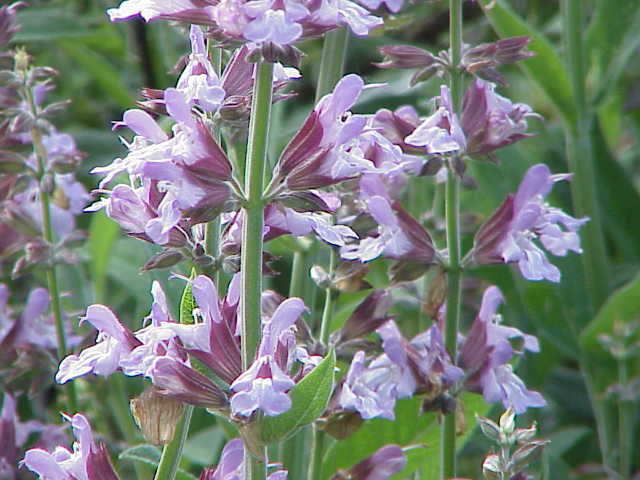 Common sageSalvia officinalis
A Mediterranean herb with grey-green leaves and blue to purple flowers
🇨🇳 China and 1 more · Herb or useful flower
Common sageSalvia officinalis
A Mediterranean herb with grey-green leaves and blue to purple flowers
🇨🇳 China and 1 more · Herb or useful flower
 French lavenderLavandula stoechas
A Mediterranean lavender with purple bracts atop its flower spikes
🇪🇸 Spain and 2 more · Wildflower
French lavenderLavandula stoechas
A Mediterranean lavender with purple bracts atop its flower spikes
🇪🇸 Spain and 2 more · Wildflower
More from Myanmar
All the flowers of Myanmar PomegranatePunica granatum
A shrub with bright red flowers and a fruit full of edible seeds
🇮🇷 Iran and 9 more · Flowering shrub
PomegranatePunica granatum
A shrub with bright red flowers and a fruit full of edible seeds
🇮🇷 Iran and 9 more · Flowering shrub
 FennelFoeniculum vulgare
A tall, aromatic herb with feathery leaves and yellow umbels, used for food and spice
🇨🇳 China and 7 more · Herb or useful flower
FennelFoeniculum vulgare
A tall, aromatic herb with feathery leaves and yellow umbels, used for food and spice
🇨🇳 China and 7 more · Herb or useful flower
 Common flaxLinum usitatissimum
The slender blue-flowered plant grown for linen and linseed
🇨🇳 China and 7 more · Wildflower
Common flaxLinum usitatissimum
The slender blue-flowered plant grown for linen and linseed
🇨🇳 China and 7 more · Wildflower
 OleanderNerium oleander
A showy, evergreen shrub with clusters of pink, white or red flowers
🇲🇦 Morocco and 8 more · Flowering shrub
OleanderNerium oleander
A showy, evergreen shrub with clusters of pink, white or red flowers
🇲🇦 Morocco and 8 more · Flowering shrub