
French lavender
Lavandula stoechas, family Lamiaceae
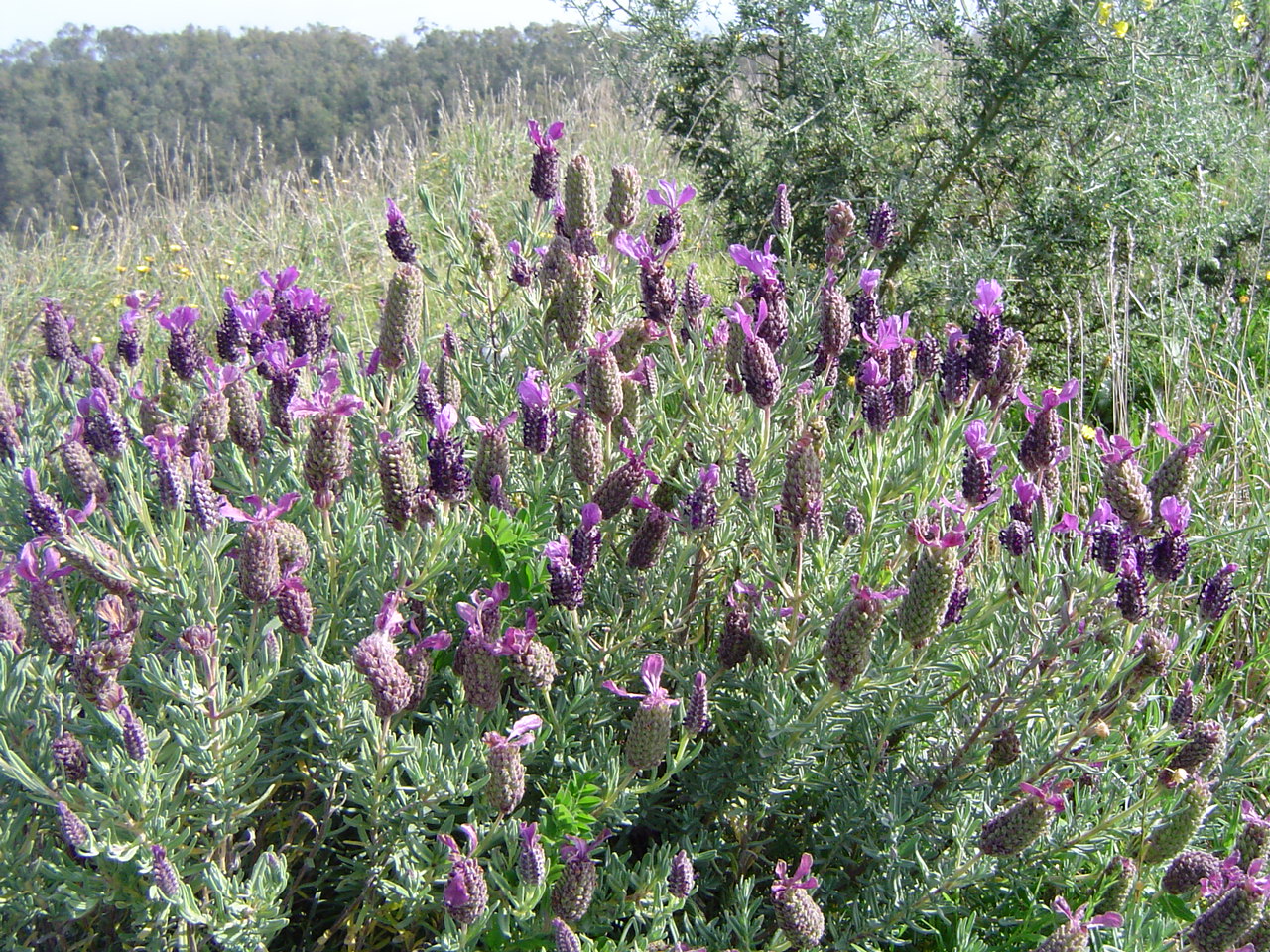
A Mediterranean lavender with purple bracts atop its flower spikes
French lavender (Lavandula stoechas) is an evergreen shrub native to the Mediterranean Basin. It grows up to a metre tall, with greyish leaves and flower spikes topped by bright purple bracts. People use its flowers for aromatherapy and garden display, but in some places it has become invasive.
- Native to the Mediterranean Basin
- Flower spikes topped with bright purple bracts
- Used in aromatherapy and essential oils
- Can be invasive in Australia and parts of Spain
What does French lavender look like?
French lavender is a small evergreen shrub, usually 30–100 cm tall, sometimes reaching 2 metres in some forms. Its leaves are narrow, greyish, and covered in fine hairs. The flower spikes are topped with a tuft of bright purple bracts, sometimes white, giving a crested look. The actual flowers are pink to purple and form a dense cluster below the bracts. The plant blooms from spring into early summer.
Where does French lavender come from?
Lavandula stoechas is native to the Mediterranean Basin. Its name comes from the Greek word for the Stoechades Islands, where it was first described by the botanist Dioscorides. Over time, it spread through the region and has been introduced to other parts of the world, including Australia, where it has become invasive.
When and how French lavender blooms
French lavender blooms in spring and early summer, starting as early as March in its native range. It prefers hot, dry, sunny locations with alkaline soil but can tolerate other conditions. Gardeners grow it for its aromatic flowers and distinctive bracts, usually from cuttings or nursery plants. It is less frost-tolerant than common lavender.



How French lavender is used
The flowers are gathered for aromatherapy, infusions, and essential oils, valued for their distinctive scent and resinous oils. In gardens, it is grown for its attractive appearance and fragrance. However, in places like Australia and parts of Spain, it is considered a weed due to its ability to spread quickly.
Kinds of French lavender
There are several subspecies, including L. stoechas subsp. luisieri, which grows in southern Portugal and southwest Spain and has larger leaves and a greyish covering. Cultivars such as 'Ballerina', 'Pretty Polly', and 'Willow Vale' have been recognised for their garden performance.
What French lavender means
French lavender is valued for its aromatic qualities and is used in aromatherapy. In gardens, it is grown for its decorative flower spikes and bracts. In Australia, it is a declared noxious weed in some regions, reflecting its ability to spread beyond cultivation.
Questions people ask about French lavender
Where does French lavender come from?
French lavender is native to the Mediterranean Basin, including regions such as Spain and Portugal. It has also been introduced to other areas, like Australia.
What does French lavender look like?
It is a small evergreen shrub with greyish, narrow leaves and flower spikes topped by a tuft of bright purple or sometimes white bracts. The flowers themselves are pink to purple.
How is French lavender used?
People use its flowers for aromatherapy, infusions, and essential oils. It is also grown in gardens for its appearance and scent.
Is French lavender invasive anywhere?
Yes, in Australia and some parts of Spain, French lavender has become invasive and is considered a weed.
Are there different types of French lavender?
Yes, there are subspecies such as L. stoechas subsp. luisieri, and several garden cultivars like 'Ballerina' and 'Pretty Polly'.
Good reading and sources
- Encyclopaedia BritannicaArticle
- Lavandula 'Ballerina'Royal Horticultural Society, Article
- USDA Plants DatabaseUS Department of Agriculture, Article
- Plants of the World OnlineRoyal Botanic Gardens, Kew, Plant database
- Where it has been recordedGBIF, Plant database
- Sightings and photos by naturalistsiNaturalist, Plant database
- Lavandula stoechas on WikipediaEncyclopedia
- More photos on Wikimedia CommonsPhotos
- Wikidata recordOpen data
The facts on this page come from the Wikipedia article "Lavandula stoechas", written by its contributors and used under the CC BY-SA 4.0 licence, and from its Wikidata record (CC0). Phool rewrote the text in its own words, with AI assistance, and compares every page with the article to make sure no passage is copied. It may be reused under the same CC BY-SA 4.0 licence with a link back.
It may contain mistakes. It is not medical or foraging advice: many flowers are poisonous, and traditional uses are reported, not recommended. If something is wrong, tell us. Last refreshed 2026-10-03.
Others in the family Lamiaceae
The whole family Salvia
A vast group of aromatic herbs and shrubs known for their flowers and uses
Salvia · Wildflower
Salvia
A vast group of aromatic herbs and shrubs known for their flowers and uses
Salvia · Wildflower
 Common sageSalvia officinalis
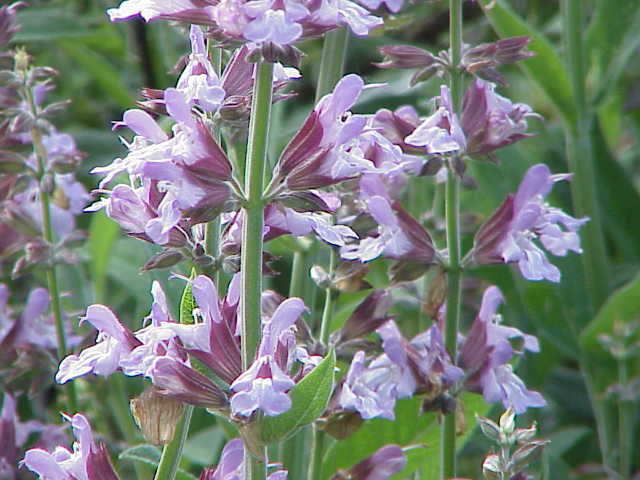
A Mediterranean herb with grey-green leaves and blue to purple flowers
🇨🇳 China and 1 more · Herb or useful flower
Common sageSalvia officinalis
A Mediterranean herb with grey-green leaves and blue to purple flowers
🇨🇳 China and 1 more · Herb or useful flower
 Holy basilOcimum tenuiflorum
A fragrant herb central to Hindu worship and Southeast Asian cooking
🇲🇲 Myanmar and 6 more · Herb or useful flower
Holy basilOcimum tenuiflorum
A fragrant herb central to Hindu worship and Southeast Asian cooking
🇲🇲 Myanmar and 6 more · Herb or useful flower
 Plectranthus
A genus of mint-family plants from Africa and Madagascar
🇲🇬 Madagascar · Herb or useful flower
Plectranthus
A genus of mint-family plants from Africa and Madagascar
🇲🇬 Madagascar · Herb or useful flower
More from Spain
All the flowers of Spain PeachPrunus persica
A flowering fruit tree from China, grown for its pink blossoms and sweet fruit
🇨🇳 China and 7 more · Flowering tree
PeachPrunus persica
A flowering fruit tree from China, grown for its pink blossoms and sweet fruit
🇨🇳 China and 7 more · Flowering tree
 AlmondPrunus amygdalus
A Mediterranean tree grown for its fragrant spring flowers and edible seeds
🇮🇷 Iran and 6 more · Flowering tree
AlmondPrunus amygdalus
A Mediterranean tree grown for its fragrant spring flowers and edible seeds
🇮🇷 Iran and 6 more · Flowering tree
 ApricotPrunus armeniaca
A small fruit tree with early white to pink blossoms and golden-orange fruit
🇨🇳 China and 6 more · Flowering tree
ApricotPrunus armeniaca
A small fruit tree with early white to pink blossoms and golden-orange fruit
🇨🇳 China and 6 more · Flowering tree
 RosemarySalvia rosmarinus
A fragrant evergreen shrub with needle-like leaves and purple, blue, or white flowers
🇪🇸 Spain and 5 more · Flowering shrub
RosemarySalvia rosmarinus
A fragrant evergreen shrub with needle-like leaves and purple, blue, or white flowers
🇪🇸 Spain and 5 more · Flowering shrub