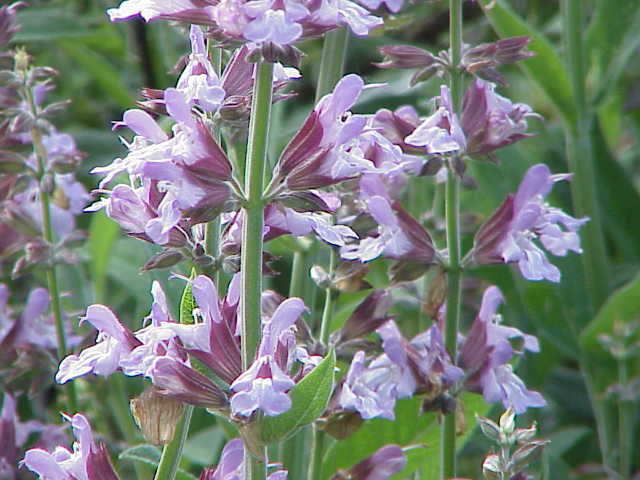
Common sage
Salvia officinalis, family Lamiaceae
A Mediterranean herb with grey-green leaves and blue to purple flowers
Common sage is a small, woody perennial shrub with grey-green, aromatic leaves and blue to purple flowers. Native to the Mediterranean, it is grown worldwide for its culinary uses, as an ornamental plant, and for its long history in traditional medicine and rituals.
- Sage is native to the Mediterranean but grown worldwide for food and gardens.
- Its leaves are grey-green, aromatic, and used in many cuisines.
- Flowers can be blue, purple, white, or pink, blooming in late spring or summer.
- Sage has a long history in traditional medicine and rituals.
- Some cultivars have variegated or purple leaves.
What does Common sage look like?
Common sage is a low, bushy evergreen shrub, usually growing up to 60 cm tall and wide. Its stems are woody, and the leaves are oblong, grey-green on top, and nearly white underneath due to soft hairs. The leaves are aromatic, giving off a light scent when crushed. Flowers appear in late spring or summer, mostly in shades of blue or purple, but some varieties have white or pink blooms. Many cultivars exist, with leaves that may be variegated in cream, yellow, or purple.
Where does Common sage come from?
Salvia officinalis is native to the Mediterranean region, where it has grown wild for centuries. It spread across Europe and beyond as people valued it for food and healing. The plant was described by Carl Linnaeus in 1753 and has been known under several scientific names. Its species name, officinalis, points to its use in traditional medicine, as 'officina' was the storeroom for medicinal herbs in monasteries. Sage has been cultivated since ancient times, including in monastery gardens during the Middle Ages.
When and how Common sage blooms
Sage flowers in late spring or summer. It prefers sunny, dry spots with well-drained soil and can be grown from seeds or cuttings. Some cultivars are compact, while others spread widely. The plant is evergreen in mild climates but may not survive cold, wet winters. Gardeners often grow it for its leaves, which are harvested for cooking or drying. Ornamental varieties are chosen for leaf color and shape.


How Common sage is used
People use sage mainly as a culinary herb, adding its peppery flavor to dishes in Italian, British, and American cooking. It is a classic ingredient in stuffings, sausages, and cheese. In the past, sage was also used in traditional remedies for many ailments and as a fragrance in the home. Its essential oil is distilled in some regions, though it contains compounds that can be toxic in large amounts.
Kinds of Common sage
There are many cultivated forms of sage. 'Alba' has white flowers, 'Aurea' has golden leaves, and 'Purpurascens' has purple foliage. 'Tricolor' combines white, purple, and green on its leaves. Some, like 'Berggarten', rarely bloom but have large leaves. 'Icterina' and 'Purpurascens' have received awards for garden merit. Leaf size, color, and flower shade vary widely among cultivars.
What Common sage means
Sage has been valued since ancient times for both food and healing. Romans called it the 'holy herb' and used it in rituals. In the Middle Ages, it was praised for its supposed health benefits and grown in monastery gardens. Sage is one of the classic herbs in British and European cooking and gives its name to the color 'sage green'. It appears in old recipes and folklore, but also carries a warning: its essential oil contains thujone, which can be toxic if consumed in excess.
Where Common sage is used and seen

Traditions that use it
Questions people ask about Common sage
Where does common sage come from?
Common sage is native to the Mediterranean region but has been naturalized and grown in many parts of the world for centuries.
What does common sage look like?
It is a small, woody shrub with grey-green, oblong leaves and blue to purple flowers. Some varieties have white or pink flowers, and the leaves can be variegated in cream, yellow, or purple.
How is sage used?
Sage is mainly used as a culinary herb in dishes like stuffings, sausages, and cheeses. It has also been used in traditional medicine and as an ornamental plant.
Is sage safe to eat?
Sage leaves are commonly used in cooking, but its essential oil contains thujone, which can be toxic in large amounts. Culinary use of the leaves is generally safe.
What does sage symbolise?
Sage has been associated with wisdom, healing, and ritual use since ancient times, especially in Europe and the Mediterranean.
Good reading and sources
- Encyclopaedia BritannicaArticle
- Salvia officinalis 'Icterina' (v)Royal Horticultural Society, Article
- Plants of the World OnlineRoyal Botanic Gardens, Kew, Plant database
- Where it has been recordedGBIF, Plant database
- Sightings and photos by naturalistsiNaturalist, Plant database
- Salvia officinalis on WikipediaEncyclopedia
- More photos on Wikimedia CommonsPhotos
- Wikidata recordOpen data
The facts on this page come from the Wikipedia article "Salvia officinalis", written by its contributors and used under the CC BY-SA 4.0 licence, and from its Wikidata record (CC0). Phool rewrote the text in its own words, with AI assistance, and compares every page with the article to make sure no passage is copied. It may be reused under the same CC BY-SA 4.0 licence with a link back.
It may contain mistakes. It is not medical or foraging advice: many flowers are poisonous, and traditional uses are reported, not recommended. If something is wrong, tell us. Last refreshed 2026-10-03.
Others in the family Lamiaceae
The whole family RosemarySalvia rosmarinus
A fragrant evergreen shrub with needle-like leaves and purple, blue, or white flowers
🇪🇸 Spain and 5 more · Flowering shrub
RosemarySalvia rosmarinus
A fragrant evergreen shrub with needle-like leaves and purple, blue, or white flowers
🇪🇸 Spain and 5 more · Flowering shrub
 Salvia
A vast group of aromatic herbs and shrubs known for their flowers and uses
Salvia · Wildflower
Salvia
A vast group of aromatic herbs and shrubs known for their flowers and uses
Salvia · Wildflower
 Holy basilOcimum tenuiflorum
A fragrant herb central to Hindu worship and Southeast Asian cooking
🇲🇲 Myanmar and 6 more · Herb or useful flower
Holy basilOcimum tenuiflorum
A fragrant herb central to Hindu worship and Southeast Asian cooking
🇲🇲 Myanmar and 6 more · Herb or useful flower
 French lavenderLavandula stoechas
A Mediterranean lavender with purple bracts atop its flower spikes
🇪🇸 Spain and 2 more · Wildflower
French lavenderLavandula stoechas
A Mediterranean lavender with purple bracts atop its flower spikes
🇪🇸 Spain and 2 more · Wildflower
More from China
All the flowers of China PeachPrunus persica
A flowering fruit tree from China, grown for its pink blossoms and sweet fruit
🇨🇳 China and 7 more · Flowering tree
PeachPrunus persica
A flowering fruit tree from China, grown for its pink blossoms and sweet fruit
🇨🇳 China and 7 more · Flowering tree
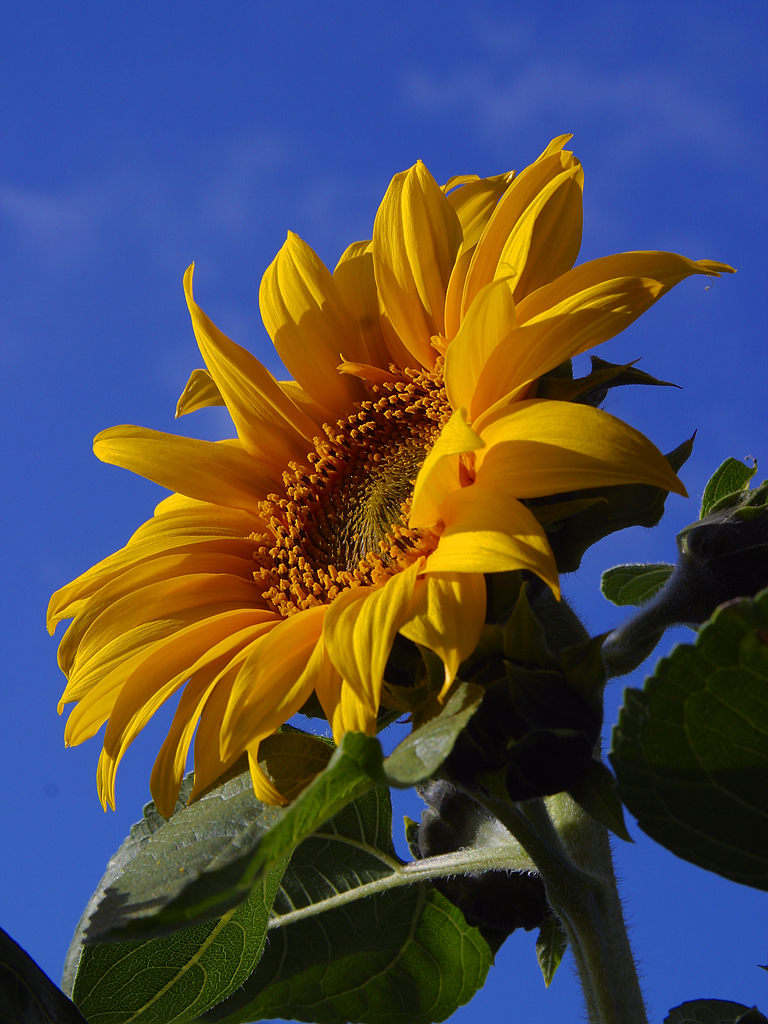 Common sunflowerHelianthus annuus
A tall annual plant grown for its large yellow flower heads and edible seeds
🇨🇦 Canada and 4 more · Wildflower
Common sunflowerHelianthus annuus
A tall annual plant grown for its large yellow flower heads and edible seeds
🇨🇦 Canada and 4 more · Wildflower
 PomegranatePunica granatum
A shrub with bright red flowers and a fruit full of edible seeds
🇮🇷 Iran and 9 more · Flowering shrub
PomegranatePunica granatum
A shrub with bright red flowers and a fruit full of edible seeds
🇮🇷 Iran and 9 more · Flowering shrub
 BirchBetula
Slender trees with papery bark found across the northern world
🇨🇳 China and 7 more · Wildflower
BirchBetula
Slender trees with papery bark found across the northern world
🇨🇳 China and 7 more · Wildflower