
Common flax
Linum usitatissimum, family Linaceae
The slender blue-flowered plant grown for linen and linseed
Common flax is a slender annual plant grown for its strong fibers and oil-rich seeds. Native to a region from the eastern Mediterranean to India, it produces blue, white, yellow, or red flowers and is the source of linen fabric and linseed oil.
- Flax is the source of linen, a traditional textile.
- Its seeds are pressed to make linseed oil.
- Flax flowers can be blue, white, yellow, or red.
- Normandy in France produces nearly a third of the world's flax.
- Flax has been cultivated for over 9,000 years.
What does Common flax look like?
Common flax is an upright annual plant reaching up to 1.2 meters tall, with slender stems and narrow, blue-green leaves. Its flowers are about 1.5 to 2.5 cm wide, each with five petals that may be blue, white, yellow, or red. After flowering, it forms round, dry capsules containing glossy brown seeds. The plant is grown both for its attractive flowers and for its useful seeds and fibers.
Where does Common flax come from?
Flax was first domesticated in the Fertile Crescent, with wild relatives found from the eastern Mediterranean to India. Archaeological finds in Georgia show humans used wild flax fibers 30,000 years ago. Domesticated flax spread to Egypt, where linen became important for clothing and burial, and later to Europe and Asia. The species is known only as a cultivated plant, with no wild populations of Linum usitatissimum itself.
When and how Common flax blooms
Flax is sown in temperate climates, preferring deep, organic-rich loam soils. It grows quickly, reaching maturity in about 100 days. The plant is harvested for fiber when the stems begin to yellow, and for seed when the capsules are ripe. Fiber is extracted by pulling up the whole plant and retting the stems to separate the fibers, while seeds are collected and pressed for oil.


How Common flax is used
People grow flax mainly for its fibers, which are spun into linen for textiles such as sheets and clothing. The seeds, called linseed or flaxseed, are eaten whole, ground, or pressed for oil used in foods and wood finishing. Flax is also grown as an ornamental garden plant. The by-products of oil extraction are used for animal feed.
Kinds of Common flax
There are two botanical varieties: Linum usitatissimum var. usitatissimum and var. stenophyllum. Other species in the genus Linum may have similar flowers in different colors and may be perennial, but common flax is always an annual. Yellow-seeded types, called solin, are grown for oil with a similar profile to brown seeds.
What Common flax means
Flax has played a major role in human history, especially for linen production in ancient Egypt and Europe. Egyptian priests wore linen as a symbol of purity, and linen was used to wrap mummies. The plant's name means 'most useful', reflecting its many uses. Flax was once the main source of plant fiber for cloth in Europe and North America before cotton became dominant.
Questions people ask about Common flax
Where does common flax come from?
Common flax was first domesticated in the Fertile Crescent and is native to a region from the eastern Mediterranean to India. It has been grown in China and India for at least 5,000 years.
What is flax used for?
Flax is grown for its strong fibers, which are spun into linen fabric, and for its seeds, which are eaten or pressed to make linseed oil. The plant is also grown as an ornamental and its by-products are used for animal feed.
What does the flax plant look like?
Flax is a slender annual plant up to 1.2 meters tall, with narrow blue-green leaves and five-petaled flowers that can be blue, white, yellow, or red. It produces round capsules with glossy brown seeds.
Is flax the same as linen?
Linen is the textile made from the fibers of the flax plant. The plant itself is called flax, while the fabric produced from it is called linen.
What does flax symbolize?
In ancient Egypt, flax symbolized purity and was used in religious rituals and for wrapping mummies. Its usefulness is reflected in its scientific name, which means 'most useful.'
Good reading and sources
- Encyclopaedia BritannicaArticle
- Superfoods: LinseedsThe Guardian, Article
- Plants of the World OnlineRoyal Botanic Gardens, Kew, Plant database
- Where it has been recordedGBIF, Plant database
- Sightings and photos by naturalistsiNaturalist, Plant database
The facts on this page come from the Wikipedia article "Flax", written by its contributors and used under the CC BY-SA 4.0 licence, and from its Wikidata record (CC0). Phool rewrote the text in its own words, with AI assistance, and compares every page with the article to make sure no passage is copied. It may be reused under the same CC BY-SA 4.0 licence with a link back.
It may contain mistakes. It is not medical or foraging advice: many flowers are poisonous, and traditional uses are reported, not recommended. If something is wrong, tell us. Last refreshed 2026-10-03.

More from China
All the flowers of China PeachPrunus persica
A flowering fruit tree from China, grown for its pink blossoms and sweet fruit
🇨🇳 China and 7 more · Flowering tree
PeachPrunus persica
A flowering fruit tree from China, grown for its pink blossoms and sweet fruit
🇨🇳 China and 7 more · Flowering tree
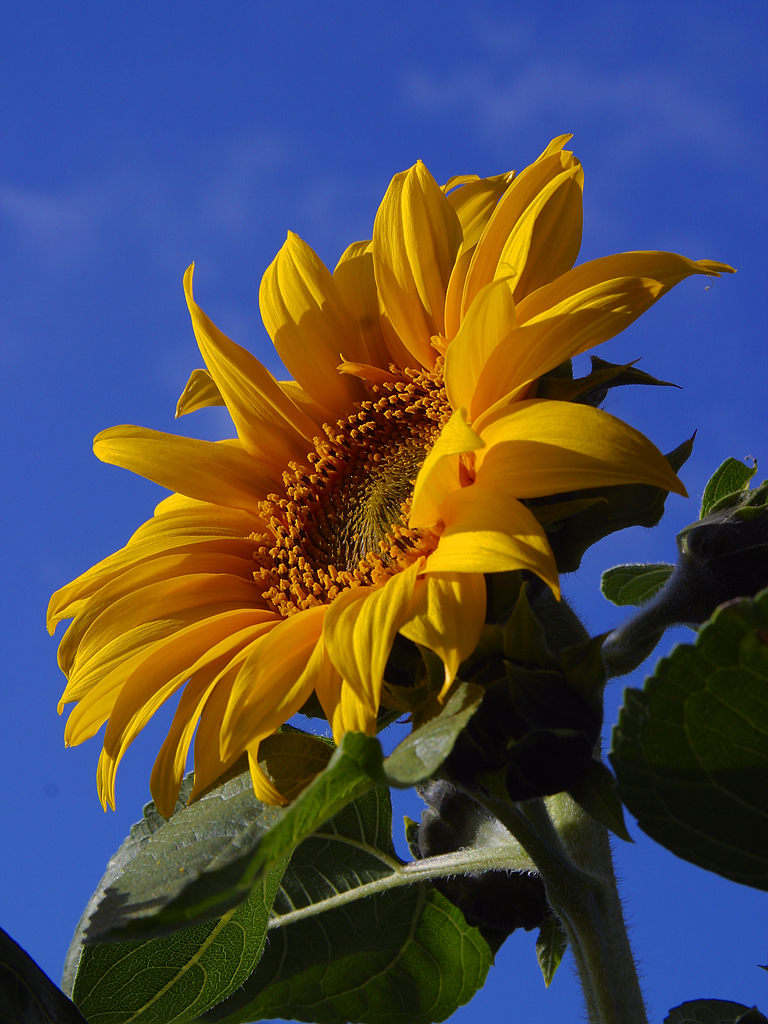 Common sunflowerHelianthus annuus
A tall annual plant grown for its large yellow flower heads and edible seeds
🇨🇦 Canada and 4 more · Wildflower
Common sunflowerHelianthus annuus
A tall annual plant grown for its large yellow flower heads and edible seeds
🇨🇦 Canada and 4 more · Wildflower
 PomegranatePunica granatum
A shrub with bright red flowers and a fruit full of edible seeds
🇮🇷 Iran and 9 more · Flowering shrub
PomegranatePunica granatum
A shrub with bright red flowers and a fruit full of edible seeds
🇮🇷 Iran and 9 more · Flowering shrub
 BirchBetula
Slender trees with papery bark found across the northern world
🇨🇳 China and 7 more · Wildflower
BirchBetula
Slender trees with papery bark found across the northern world
🇨🇳 China and 7 more · Wildflower