
Stellera
Stellera chamaejasme, family Thymelaeaceae
A poisonous alpine flower of Central and East Asia, grown for its showy heads
Stellera chamaejasme is a perennial herb from the mountains of Central Asia, China, and Siberia. It forms clusters of narrow leaves and rounded heads of fragrant white, pink, or yellow flowers, but is highly toxic to people and livestock. The plant is grown in rock gardens and used in traditional medicine and papermaking.
- Native to high mountains of Central Asia, China, and Siberia
- Flowers are fragrant and come in white, pink, yellow, or dark reddish-purple
- Extremely poisonous to humans and livestock
- Used in traditional medicine and Tibetan papermaking
- Grown as an ornamental in rock gardens and alpine houses
What does Stellera look like?
Stellera chamaejasme is a low, herbaceous perennial with unbranched stems 20–30 cm tall, rising from an underground rhizome. Its narrow, pointed leaves overlap along the stems. At the top, the plant forms tight, rounded heads of small flowers. These flowers have no true petals but display petal-like sepals in shades of white, pink, yellow, or dark reddish-purple, often with a white border and a colored patch in the center. The flowers are fragrant, and the plant produces a dry fruit enclosed by the remains of the calyx.
Where does Stellera come from?
Stellera chamaejasme is native to mountainous areas of Central Asia, northern and western Tibet, the Himalayas, Mongolia, Russia, Korea, and northern India. It grows wild on sunny, dry slopes and sandy ground at high altitudes, between 2600 and 4200 meters. The genus was named by Linnaeus in 1753 after Georg Wilhelm Steller. The plant’s name refers to its jasmine-like scent and creeping habit. Though once thought to include more species, only S. chamaejasme is widely accepted today.
When and how Stellera blooms
The plant blooms in spring and summer, sending up clusters of flowering stems from its rhizome. It prefers sunny, well-drained, gritty soils and is often grown in rock gardens or alpine houses. Propagation is by seed. In cultivation, it is considered difficult to grow and is usually kept in pots or specialized garden beds to mimic its natural mountain habitat.


How Stellera is used
Stellera chamaejasme is valued as an ornamental in rock gardens for its showy, fragrant flower heads. In China and Mongolia, the plant is used in traditional medicine, though all parts are highly poisonous and can be fatal if ingested by people or animals. Its root is used as a drastic purgative, pesticide, and fish poison. In Tibet, the fibrous root is cooked and beaten to make paper. Some Mongolian traditions use the flowering stems for head adornments.
Kinds of Stellera
While many species names have been proposed for the genus Stellera, most are now considered synonyms of S. chamaejasme. The Flora of China lists up to 10–12 species, but only S. chamaejasme is widely recognized. Flower color can vary from white and pink to yellow and dark reddish-purple, and flowers sometimes show unusual forms with extra lobes and stamens.
What Stellera means
Stellera chamaejasme is known as Langdu ('wolf poison flower') in China, reflecting its toxic nature. In Mongolia and Russia, it is both respected for its medicinal uses and feared for its lethality. The root's human-like shape has led to folklore and the Russian name 'Man root.' The plant is considered a weed in grasslands, contributing to desertification, but is not endangered and is even spreading in some areas. Its strong toxicity is used in pest control and traditional remedies.
Questions people ask about Stellera
Where does Stellera chamaejasme come from?
It is native to mountainous regions of Central Asia, including Tibet, the Himalayas, Mongolia, Russia, Korea, and northern India. It grows wild on sunny, dry slopes at high altitudes.
What does Stellera chamaejasme look like?
It is a low perennial plant with narrow, pointed leaves and rounded heads of small, fragrant flowers. The flowers can be white, pink, yellow, or dark reddish-purple, often with a white border and a colored patch in the center.
Is Stellera chamaejasme poisonous?
Yes, all parts of the plant are highly toxic and can be fatal to humans and livestock if ingested. The root is especially dangerous and has been used as a poison in traditional practices.
How is Stellera chamaejasme used?
It is grown as an ornamental plant in rock gardens, used in traditional medicine (with great caution), and its root is used for making paper in Tibet. It is also used as a pesticide and fish poison.
What does Stellera chamaejasme symbolize or mean in culture?
In China, it is called 'wolf poison flower' for its toxicity. In Russia, its root's human-like shape has inspired folklore and the name 'Man root.' It is both respected for its uses and feared for its dangers.
Good reading and sources
- Plants of the World OnlineRoyal Botanic Gardens, Kew, Plant database
- Where it has been recordedGBIF, Plant database
- Sightings and photos by naturalistsiNaturalist, Plant database
The facts on this page come from the Wikipedia article "Stellera", written by its contributors and used under the CC BY-SA 4.0 licence, and from its Wikidata record (CC0). Phool rewrote the text in its own words, with AI assistance, and compares every page with the article to make sure no passage is copied. It may be reused under the same CC BY-SA 4.0 licence with a link back.
It may contain mistakes. It is not medical or foraging advice: many flowers are poisonous, and traditional uses are reported, not recommended. If something is wrong, tell us. Last refreshed 2026-10-03.
More from China
All the flowers of China PeachPrunus persica
A flowering fruit tree from China, grown for its pink blossoms and sweet fruit
🇨🇳 China and 7 more · Flowering tree
PeachPrunus persica
A flowering fruit tree from China, grown for its pink blossoms and sweet fruit
🇨🇳 China and 7 more · Flowering tree
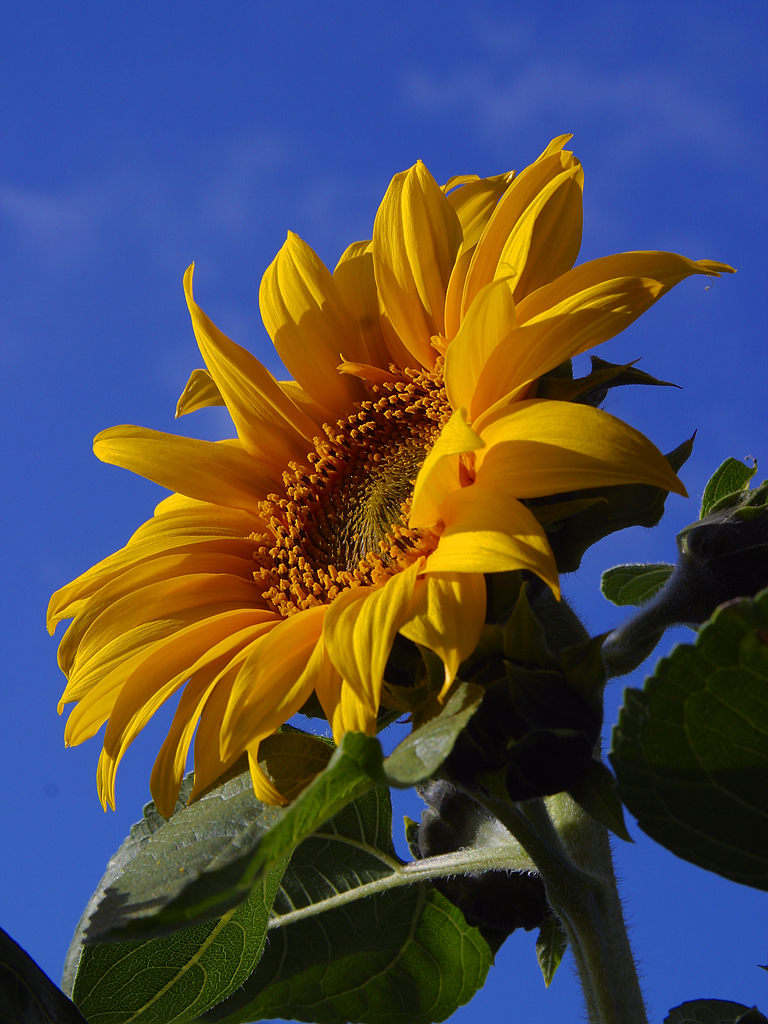 Common sunflowerHelianthus annuus
A tall annual plant grown for its large yellow flower heads and edible seeds
🇨🇦 Canada and 4 more · Wildflower
Common sunflowerHelianthus annuus
A tall annual plant grown for its large yellow flower heads and edible seeds
🇨🇦 Canada and 4 more · Wildflower
 PomegranatePunica granatum
A shrub with bright red flowers and a fruit full of edible seeds
🇮🇷 Iran and 9 more · Flowering shrub
PomegranatePunica granatum
A shrub with bright red flowers and a fruit full of edible seeds
🇮🇷 Iran and 9 more · Flowering shrub
 BirchBetula
Slender trees with papery bark found across the northern world
🇨🇳 China and 7 more · Wildflower
BirchBetula
Slender trees with papery bark found across the northern world
🇨🇳 China and 7 more · Wildflower