
Cubbon Park
A historic green heart in central Bengaluru
Cubbon Park is a large public park in the centre of Bengaluru, India. Created in 1870 and expanded since, it holds thousands of trees, historic buildings like the Karnataka High Court, museums, libraries, and walking paths used by locals and visitors.
- Holds around 6,000 trees from 96 species, both native and exotic
- Home to the Karnataka High Court in the historic Attara Kacheri building
- Contains one of India’s oldest archaeological museums, built in 1876
- Protected since 1979 by state law against new construction
- Renamed in 1927 but still widely known as Cubbon Park
What is Cubbon Park?
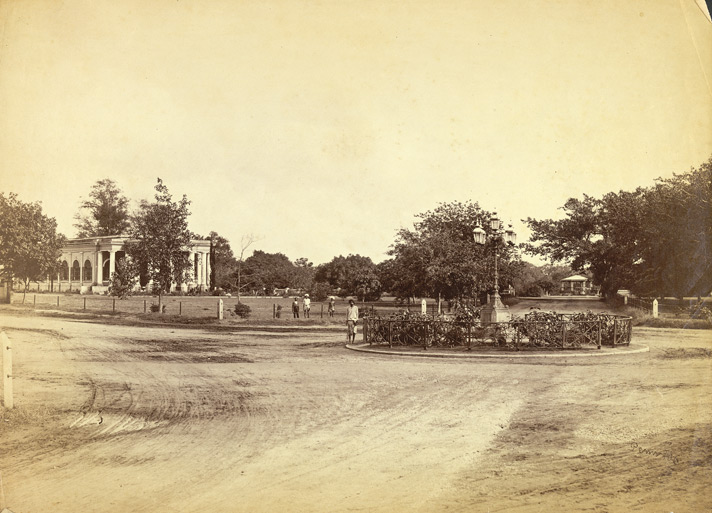
Cubbon Park covers 300 acres in central Bengaluru. It blends lawns, thickets, bamboo groves, and flowerbeds with natural rock formations. Scattered through its grounds are statues, a bandstand, a lotus pond, and notable colonial-era buildings including courts, libraries, and museums.
The history of Cubbon Park
The park was founded in 1870 under British administration by Richard Sankey, then Chief Engineer of Mysore State. Initially named Meade’s Park, it was soon renamed after Sir Mark Cubbon, a long-serving commissioner. In 1927, it received its official name, Sri Chamarajendra Park, honouring a former Mysore ruler.
What there is to see
Laid out with wide avenues lined by exotic and native trees, the park features walking paths and motorable roads restricted to light vehicles. Its design links formal gardens with monuments and natural elements. The Horticulture Department of Karnataka manages its layout and plantings.



When to go
Open daily except Sundays, the park serves as a green retreat for walkers, students, and tourists. Morning hours see heavy use by exercisers, especially when surrounding roads close to traffic. It contributes to Bengaluru’s identity as the 'Garden City'.
Why Cubbon Park matters
Though officially renamed in 1927, most people still call it Cubbon Park. A 2013 event marked renewed recognition of Sir Mark Cubbon’s role in shaping Bengaluru. The park is protected under Karnataka’s Preservation Act of 1979, which bans new construction except by the Horticulture Department.
Questions people ask about Cubbon Park
Where is Cubbon Park located?
Cubbon Park is in the central business district of Bengaluru, Karnataka, India, near landmarks like Vidhana Soudha and MG Road.
When was Cubbon Park established?
The park was created in 1870 under British rule by Major General Richard Sankey, then Chief Engineer of Mysore State.
What can visitors see in Cubbon Park?
Visitors find tree-lined avenues, statues, a lotus pond, bamboo groves, historic buildings like the High Court and museums, and walking paths through diverse plantings.
Is Cubbon Park open every day?
The park is closed on Sundays. On other days, it is open all day, though surrounding roads are closed to traffic during early morning hours for walkers.
Why is it also called Sri Chamarajendra Park?
It was renamed in 1927 to honour Maharaja Chamarajendra Wadiyar X, under whose rule the park was originally established, though the old name remains more common.
Good reading and sources
- Official websiteOfficial site
- Know Your City: Bengaluru’s famed Cubbon Park and the namesake who never saw it completedThe Indian Express, Article
The facts on this page come from the Wikipedia article "Cubbon Park", written by its contributors and used under the CC BY-SA 4.0 licence, and from its Wikidata record (CC0). Phool rewrote the text in its own words, with AI assistance, and compares every page with the article to make sure no passage is copied. It may be reused under the same CC BY-SA 4.0 licence with a link back.
It may contain mistakes. Opening times, prices and bloom dates change: check with the place before you travel. If something is wrong, tell us. Last refreshed 2026-10-03.
More of the same kind
 Place
AlhambraLa Alhambra
Medieval palace and fortress complex overlooking Granada, Spain
Granada, 🇪🇸 Spain · Flower garden
Place
AlhambraLa Alhambra
Medieval palace and fortress complex overlooking Granada, Spain
Granada, 🇪🇸 Spain · Flower garden
 Place
Villa Rufolo
A historic villa in Ravello with year-round flower gardens and sea views
Ravello, 🇮🇹 Italy · Flower garden
Place
Villa Rufolo
A historic villa in Ravello with year-round flower gardens and sea views
Ravello, 🇮🇹 Italy · Flower garden
 Place
Yadavindra Gardens
A 17th-century Mughal garden with seven terraces in Pinjore, Haryana
Panchkula, 🇮🇳 India · Flower garden, Apr to Dec
Place
Yadavindra Gardens
A 17th-century Mughal garden with seven terraces in Pinjore, Haryana
Panchkula, 🇮🇳 India · Flower garden, Apr to Dec
 Place
International Garden Festival
Britain’s first major international garden festival, held in Liverpool in 1984
Liverpool, 🇬🇧 United Kingdom · Festival or show, May to Oct
Place
International Garden Festival
Britain’s first major international garden festival, held in Liverpool in 1984
Liverpool, 🇬🇧 United Kingdom · Festival or show, May to Oct
More from India
All the flowers of India Place
Shalimar Bagh
A Mughal-era garden of terraces, fountains and chinar trees by Dal Lake, Srinagar
Srinagar, 🇮🇳 India · Flower garden
Place
Shalimar Bagh
A Mughal-era garden of terraces, fountains and chinar trees by Dal Lake, Srinagar
Srinagar, 🇮🇳 India · Flower garden
 Place
Sim's Park, Coonoor
A century-old botanical garden in the Nilgiri hills of Tamil Nadu
Coonoor, 🇮🇳 India · Botanical garden, May
Place
Sim's Park, Coonoor
A century-old botanical garden in the Nilgiri hills of Tamil Nadu
Coonoor, 🇮🇳 India · Botanical garden, May
 Place
Rose garden
A public garden devoted to growing and displaying many kinds of roses
L'Haÿ-les-Roses, 🇫🇷 France · Flower garden
Place
Rose garden
A public garden devoted to growing and displaying many kinds of roses
L'Haÿ-les-Roses, 🇫🇷 France · Flower garden
 Place
Chashme Shahi
A Mughal garden built around a spring in Srinagar, Kashmir
Srinagar, 🇮🇳 India · Flower garden, Mar to Nov
Place
Chashme Shahi
A Mughal garden built around a spring in Srinagar, Kashmir
Srinagar, 🇮🇳 India · Flower garden, Mar to Nov