
Nezu Shrine
In its own language: 根津神社
Historic Shinto shrine in Tokyo known for its spring azalea festival
Nezu Shrine is a Shinto place of worship in Bunkyō, Tokyo, established in 1705. It is known for its historic architecture and its annual Azalea Festival each spring, when visitors come to see paths lined with torii gates and blooming azaleas.
- Founded in 1705 and moved to Nezu by Tokugawa Tsunayoshi
- Famous for its hillside azalea garden and spring Azalea Festival
- Features a long path of vermilion torii gates
- Several buildings are Important Cultural Properties
- Dedicated to Susanoo-no-Mikoto, deity of sea and storms
What is Nezu Shrine?
Nezu Shrine is a Shinto shrine complex featuring traditional Japanese architecture, including a main hall (honden), worship hall (haiden), and offertory hall (heiden) all connected under one roof. Visitors enter through large red torii gates and can walk along a hillside path lined with many smaller vermilion torii. The grounds include a koi pond, a two-storied tower gate (rōmon), and a Chinese-style gate (karamon) with a long lattice wall (Sukibei). In spring, the shrine is especially known for its blooming azaleas.
The history of Nezu Shrine
According to legend, Nezu Shrine was first founded in the 1st century in Sendagi by Yamato Takeru, son of Emperor Keikō. The shrine was moved to its present location in Nezu in 1705 by Tokugawa Tsunayoshi, the fifth Tokugawa shōgun, to mark the selection of his successor. The current buildings, constructed in 1706, are among the oldest in Tokyo and are designated Important Cultural Properties. The shrine is dedicated to Susanoo-no-Mikoto, a deity of the sea and storms.
What there is to see
The shrine's main structures are built in the Ishi-no-ma-zukuri style, with interconnected halls under a single roof. The grounds feature long rows of torii gates, a rōmon gate guarded by warrior statues, and a Chinese-style gate with a surrounding wall. The hillside is planted with azaleas, which bloom in spring and attract many visitors during the festival. The shrine is open to the public with no admission fee.


When to go
Nezu Shrine is an active place of Shinto worship throughout the year. Its most popular event is the Azalea Festival, held from early April to early May, when the hillside is covered in flowering azaleas. The shrine is also visited for traditional ceremonies and is one of the Tokyo Ten Shrines. It is easily accessible by public transport and open to all visitors.
Parts and collections
The shrine complex includes several subsidiary shrines, such as Otome Inari Shrine and Komagome Shrine, each with its own path of torii gates. The architectural style follows the example of Tōshō-gū Shrine in Nikkō, and similar features can be seen at Ueno Tōshō-gū in Tokyo.
Why Nezu Shrine matters
Nezu Shrine is considered one of Tokyo's oldest and most important Shinto shrines. It is part of the Tokyo Ten Shrines and has several buildings designated as Important Cultural Properties. The Azalea Festival is a major spring event in Tokyo, drawing crowds to see the flowers and traditional architecture. The shrine is also linked to the Tokugawa shogunate and the Meiji Restoration.
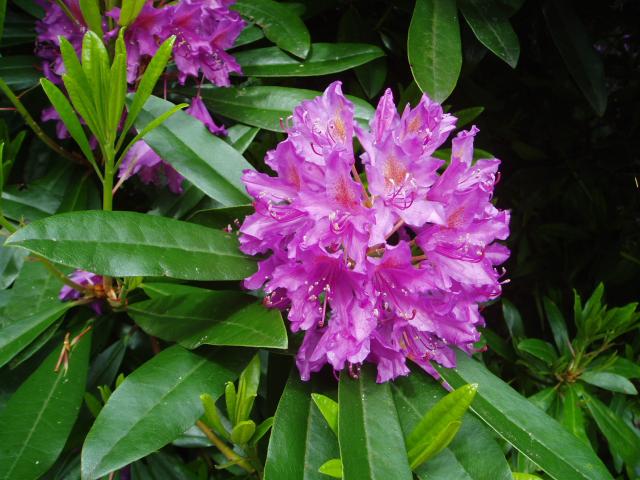
The flowers of Nezu Shrine

Questions people ask about Nezu Shrine
Where is Nezu Shrine located?
Nezu Shrine is in the Bunkyō ward of Tokyo, Japan. It is a short walk from Nezu, Sendagi, and Todaimae stations.
What is Nezu Shrine famous for?
The shrine is best known for its Azalea Festival each spring, when thousands of azalea bushes bloom on the hillside, and for its long path of vermilion torii gates.
When was Nezu Shrine established?
The shrine was established in 1705 at its current location, though legend says it was originally founded in the 1st century.
What kind of architecture does Nezu Shrine have?
Nezu Shrine is built in the Ishi-no-ma-zukuri style, with interconnected halls under one roof, and features traditional gates and walls.
What does Nezu Shrine symbolise or represent?
Nezu Shrine is dedicated to Susanoo-no-Mikoto, a Shinto deity of the sea and storms, and is part of the Tokyo Ten Shrines, representing important places of worship in the city.
Good reading and sources
The facts on this page come from the Wikipedia article "Nezu Shrine", written by its contributors and used under the CC BY-SA 4.0 licence, and from its Wikidata record (CC0). Phool rewrote the text in its own words, with AI assistance, and compares every page with the article to make sure no passage is copied. It may be reused under the same CC BY-SA 4.0 licence with a link back.
It may contain mistakes. Opening times, prices and bloom dates change: check with the place before you travel. If something is wrong, tell us. Last refreshed 2026-10-03.
More of the same kind
 Place
International Garden Festival
Britain’s first major international garden festival, held in Liverpool in 1984
Liverpool, 🇬🇧 United Kingdom · Festival or show, May to Oct
Place
International Garden Festival
Britain’s first major international garden festival, held in Liverpool in 1984
Liverpool, 🇬🇧 United Kingdom · Festival or show, May to Oct
 Place
Bloom Festival
Ireland’s largest gardening and food show in Phoenix Park, Dublin
Dublin, 🇮🇪 Ireland · Festival or show, June
Place
Bloom Festival
Ireland’s largest gardening and food show in Phoenix Park, Dublin
Dublin, 🇮🇪 Ireland · Festival or show, June
 Place
Villa Rufolo
A historic villa in Ravello with year-round flower gardens and sea views
Ravello, 🇮🇹 Italy · Flower garden
Place
Villa Rufolo
A historic villa in Ravello with year-round flower gardens and sea views
Ravello, 🇮🇹 Italy · Flower garden
 Place
Genzano di Roma
A hill town near Rome known for its June flower carpet festival
Genzano di Roma, 🇮🇹 Italy · Flower garden, June
Place
Genzano di Roma
A hill town near Rome known for its June flower carpet festival
Genzano di Roma, 🇮🇹 Italy · Flower garden, June
More from Japan
All the flowers of Japan Place
Odori Park大通公園
A long city park and event space in central Sapporo, Hokkaido
Sapporo, 🇯🇵 Japan · Flower garden
Place
Odori Park大通公園
A long city park and event space in central Sapporo, Hokkaido
Sapporo, 🇯🇵 Japan · Flower garden
 Place
Huis Ten Boschハウステンボス
A Dutch-themed park with canals, windmills, and seasonal flower gardens in Nagasaki, Japan
Sasebo, 🇯🇵 Japan · Flower garden
Place
Huis Ten Boschハウステンボス
A Dutch-themed park with canals, windmills, and seasonal flower gardens in Nagasaki, Japan
Sasebo, 🇯🇵 Japan · Flower garden
 Place
Ashikaga足利市
A city in Japan known for its historic school and famous wisteria park
Ashikaga, 🇯🇵 Japan · Flower garden, Apr to May
Place
Ashikaga足利市
A city in Japan known for its historic school and famous wisteria park
Ashikaga, 🇯🇵 Japan · Flower garden, Apr to May
 Place
Adachi Museum of Art足立美術館
A Japanese art museum famed for its gardens and modern paintings
Yasugi, 🇯🇵 Japan · Botanical garden
Place
Adachi Museum of Art足立美術館
A Japanese art museum famed for its gardens and modern paintings
Yasugi, 🇯🇵 Japan · Botanical garden