
Azalea
Rhododendron, family Ericaceae
Shade-loving flowering shrubs with spring blooms and thousands of cultivated forms
Azaleas are shrubs in the Rhododendron genus, grown for their showy flowers that appear in spring. Native to parts of Asia, Europe, and North America, they thrive in shady spots and acidic soil. Azaleas are popular in gardens and parks worldwide, but all parts of the plant are highly toxic.
- Azaleas bloom in spring, creating large displays of color.
- All parts of the azalea are poisonous to humans and animals.
- Thousands of named azalea varieties exist worldwide.
- Azalea festivals are held in Japan, South Korea, the US, and Hong Kong.
- Azaleas thrive in acidic soil and partial shade.
What does Azalea look like?
Azaleas are bushy shrubs with a wide range of flower shapes and sizes. Their blossoms can be funnel-shaped or tubular, often with five petals and a variety of colors including pink, white, purple, red, orange, and yellow. The plants are usually evergreen or deciduous, depending on the species, and have leaves that are often small and leathery. Azaleas are known for creating dense, colorful displays when in bloom.
Where does Azalea come from?
Azaleas are native to regions across Asia, Europe, and North America. Over centuries, people have cultivated and bred them for gardens, resulting in thousands of named varieties. In the United States, Southern indica azaleas were first grown outdoors in South Carolina in the 1830s and became a feature of public gardens like Magnolia Plantation. Today, azaleas are widely grown in temperate climates around the world.
When and how Azalea blooms
Azaleas bloom once a year, with flowers appearing in spring. In the northern hemisphere, this is usually April and May, while in the southern hemisphere, it is October and November. They prefer acidic, well-drained soil and partial shade, often thriving under trees. Most cultivated azaleas are grown from cuttings, though they can also be started from seed. Regular pruning may be needed for some types.


How Azalea is used
Azaleas are valued for their ornamental use in gardens, parks, and as landscape plants. Many cities and regions hold festivals to celebrate their flowering, drawing visitors to see the colorful displays. In some places, azaleas are city symbols or emblems. However, all parts of the plant are poisonous and should not be ingested by people or animals.
Kinds of Azalea
There are thousands of azalea cultivars, bred for different flower colors, forms, and growth habits. Some are evergreen, while others lose their leaves in winter. In Hong Kong, six native species are celebrated at local festivals. The royal azalea (Rhododendron schlippenbachii) is notable in South Korea, where it covers mountain slopes in spring.
What Azalea means
Azaleas have a strong presence in cultural events and festivals, especially in the United States, Japan, South Korea, and Hong Kong. In Chinese poetry, the azalea is called the 'thinking of home bush.' The plant is a symbol of São Paulo, Brazil. Historically, azaleas and rhododendrons were associated with danger due to their toxicity, and a bouquet in a black vase once signaled a death threat.
Where Azalea is used and seen
 Parc floral de ParisA botanical garden and flower park in the Bois de Vincennes, Paris
 Parc Floral de la SourceA large public garden in Orléans built around the source of the Loiret river
 Rhododendron-Park BremenA vast park in Bremen with the world’s largest rhododendron and azalea collection
 Botanical Garden of the University of ViennaA historic 8-hectare plant collection next to Vienna’s Belvedere gardens
 Kórnik ArboretumPoland’s oldest and largest collection of trees and shrubs, near Kórnik Castle
 VanDusen Botanical GardenA public garden in Vancouver with global and native plant collections
 Abkhazi GardenA one-acre garden in Victoria, British Columbia, created by Prince and Princess Abkhazi
 Hong Kong Zoological and Botanical GardensA historic garden and zoo in Central, Hong Kong with themed plant collections
Where to see Azalea
 🇯🇵 Tokyo · Feb to NovShinjuku Gyoen through the seasonsA large former imperial garden in central Tokyo with a long cherry season and an autumn chrysanthemum show.
🇯🇵 Ashikaga · Apr to MayWisteria at Ashikaga Flower ParkVast old wisteria vines trained over trellises, with flower trails hanging to head height.
🇯🇵 Tokyo · Feb to NovShinjuku Gyoen through the seasonsA large former imperial garden in central Tokyo with a long cherry season and an autumn chrysanthemum show.
🇯🇵 Ashikaga · Apr to MayWisteria at Ashikaga Flower ParkVast old wisteria vines trained over trellises, with flower trails hanging to head height. 🇯🇵 Kanazawa · All yearKenroku-enOne of Japan's most celebrated landscape gardens, with something in flower in almost every season.
 🇰🇷 Seoul · AprilYeouido cherry blossom walkA road of old cherry trees behind the National Assembly, closed to cars at blossom time.
🇰🇷 Gapyeong · Jan to DecThe Garden of Morning CalmA hillside garden north-east of Seoul designed to show a Korean sense of beauty in plants.
🇰🇷 Seoul · AprilYeouido cherry blossom walkA road of old cherry trees behind the National Assembly, closed to cars at blossom time.
🇰🇷 Gapyeong · Jan to DecThe Garden of Morning CalmA hillside garden north-east of Seoul designed to show a Korean sense of beauty in plants. 🇨🇳 Suzhou · Mar to OctClassical gardens of SuzhouScholar gardens of rock, water and pavilions, where each season has its chosen flower.
Questions people ask about Azalea
Where do azaleas come from?
Azaleas are native to parts of Asia, Europe, and North America. They have been cultivated and bred in gardens around the world for centuries, especially in temperate regions.
When do azaleas flower?
Azaleas usually bloom in spring. In the northern hemisphere, their flowers appear in April and May, while in the southern hemisphere, they bloom in October and November.
Are azaleas poisonous?
Yes, all parts of the azalea plant are highly toxic to people and animals. Eating any part of the plant or honey made from its nectar can cause serious health problems.
What are azaleas used for?
Azaleas are mainly grown for their decorative flowers in gardens and parks. They are also celebrated at festivals and serve as city symbols in some places.
What do azaleas symbolize?
In Chinese culture, azaleas are linked to thoughts of home. In Brazil, they are a symbol of São Paulo. Historically, they were also associated with danger due to their toxicity.
Good reading and sources
The facts on this page come from the Wikipedia article "Azalea", written by its contributors and used under the CC BY-SA 4.0 licence, and from its Wikidata record (CC0). Phool rewrote the text in its own words, with AI assistance, and compares every page with the article to make sure no passage is copied. It may be reused under the same CC BY-SA 4.0 licence with a link back.
It may contain mistakes. It is not medical or foraging advice: many flowers are poisonous, and traditional uses are reported, not recommended. If something is wrong, tell us. Last refreshed 2026-10-03.
Others in the family Ericaceae
The whole family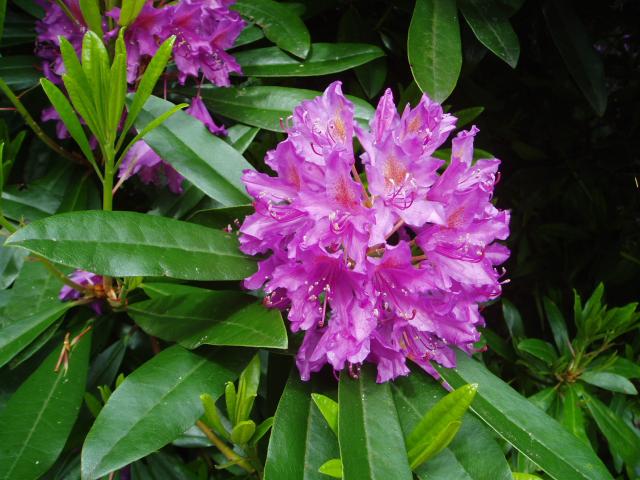 Rhododendron
A vast group of shrubs and trees with showy blooms in many colours
🇳🇵 Nepal and 4 more · Wildflower
Rhododendron
A vast group of shrubs and trees with showy blooms in many colours
🇳🇵 Nepal and 4 more · Wildflower
 Erica
Evergreen shrubs with tiny needle leaves and nodding flowers, known as heaths or heathers
🇿🇦 South Africa and 1 more · Wildflower
Erica
Evergreen shrubs with tiny needle leaves and nodding flowers, known as heaths or heathers
🇿🇦 South Africa and 1 more · Wildflower
 Catawba rosebayRhododendron catawbiense
A spring-flowering rhododendron native to the southern Appalachian Mountains
🇺🇸 United States · Wildflower
Catawba rosebayRhododendron catawbiense
A spring-flowering rhododendron native to the southern Appalachian Mountains
🇺🇸 United States · Wildflower
 Common rhododendronRhododendron ponticum
A dense evergreen shrub with violet-purple flowers from Europe and the Caucasus
🇵🇹 Portugal and 6 more · Flowering shrub
Common rhododendronRhododendron ponticum
A dense evergreen shrub with violet-purple flowers from Europe and the Caucasus
🇵🇹 Portugal and 6 more · Flowering shrub
More from the United States
All the flowers of the United States PeachPrunus persica
A flowering fruit tree from China, grown for its pink blossoms and sweet fruit
🇨🇳 China and 7 more · Flowering tree
PeachPrunus persica
A flowering fruit tree from China, grown for its pink blossoms and sweet fruit
🇨🇳 China and 7 more · Flowering tree
 AlmondPrunus amygdalus
A Mediterranean tree grown for its fragrant spring flowers and edible seeds
🇮🇷 Iran and 6 more · Flowering tree
AlmondPrunus amygdalus
A Mediterranean tree grown for its fragrant spring flowers and edible seeds
🇮🇷 Iran and 6 more · Flowering tree
 CactusCactaceae
Succulent plants with spines, native to the Americas
🇲🇽 Mexico and 7 more · Wildflower
CactusCactaceae
Succulent plants with spines, native to the Americas
🇲🇽 Mexico and 7 more · Wildflower
 Chrysanthemum菊花
Autumn-blooming flower with thousands of varieties, cherished in East Asia and beyond
🇨🇳 China and 6 more · Wildflower
Chrysanthemum菊花
Autumn-blooming flower with thousands of varieties, cherished in East Asia and beyond
🇨🇳 China and 6 more · Wildflower