
Erica
Evergreen shrubs with tiny needle leaves and nodding flowers, known as heaths or heathers
Erica is a large group of evergreen shrubs in the Ericaceae family, known as heaths or heathers. Most species are native to South Africa, with others in Europe and Madagascar, and are valued for their small, needle-like leaves and clusters of bell-shaped flowers, often grown as ground cover or in gardens.
- Erica includes about 857 species of evergreen shrubs.
- Most species are native to South Africa's Cape fynbos.
- Some species, like tree heath, can grow up to 7 metres tall.
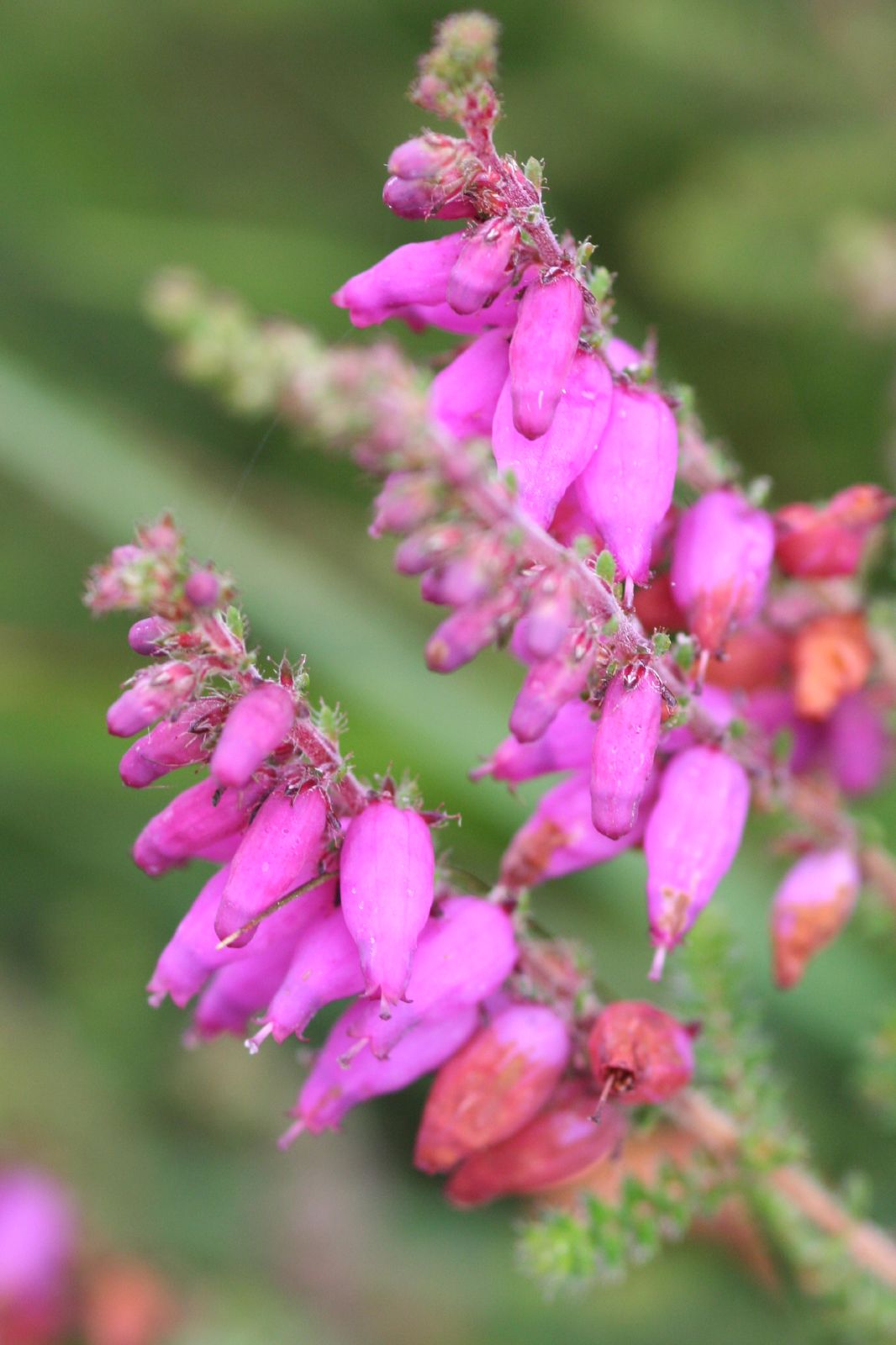
- Erica plants have tiny, needle-like leaves and small, clustered flowers.
- They are widely used as ground cover in gardens.
What does Erica look like?
Erica plants are mostly small, evergreen shrubs, usually between 20 and 150 centimetres tall, though some can reach up to 7 metres. They have tiny, needle-like leaves from 2 to 15 millimetres long. Their flowers are often grouped in clusters, facing outward or downward, and can be found at the tips of branches or along the stems. The flowers vary in shape, with many South African species having long, disc-shaped blooms. Erica species keep their leaves year-round, and their seeds are very small, sometimes able to remain in the soil for decades.
Where does Erica come from?
The genus Erica includes about 857 species, with the majority native to South Africa, especially in the Cape fynbos, a unique shrubland habitat. Other species are found in Madagascar, the Mediterranean, and Europe. European species represent some of the oldest lineages, while the African group is much more species-rich. The name 'Erica' comes from Latin, meaning 'heath' or 'broom', and was likely borrowed from Ancient Greek. Erica has been known since Roman times, with pollen traces found near Florence.
When and how Erica blooms
Erica species are adapted to acidic or very acidic soils, from dry sand to wet bog. They are often grown as ground cover in gardens, especially under conifers, and can be planted in beds, tubs, or window boxes. They are valued for providing flower colour throughout the year. Most are grown from seed or cuttings, and thrive in conditions that mimic their natural heathland or fynbos habitats.


How Erica is used
Heaths are popular in gardens for their evergreen foliage and clusters of flowers. They are used as massed ground cover, especially beneath dwarf conifers, and can be grown in containers for seasonal interest. Erica species are also important in natural habitats, providing food for the larvae of various moths and butterflies, and nectar for sunbirds in Africa.
Kinds of Erica
There are over 857 species of Erica, with the largest diversity in South Africa. Notable species include Erica arborea (tree heath), which can grow into a small tree, and Erica scoparia (besom heath), both reaching several metres in height. The genus also includes the Cape heaths, which are endemic to the Cape region, and species in Madagascar and Europe.
What Erica means
Erica dominates the fynbos of South Africa and is the largest genus in that ecosystem. The term 'ericaceous' is used for plants and soils that prefer acidic conditions, reflecting the typical habitat of Erica. While not tied to specific symbolism or festivals in the sources, Erica is valued for its role in gardens and natural landscapes, and its ecological importance in heathlands.
Where Erica is used and seen


Where to see Erica
 🇿🇦 Cape Town · All yearKirstenbosch National Botanical GardenA garden of South African plants on the slopes of Table Mountain, at its best from late winter to spring.
 🇿🇦 Cape Town · Aug to NovFynbos walks on the Cape Peninsula and at HermanusDay walks through the Cape floral kingdom, the smallest and one of the richest plant regions on earth.
 🇿🇦 Plettenberg Bay · Aug to NovGarden Route coastal fynbos walksCoastal paths along South Africa's southern shore, through fynbos and old forest.
Questions people ask about Erica
Where does Erica come from?
Most Erica species are native to South Africa, especially the Cape fynbos, with others found in Madagascar, Europe, and the Mediterranean.
What does an Erica plant look like?
Erica plants are evergreen shrubs with tiny, needle-like leaves and clusters of small, often bell-shaped flowers. Most are under 1.5 metres tall, but some can grow much taller.
How are Erica plants used?
They are mainly grown as ground cover in gardens, often under conifers, and can be planted in beds or containers for year-round interest.
What kind of soil do Erica plants need?
Erica species prefer acidic or very acidic soils, ranging from dry sandy areas to wet bogs, and are often found in heathland or open woodland.
Are Erica plants important in nature?
Yes, they are a key part of the fynbos ecosystem in South Africa and provide food for the larvae of various moths and butterflies, as well as nectar for sunbirds.
Good reading and sources
- Encyclopaedia BritannicaArticle
- USDA Plants DatabaseUS Department of Agriculture, Article
- Plants of the World OnlineRoyal Botanic Gardens, Kew, Plant database
- Where it has been recordedGBIF, Plant database
- Sightings and photos by naturalistsiNaturalist, Plant database
- Erica (plant) on WikipediaEncyclopedia
- More photos on Wikimedia CommonsPhotos
- Wikidata recordOpen data
The facts on this page come from the Wikipedia article "Erica (plant)", written by its contributors and used under the CC BY-SA 4.0 licence, and from its Wikidata record (CC0). Phool rewrote the text in its own words, with AI assistance, and compares every page with the article to make sure no passage is copied. It may be reused under the same CC BY-SA 4.0 licence with a link back.
It may contain mistakes. It is not medical or foraging advice: many flowers are poisonous, and traditional uses are reported, not recommended. If something is wrong, tell us. Last refreshed 2026-10-03.
Others in the family Ericaceae
The whole family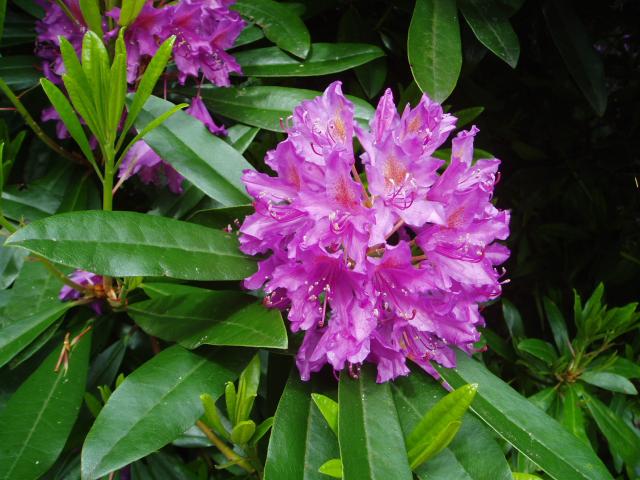 Rhododendron
A vast group of shrubs and trees with showy blooms in many colours
🇳🇵 Nepal and 4 more · Wildflower
Rhododendron
A vast group of shrubs and trees with showy blooms in many colours
🇳🇵 Nepal and 4 more · Wildflower
 Rhododendron aureum
A low evergreen shrub with pale yellow spring flowers from northeastern Asia
🇨🇳 China and 2 more · Wildflower
Rhododendron aureum
A low evergreen shrub with pale yellow spring flowers from northeastern Asia
🇨🇳 China and 2 more · Wildflower
 Rhododendron molle羊踯躅
A yellow-flowered deciduous azalea from China and Japan
🇨🇳 China and 1 more · Wildflower
Rhododendron molle羊踯躅
A yellow-flowered deciduous azalea from China and Japan
🇨🇳 China and 1 more · Wildflower
 Common rhododendronRhododendron ponticum
A dense evergreen shrub with violet-purple flowers from Europe and the Caucasus
🇵🇹 Portugal and 6 more · Flowering shrub
Common rhododendronRhododendron ponticum
A dense evergreen shrub with violet-purple flowers from Europe and the Caucasus
🇵🇹 Portugal and 6 more · Flowering shrub
More from South Africa
All the flowers of South Africa Eucalyptus
The tall, aromatic trees and shrubs known as gum trees or eucalypts
🇦🇺 Australia and 7 more · Flowering tree
Eucalyptus
The tall, aromatic trees and shrubs known as gum trees or eucalypts
🇦🇺 Australia and 7 more · Flowering tree
 AmaranthAmaranthus
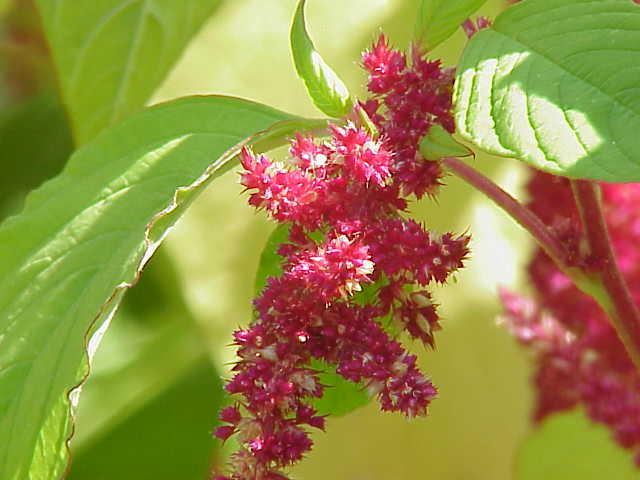
A tall, colourful plant grown for its flowers, leaves and edible seeds
🇲🇽 Mexico and 7 more · Wildflower
AmaranthAmaranthus
A tall, colourful plant grown for its flowers, leaves and edible seeds
🇲🇽 Mexico and 7 more · Wildflower
 Acacia
Shrubs and trees with golden or cream puffball flowers, native mostly to Australia
🇦🇺 Australia and 6 more · Wildflower
Acacia
Shrubs and trees with golden or cream puffball flowers, native mostly to Australia
🇦🇺 Australia and 6 more · Wildflower
 Sensitive PlantMimosa pudica
A touch-sensitive plant whose leaves fold up when disturbed
🇧🇷 Brazil and 8 more · Wildflower
Sensitive PlantMimosa pudica
A touch-sensitive plant whose leaves fold up when disturbed
🇧🇷 Brazil and 8 more · Wildflower