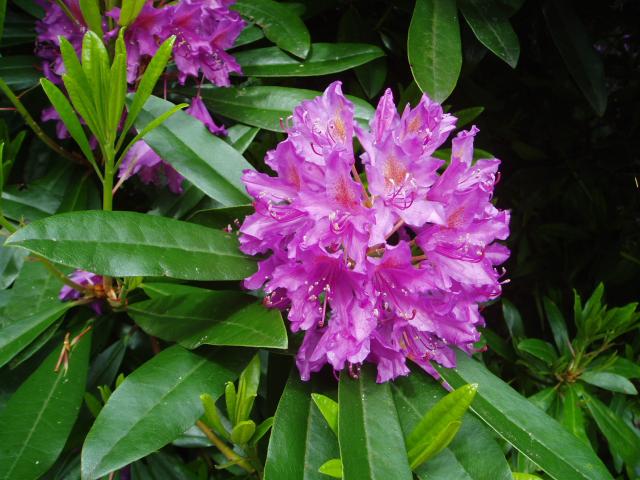
Rhododendron
A vast group of shrubs and trees with showy blooms in many colours
Rhododendron is a large group of woody plants in the heath family, including both evergreen and deciduous types. Most species grow in Asia and the Himalayas, but some are found in North America, Europe, and Australia. Their flowers, often bright and clustered, appear from late winter to early summer. Rhododendron is a national or state symbol in several countries and regions.
- Over 1,000 species, from small shrubs to tall trees
- Flowers in many colours, blooming late winter to early summer
- National flower of Nepal and emblem in several regions
- Includes both evergreen and deciduous plants
- Azaleas are part of the rhododendron group
What does Rhododendron look like?
Rhododendrons range from small shrubs to tall trees, with some species only 10 cm high and others reaching up to 30 metres. Leaves can be tiny or very large, arranged in a spiral, and may be evergreen or shed each year. Some have hairy or scaly undersides. The flowers are often grouped in clusters and come in a wide range of colours, sometimes with petals as large as 15 cm across.
Where does Rhododendron come from?
Most rhododendrons grow naturally in Asian mountains and forests, especially in the Himalayas and eastern Asia. A smaller number are found in North America, Europe, and Australia. The genus was first formally described in 1753 by Linnaeus, though some species were known to European botanists earlier. Over time, the group has expanded as new species were discovered and as related plants, like azaleas, were included.
When and how Rhododendron blooms
Rhododendrons bloom from late winter through early summer, depending on the species and climate. They grow in a variety of habitats, from alpine slopes to tropical forests, and some even grow on trees as epiphytes. Most are grown from seed or cuttings and prefer acidic soils. Their care and appearance can vary widely due to the diversity within the genus.


How Rhododendron is used
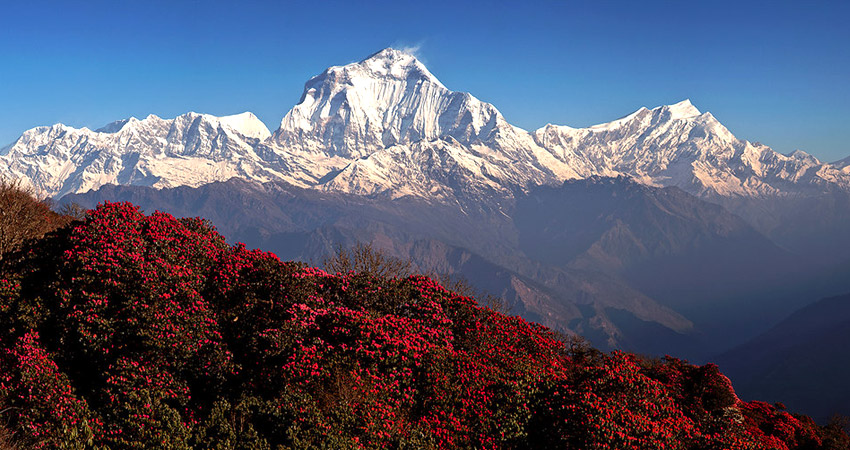
People grow rhododendrons for their colourful flowers in gardens and parks. They are also important symbols: Nepal has adopted it as its national flower, and several states and provinces in India, the United States, China, and South Korea use it as an emblem. Rhododendrons are celebrated in festivals and are a source of pride in many regions.
Kinds of Rhododendron
The genus includes over a thousand species, with forms ranging from tiny alpine plants to large trees. Azaleas, once considered separate, are now grouped within rhododendrons and are known for their five stamens per flower. Some species have unique features, like large petals or unusual leaf coverings. There are also tropical types that grow as epiphytes.
What Rhododendron means
Rhododendrons hold special meaning in several countries, serving as national or state flowers. They are featured in local festivals and are often planted in public spaces. The plant’s name comes from Greek words for 'rose' and 'tree'. Its diversity and bright flowers have made it a favourite in gardens and a symbol of natural beauty in many cultures.
Where Rhododendron is used and seen
 Parc floral de ParisA botanical garden and flower park in the Bois de Vincennes, Paris
 Parc Floral de la SourceA large public garden in Orléans built around the source of the Loiret river
 Kórnik ArboretumPoland’s oldest and largest collection of trees and shrubs, near Kórnik Castle
 Abkhazi GardenA one-acre garden in Victoria, British Columbia, created by Prince and Princess Abkhazi
 Callaway GardensA 2,500-acre garden and resort in Pine Mountain, Georgia, known for its azaleas
 Holden ArboretumA vast botanical garden and arboretum in Kirtland, Ohio
 Roan MountainA high Appalachian massif known for rhododendrons and grassy summits
 Hong Kong Zoological and Botanical GardensA historic garden and zoo in Central, Hong Kong with themed plant collections
Where to see Rhododendron
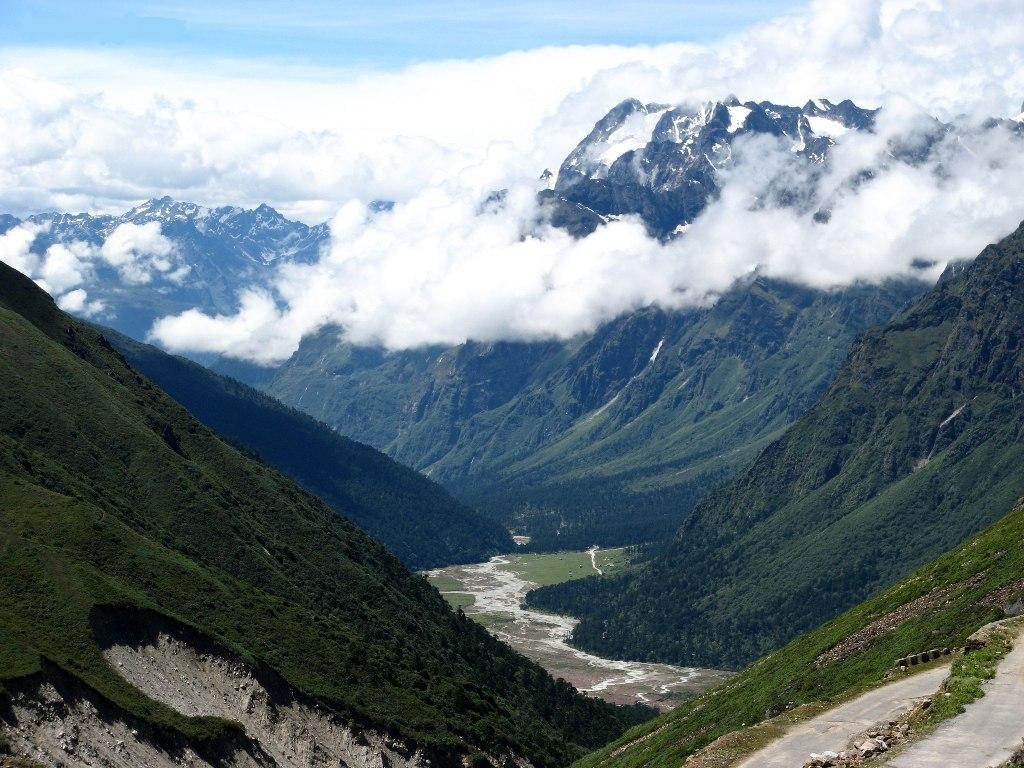 🇮🇳 Lachung · Apr to JunYumthang valley rhododendronsA high valley in north Sikkim where many kinds of rhododendron flower in late spring.
 🇮🇳 Kohima · Jun to JulDzukou valley in the monsoonA day-long hike to a green valley on the Nagaland and Manipur border, home of the Dzukou lily.
 🇮🇳 Darjeeling · Apr to MaySandakphu rhododendron trekA ridge walk along the India and Nepal border through rhododendron and magnolia forest in spring.
 🇹🇭 Chiang Mai · Jan to DecWild Himalayan cherry on Doi InthanonPink cherry trees and royal flower gardens on Thailand's highest mountain.
 🇳🇵 Pokhara · Mar to AprGhorepani rhododendron forest trekA short Annapurna trek through forests of Nepal's national flower, the red tree rhododendron.
 🇳🇿 Christchurch · Jan to DecChristchurch Botanic Gardens and Hagley ParkThe heart of New Zealand's Garden City, set in a loop of the Avon river.
Questions people ask about Rhododendron
Where do rhododendrons come from?
Most species are found in Asia, especially in the Himalayas and eastern regions, but some also grow in North America, Europe, and Australia.
What are rhododendrons used for?
They are popular garden plants and are used as emblems in countries like Nepal, India, the United States, China, and South Korea. They are also featured in festivals.
How big can rhododendrons get?
They vary greatly in size, from small shrubs just 10 cm tall to trees that can reach up to 30 metres high.
What colours do rhododendron flowers have?
Their flowers come in many colours, including red, pink, orange, yellow, white, purple, blue, cream, and maroon. Some have mixed colours.
Are azaleas different from rhododendrons?
Azaleas are now considered part of the rhododendron group, but they are distinguished by having five stamens per flower.
Good reading and sources
- Encyclopaedia BritannicaArticle
- A spectacular thug is out of controlThe Guardian, Article
- USDA Plants DatabaseUS Department of Agriculture, Article
- Plants of the World OnlineRoyal Botanic Gardens, Kew, Plant database
- Where it has been recordedGBIF, Plant database
- Sightings and photos by naturalistsiNaturalist, Plant database
The facts on this page come from the Wikipedia article "Rhododendron", written by its contributors and used under the CC BY-SA 4.0 licence, and from its Wikidata record (CC0). Phool rewrote the text in its own words, with AI assistance, and compares every page with the article to make sure no passage is copied. It may be reused under the same CC BY-SA 4.0 licence with a link back.
It may contain mistakes. It is not medical or foraging advice: many flowers are poisonous, and traditional uses are reported, not recommended. If something is wrong, tell us. Last refreshed 2026-10-03.
Others in the family Ericaceae
The whole family Erica
Evergreen shrubs with tiny needle leaves and nodding flowers, known as heaths or heathers
🇿🇦 South Africa and 1 more · Wildflower
Erica
Evergreen shrubs with tiny needle leaves and nodding flowers, known as heaths or heathers
🇿🇦 South Africa and 1 more · Wildflower
 Rhododendron aureum
A low evergreen shrub with pale yellow spring flowers from northeastern Asia
🇨🇳 China and 2 more · Wildflower
Rhododendron aureum
A low evergreen shrub with pale yellow spring flowers from northeastern Asia
🇨🇳 China and 2 more · Wildflower
 Rhododendron molle羊踯躅
A yellow-flowered deciduous azalea from China and Japan
🇨🇳 China and 1 more · Wildflower
Rhododendron molle羊踯躅
A yellow-flowered deciduous azalea from China and Japan
🇨🇳 China and 1 more · Wildflower
 Common rhododendronRhododendron ponticum
A dense evergreen shrub with violet-purple flowers from Europe and the Caucasus
🇵🇹 Portugal and 6 more · Flowering shrub
Common rhododendronRhododendron ponticum
A dense evergreen shrub with violet-purple flowers from Europe and the Caucasus
🇵🇹 Portugal and 6 more · Flowering shrub
More from Nepal
All the flowers of Nepal Hydrangea
Flowering shrubs with large heads that change color with soil pH
🇯🇵 Japan and 2 more · Flowering shrub
Hydrangea
Flowering shrubs with large heads that change color with soil pH
🇯🇵 Japan and 2 more · Flowering shrub
 BaelAegle marmelos
A spiny tree with fragrant yellow-green flowers and hard-shelled aromatic fruit
🇮🇳 India and 6 more · Flowering tree
BaelAegle marmelos
A spiny tree with fragrant yellow-green flowers and hard-shelled aromatic fruit
🇮🇳 India and 6 more · Flowering tree
 Holy basilOcimum tenuiflorum
A fragrant herb central to Hindu worship and Southeast Asian cooking
🇲🇲 Myanmar and 6 more · Herb or useful flower
Holy basilOcimum tenuiflorum
A fragrant herb central to Hindu worship and Southeast Asian cooking
🇲🇲 Myanmar and 6 more · Herb or useful flower
 Brown mustardBrassica juncea
A leafy mustard plant grown for greens, seeds, and oil across Asia and beyond
🇨🇳 China and 7 more · Wildflower
Brown mustardBrassica juncea
A leafy mustard plant grown for greens, seeds, and oil across Asia and beyond
🇨🇳 China and 7 more · Wildflower