
Roan Mountain
A high Appalachian massif known for rhododendrons and grassy summits
Roan Mountain rises along the border of North Carolina and Tennessee, reaching 6,277 feet at its highest point. It is famous for its spruce–fir forests, extensive rhododendron gardens, and broad grassy meadows called balds. Visitors come for hiking, sweeping views, and rare mountain plants.
- Home to the world’s largest natural rhododendron garden
- Features rare spruce–fir forests and grassy balds
- Crossed by the Appalachian Trail and popular for hiking
- Contains five main summits over 5,800 feet
- Shelters rare and endangered mountain species
What is Roan Mountain?
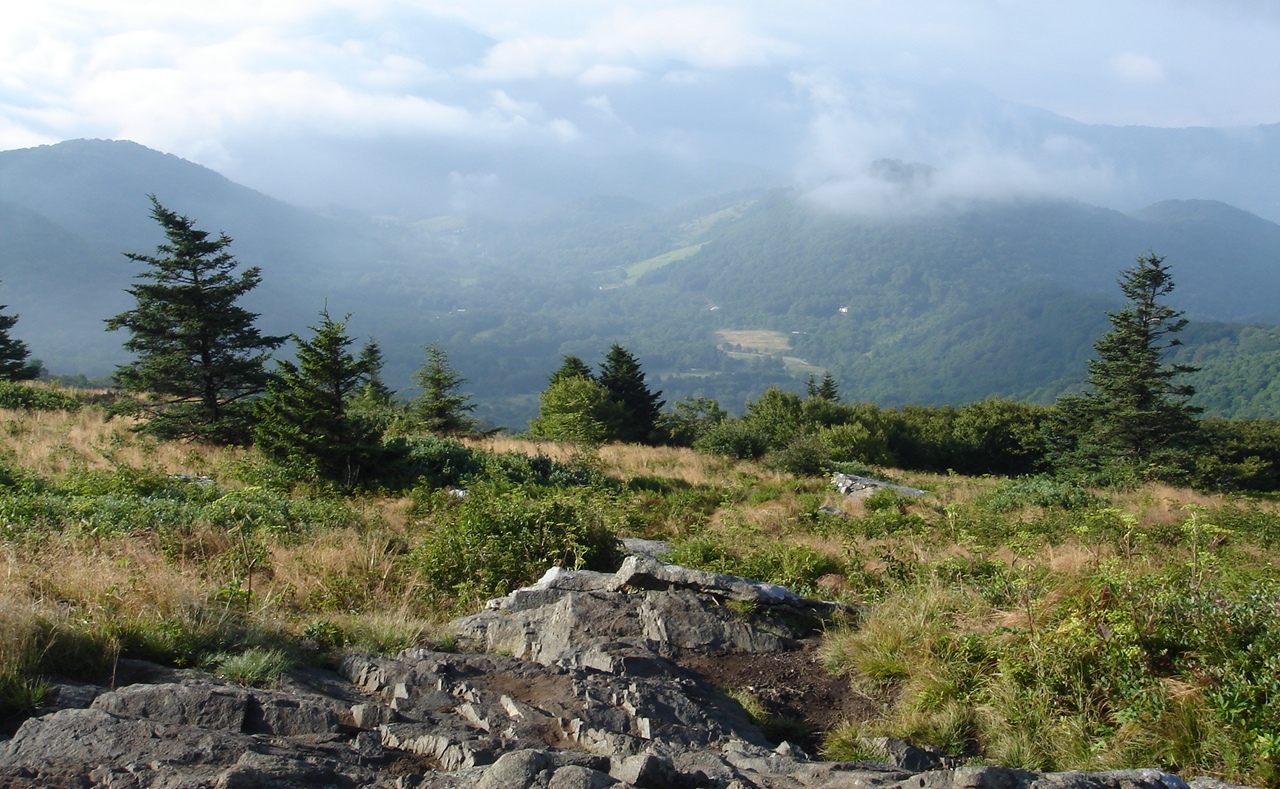
Roan Mountain is a large, high-elevation ridge in the Southern Appalachians, with its crest straddling the North Carolina–Tennessee line. The area is covered by dense spruce and fir forests at the highest points, while open grassy meadows, called balds, spread across the eastern side. In late spring, the mountain’s slopes are bright with blooming rhododendrons. The landscape includes several summits, panoramic viewpoints, and rare plants found only in this region.
The history of Roan Mountain
Roan Mountain formed hundreds of millions of years ago during the collision of ancient continents, which created the Appalachian Mountains. Its oldest rocks, Cranberry gneiss, date back over a billion years. The mountain’s name may come from the reddish color of rhododendron flowers or mountain ash berries, or possibly from a legendary horse. Native Americans lived around its base, and early botanists explored its unique flora in the 18th and 19th centuries.
What there is to see
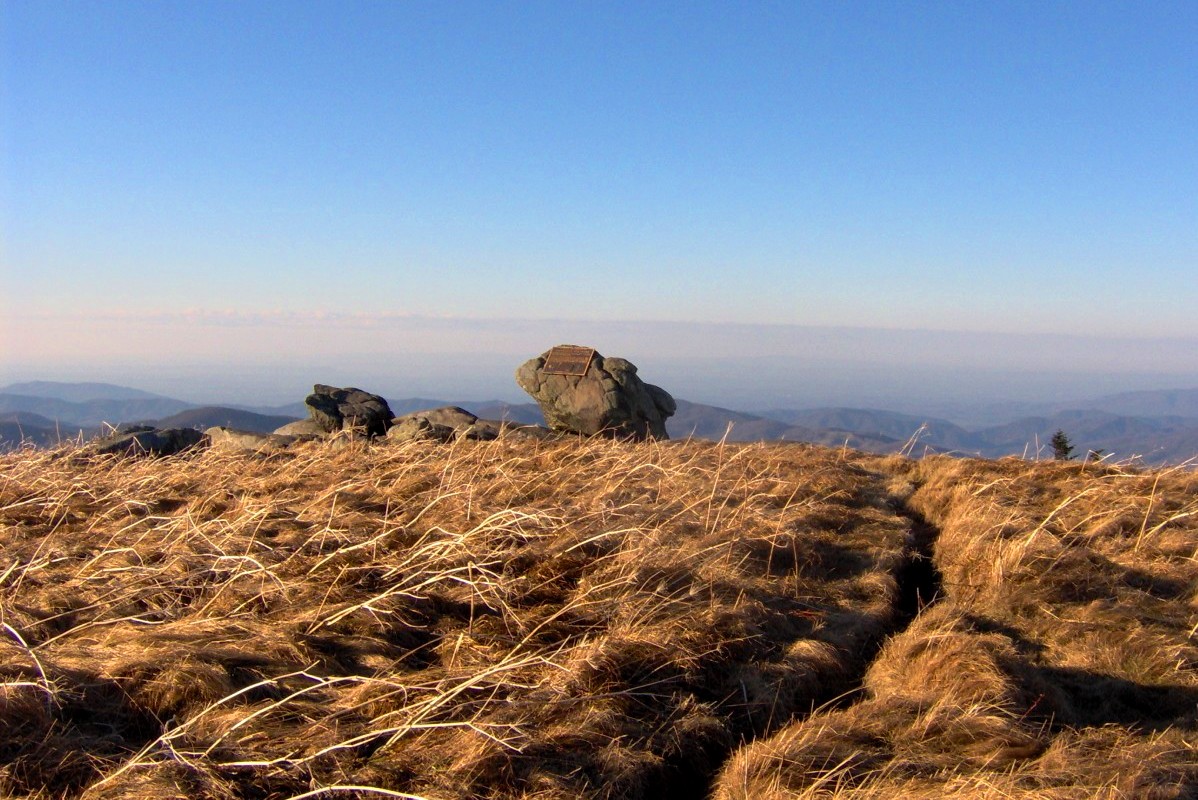
The mountain’s natural features include five main peaks, divided by Carver’s Gap. The western section is forested, while the eastern part is mostly open grassland. Trails, including the Appalachian Trail, cross the crest and connect the summits. The rhododendron gardens are found near Tollhouse Gap. Visitors can walk through meadows, forests, and enjoy observation platforms with wide views.


When to go
Roan Mountain is popular for hiking, especially when rhododendrons bloom in late spring and early summer. The Appalachian Trail passes over its ridges, and shelters are available for backpackers. The grassy balds and gardens attract nature lovers and those interested in rare plants. The area is also valued for its scenic views and as a summer retreat.
Parts and collections
The massif includes several peaks: Roan High Knob, Roan High Bluff, Round Bald, Jane Bald, and Grassy Ridge Bald. Each summit offers different views and habitats. Grassy Ridge is known for its large open meadows, while Roan High Knob is the highest point. The area also contains smaller peaks like Yellow Mountain and Little Hump Mountain.
Why Roan Mountain matters
Roan Mountain has inspired local legends, including stories about its name and the origins of its treeless balds. It played a role in the journey of the Overmountain Men during the American Revolution. Botanists have long studied its rare plants, and the rhododendron gardens are a regional attraction. The area’s forests and balds are considered globally rare habitats.
The flowers of Roan Mountain
 RhododendronA vast group of shrubs and trees with showy blooms in many colours
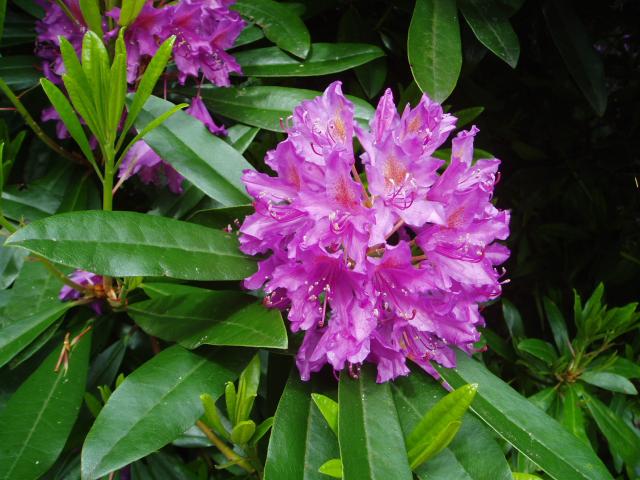
 Common rhododendronA dense evergreen shrub with violet-purple flowers from Europe and the Caucasus
 Rhododendron aureumA low evergreen shrub with pale yellow spring flowers from northeastern Asia
 Rhododendron molleA yellow-flowered deciduous azalea from China and Japan
 Rhododendron simsiiA shrub from East Asia with flowers in shades from white to deep red
 Rhododendron kaempferiA Japanese semi-evergreen azalea with many colourful forms
 Rhododendron kesangiaeA tall rhododendron tree with rose pink flowers, found only in Bhutan
 Rhododendron faurieiA rhododendron with pale red to white flowers from Japan and Korea
Questions people ask about Roan Mountain
Where is Roan Mountain located?
Roan Mountain sits along the border between North Carolina and Tennessee, mainly in Mitchell County, North Carolina, and Carter County, Tennessee, in the Southern Appalachian Mountains.
What makes Roan Mountain special?
It is known for its high elevation, rare spruce–fir forests, extensive rhododendron gardens, and wide grassy balds. The area is also home to rare plants and offers panoramic views.
When is the best time to visit Roan Mountain?
Late spring and early summer are popular, especially when the rhododendrons are in bloom and the weather is mild for hiking.
What can you do at Roan Mountain?
Visitors can hike the Appalachian Trail, explore rhododendron gardens, walk across open balds, and enjoy mountain views from several summits.
Are there any legends or history tied to Roan Mountain?
Local stories link the mountain’s name to its flowers or a legendary horse. It was crossed by the Overmountain Men during the American Revolution and has long attracted botanists.
Good reading and sources
- Roan Mountain (Roan Highlands) on WikipediaEncyclopedia
- More photos on Wikimedia CommonsPhotos
- Wikidata recordOpen data
The facts on this page come from the Wikipedia article "Roan Mountain (Roan Highlands)", written by its contributors and used under the CC BY-SA 4.0 licence, and from its Wikidata record (CC0). Phool rewrote the text in its own words, with AI assistance, and compares every page with the article to make sure no passage is copied. It may be reused under the same CC BY-SA 4.0 licence with a link back.
It may contain mistakes. Opening times, prices and bloom dates change: check with the place before you travel. If something is wrong, tell us. Last refreshed 2026-10-03.
More of the same kind
 Place
Hallim Park한림공원
A large botanical park with lava caves and themed gardens on Jeju Island
Hallim, 🇰🇷 South Korea · Botanical garden
Place
Hallim Park한림공원
A large botanical park with lava caves and themed gardens on Jeju Island
Hallim, 🇰🇷 South Korea · Botanical garden
 Place
Phu Hin Rong Kla National Parkอุทยานแห่งชาติภูหินร่องกล้า
A cool, mountainous national park in northern Thailand with forests and waterfalls
Loei, 🇹🇭 Thailand · Bloom site
Place
Phu Hin Rong Kla National Parkอุทยานแห่งชาติภูหินร่องกล้า
A cool, mountainous national park in northern Thailand with forests and waterfalls
Loei, 🇹🇭 Thailand · Bloom site
 Place
West Lake西湖
The historic lakeside landscape at the heart of Hangzhou, China
Hangzhou, 🇨🇳 China · Flower garden
Place
West Lake西湖
The historic lakeside landscape at the heart of Hangzhou, China
Hangzhou, 🇨🇳 China · Flower garden
 Place
Deosai National Parkدیوسائی نیشنل پارک
A vast alpine plateau in northern Pakistan, famed for wildflowers and wildlife
Astore, 🇵🇰 Pakistan · Bloom site
Place
Deosai National Parkدیوسائی نیشنل پارک
A vast alpine plateau in northern Pakistan, famed for wildflowers and wildlife
Astore, 🇵🇰 Pakistan · Bloom site
More from the United States
All the flowers of the United States Place
Anza-Borrego Desert State Park
California’s largest state park, famous for spring wildflower blooms and desert landscapes
Borrego Springs, 🇺🇸 United States · Bloom site
Place
Anza-Borrego Desert State Park
California’s largest state park, famous for spring wildflower blooms and desert landscapes
Borrego Springs, 🇺🇸 United States · Bloom site
 Place
Holden Arboretum
A vast botanical garden and arboretum in Kirtland, Ohio
Kirtland, 🇺🇸 United States · Botanical garden
Place
Holden Arboretum
A vast botanical garden and arboretum in Kirtland, Ohio
Kirtland, 🇺🇸 United States · Botanical garden
 Place
Antelope Valley California Poppy Reserve
A state reserve in California known for its spring poppy bloom
Lancaster, 🇺🇸 United States · Bloom site, Feb to May
Place
Antelope Valley California Poppy Reserve
A state reserve in California known for its spring poppy bloom
Lancaster, 🇺🇸 United States · Bloom site, Feb to May
 Place
Great Craggy Mountains
A North Carolina mountain range known for rhododendrons and sweeping views
Asheville, 🇺🇸 United States · Bloom site, June
Place
Great Craggy Mountains
A North Carolina mountain range known for rhododendrons and sweeping views
Asheville, 🇺🇸 United States · Bloom site, June