
Rhododendron kesangiae
In its own language: ཏ་ལ
A tall rhododendron tree with rose pink flowers, found only in Bhutan
Rhododendron kesangiae is a large rhododendron native to Bhutan’s high forests. It grows as a shrub or tree up to 15 metres tall, with broad, elliptic leaves and rose pink flowers that fade to purple. Locally called Tala, it blooms from April to May in fir and hemlock woods.
- Endemic to Bhutan’s high-altitude forests
- Grows up to 15 metres tall as a shrub or tree
- Rose pink flowers fade to purple
- Named after Bhutan’s Royal Grandmother
- Blooms from April to May
What does Rhododendron kesangiae look like?
Rhododendron kesangiae is a striking shrub or tree that can reach up to 15 metres in height. Its leaves are broad and elliptic, sometimes nearly egg-shaped, and can be 20 to 30 centimetres long and 10 to 16 centimetres wide. The flowers are rose pink when they open, gradually fading to purple as they age. This rhododendron grows in the cool, moist forests of Bhutan, often among fir and hemlock trees at high elevations.
Where does Rhododendron kesangiae come from?
This species is found only in Bhutan, where it is native to mountain forests between 2,890 and 3,450 metres above sea level. It was named to honour Ashi Kesang Choden Wangchuck, the Royal Grandmother of Bhutan. The plant is known locally as Tala in Dzongkha. Its natural habitat is the mixed conifer forests of the Himalayas, where it grows wild and is part of the local flora.
When and how Rhododendron kesangiae blooms
Rhododendron kesangiae blooms in the spring, from April to May. It grows best in the cool, high-altitude forests of Bhutan, especially among fir and hemlock trees. The plant can be found as a large shrub or as a tree, and spreads naturally in its native environment. Its broad leaves and colourful flowers make it stand out in the forest during its flowering season.

How Rhododendron kesangiae is used
There are no specific traditional or ornamental uses mentioned for Rhododendron kesangiae in the sources. It is mainly noted for its presence in Bhutan’s forests, where it adds to the diversity and beauty of the native flora during the spring bloom.
Kinds of Rhododendron kesangiae
Two varieties of this species are recognised: Rhododendron kesangiae var. album and Rhododendron kesangiae var. kesangiae. The variety album is distinguished by its flower colour, but both are found within the same native range in Bhutan.
What Rhododendron kesangiae means
The species name, kesangiae, was chosen to honour Ashi Kesang Choden Wangchuck, the Royal Grandmother of Bhutan. This highlights its cultural connection to the country. As an endemic plant, it is a unique part of Bhutan’s natural heritage, but the sources do not mention any symbolic meaning or ceremonial use.
Where Rhododendron kesangiae is used and seen
 Parc Floral de la SourceA large public garden in Orléans built around the source of the Loiret river
 Kórnik ArboretumPoland’s oldest and largest collection of trees and shrubs, near Kórnik Castle
 Abkhazi GardenA one-acre garden in Victoria, British Columbia, created by Prince and Princess Abkhazi
 Holden ArboretumA vast botanical garden and arboretum in Kirtland, Ohio
 Roan MountainA high Appalachian massif known for rhododendrons and grassy summits
 Powell GardensA 970-acre botanical garden near Kansas City, Missouri
 Dandenong Ranges Botanic GardenA cool-climate garden in the hills near Melbourne, famous for rhododendrons and cherry blossom
 Parc floral de ParisA botanical garden and flower park in the Bois de Vincennes, Paris
Questions people ask about Rhododendron kesangiae
Where does Rhododendron kesangiae come from?
Rhododendron kesangiae is native to Bhutan, where it grows wild in high-altitude fir and hemlock forests between 2,890 and 3,450 metres.
What does Rhododendron kesangiae look like?
It is a large shrub or tree, reaching up to 15 metres, with broad, elliptic leaves and rose pink flowers that fade to purple as they age.
When does Rhododendron kesangiae flower?
This rhododendron blooms in the spring, from April to May, in its native Bhutanese forests.
Why is it called kesangiae?
The species was named in honour of Ashi Kesang Choden Wangchuck, the Royal Grandmother of Bhutan.
Are there different varieties of Rhododendron kesangiae?
Yes, there are two recognised varieties: Rhododendron kesangiae var. album and Rhododendron kesangiae var. kesangiae.
Good reading and sources
- IUCN Red List of Threatened SpeciesIUCN Red List, Article
- Plants of the World OnlineRoyal Botanic Gardens, Kew, Plant database
- Where it has been recordedGBIF, Plant database
- Sightings and photos by naturalistsiNaturalist, Plant database
- Rhododendron kesangiae on WikipediaEncyclopedia
- More photos on Wikimedia CommonsPhotos
- Wikidata recordOpen data
The facts on this page come from the Wikipedia article "Rhododendron kesangiae", written by its contributors and used under the CC BY-SA 4.0 licence, and from its Wikidata record (CC0). Phool rewrote the text in its own words, with AI assistance, and compares every page with the article to make sure no passage is copied. It may be reused under the same CC BY-SA 4.0 licence with a link back.
It may contain mistakes. It is not medical or foraging advice: many flowers are poisonous, and traditional uses are reported, not recommended. If something is wrong, tell us. Last refreshed 2026-10-03.
Others in the family Ericaceae
The whole family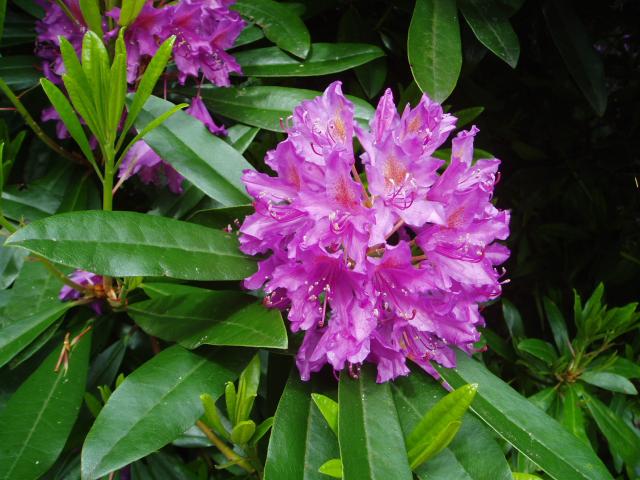 Rhododendron
A vast group of shrubs and trees with showy blooms in many colours
🇳🇵 Nepal and 4 more · Wildflower
Rhododendron
A vast group of shrubs and trees with showy blooms in many colours
🇳🇵 Nepal and 4 more · Wildflower
 Erica
Evergreen shrubs with tiny needle leaves and nodding flowers, known as heaths or heathers
🇿🇦 South Africa and 1 more · Wildflower
Erica
Evergreen shrubs with tiny needle leaves and nodding flowers, known as heaths or heathers
🇿🇦 South Africa and 1 more · Wildflower
 Rhododendron aureum
A low evergreen shrub with pale yellow spring flowers from northeastern Asia
🇨🇳 China and 2 more · Wildflower
Rhododendron aureum
A low evergreen shrub with pale yellow spring flowers from northeastern Asia
🇨🇳 China and 2 more · Wildflower
 Common rhododendronRhododendron ponticum
A dense evergreen shrub with violet-purple flowers from Europe and the Caucasus
🇵🇹 Portugal and 6 more · Flowering shrub
Common rhododendronRhododendron ponticum
A dense evergreen shrub with violet-purple flowers from Europe and the Caucasus
🇵🇹 Portugal and 6 more · Flowering shrub
More from Bhutan
All the flowers of Bhutan Iris tectorum鸢尾
A blue or white iris once grown on rooftops in China and Japan
🇨🇳 China and 5 more · Wildflower
Iris tectorum鸢尾
A blue or white iris once grown on rooftops in China and Japan
🇨🇳 China and 5 more · Wildflower
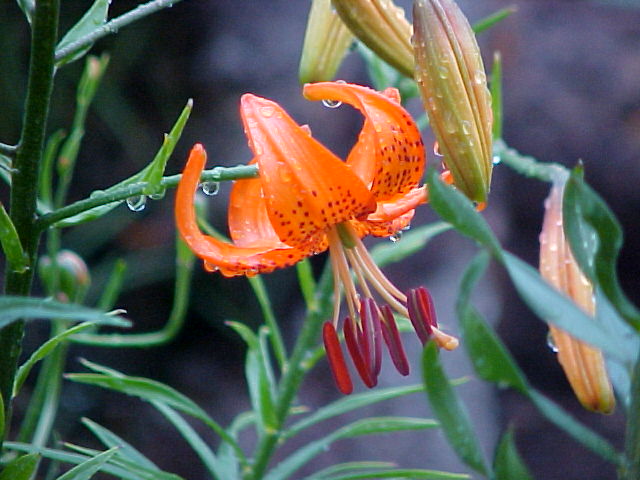 Lilium davidii
A tall Asian lily with edible bulbs and orange recurved flowers
🇨🇳 China and 1 more · Wildflower
Lilium davidii
A tall Asian lily with edible bulbs and orange recurved flowers
🇨🇳 China and 1 more · Wildflower
 StelleraStellera chamaejasme
A poisonous alpine flower of Central and East Asia, grown for its showy heads
🇨🇳 China and 5 more · Wildflower
StelleraStellera chamaejasme
A poisonous alpine flower of Central and East Asia, grown for its showy heads
🇨🇳 China and 5 more · Wildflower
 Prickly blue poppyMeconopsis horridula
A spiny blue poppy from the high Himalayas and western China
🇮🇳 India and 4 more · Wildflower
Prickly blue poppyMeconopsis horridula
A spiny blue poppy from the high Himalayas and western China
🇮🇳 India and 4 more · Wildflower