
Rhododendron fauriei
A rhododendron with pale red to white flowers from Japan and Korea
Rhododendron fauriei is a species of rhododendron found in Japan and Korea. Its flowers range from light red to white, and a double-flowered form is known locally as Nemoto-shakunage. The species is linked to Fukushima, where it is the prefectural flower.
- Native to Japan and Korea
- Flowers range from light red to white
- Double-flowered form called Nemoto-shakunage
- Official flower of Fukushima Prefecture
What does Rhododendron fauriei look like?
Rhododendron fauriei is a shrub that produces flowers in shades from light red to white. The blooms can be single or, in some forms, double. The leaves and overall shape are typical of rhododendrons, with clusters of blossoms appearing above the foliage. The double-flowered form, known as Nemoto-shakunage in Japan, is especially noted for its fuller blooms.
Where does Rhododendron fauriei come from?
This species is native to Japan and Korea, where it grows in the wild. Over time, it has also been cultivated in gardens. The double-flowered form, Nemoto-shakunage, is recognized in Japan and has a special connection to Fukushima, where it was chosen as the official prefectural flower in 1955. The plant belongs to the larger Rhododendron group, which is widely grown in temperate regions.
When and how Rhododendron fauriei blooms
Rhododendron fauriei blooms naturally in its native range and is grown as a garden shrub. It is typically planted in well-drained soil and prefers cool, temperate climates. The double-flowered Nemoto-shakunage form is selected for its ornamental value and is often cultivated for display in gardens and parks.


How Rhododendron fauriei is used
People grow Rhododendron fauriei for its attractive flowers, both in gardens and as part of natural landscapes. In Fukushima, the double-flowered form is celebrated as the prefectural flower, symbolizing the region. Its main uses are ornamental, and it is valued for its showy spring or early summer blooms.
Kinds of Rhododendron fauriei
A notable variation is the double-flowered form called Rhododendron brachycarpum f. nemotoanum, or Nemoto-shakunage. This form is especially popular in Japan and is distinct for its fuller, more layered flowers compared to the typical single-flowered type.
What Rhododendron fauriei means
Rhododendron fauriei holds cultural importance in Fukushima, Japan, where its double-flowered form was named the official prefectural flower in 1955. This recognition highlights its role as a regional emblem and its presence in local gardens and public spaces.
Where Rhododendron fauriei is used and seen
 Parc Floral de la SourceA large public garden in Orléans built around the source of the Loiret river
 Kórnik ArboretumPoland’s oldest and largest collection of trees and shrubs, near Kórnik Castle
 Abkhazi GardenA one-acre garden in Victoria, British Columbia, created by Prince and Princess Abkhazi
 Holden ArboretumA vast botanical garden and arboretum in Kirtland, Ohio
 Roan MountainA high Appalachian massif known for rhododendrons and grassy summits
 Powell GardensA 970-acre botanical garden near Kansas City, Missouri
 Dandenong Ranges Botanic GardenA cool-climate garden in the hills near Melbourne, famous for rhododendrons and cherry blossom
 Parc floral de ParisA botanical garden and flower park in the Bois de Vincennes, Paris
Questions people ask about Rhododendron fauriei
Where does Rhododendron fauriei come from?
Rhododendron fauriei is native to Japan and Korea, where it grows both in the wild and in gardens.
What does the flower look like?
Its flowers range from light red to white, and there is a double-flowered form with fuller blooms known as Nemoto-shakunage.
Is Rhododendron fauriei used as a symbol anywhere?
Yes, the double-flowered form called Nemoto-shakunage is the official prefectural flower of Fukushima in Japan.
How is Rhododendron fauriei grown?
It is grown as a garden shrub in temperate climates, preferring well-drained soil and cool conditions.
Good reading and sources
- Plants of the World OnlineRoyal Botanic Gardens, Kew, Plant database
- Where it has been recordedGBIF, Plant database
- Sightings and photos by naturalistsiNaturalist, Plant database
- Rhododendron fauriei on WikipediaEncyclopedia
- More photos on Wikimedia CommonsPhotos
- Wikidata recordOpen data
The facts on this page come from the Wikipedia article "Rhododendron fauriei", written by its contributors and used under the CC BY-SA 4.0 licence, and from its Wikidata record (CC0). Phool rewrote the text in its own words, with AI assistance, and compares every page with the article to make sure no passage is copied. It may be reused under the same CC BY-SA 4.0 licence with a link back.
It may contain mistakes. It is not medical or foraging advice: many flowers are poisonous, and traditional uses are reported, not recommended. If something is wrong, tell us. Last refreshed 2026-10-03.
Others in the family Ericaceae
The whole family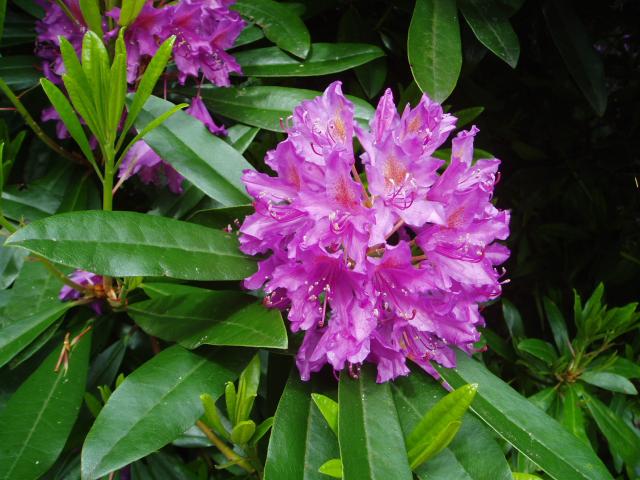 Rhododendron
A vast group of shrubs and trees with showy blooms in many colours
🇳🇵 Nepal and 4 more · Wildflower
Rhododendron
A vast group of shrubs and trees with showy blooms in many colours
🇳🇵 Nepal and 4 more · Wildflower
 Erica
Evergreen shrubs with tiny needle leaves and nodding flowers, known as heaths or heathers
🇿🇦 South Africa and 1 more · Wildflower
Erica
Evergreen shrubs with tiny needle leaves and nodding flowers, known as heaths or heathers
🇿🇦 South Africa and 1 more · Wildflower
 Rhododendron aureum
A low evergreen shrub with pale yellow spring flowers from northeastern Asia
🇨🇳 China and 2 more · Wildflower
Rhododendron aureum
A low evergreen shrub with pale yellow spring flowers from northeastern Asia
🇨🇳 China and 2 more · Wildflower
 Common rhododendronRhododendron ponticum
A dense evergreen shrub with violet-purple flowers from Europe and the Caucasus
🇵🇹 Portugal and 6 more · Flowering shrub
Common rhododendronRhododendron ponticum
A dense evergreen shrub with violet-purple flowers from Europe and the Caucasus
🇵🇹 Portugal and 6 more · Flowering shrub
More from Japan
All the flowers of Japan PeachPrunus persica
A flowering fruit tree from China, grown for its pink blossoms and sweet fruit
🇨🇳 China and 7 more · Flowering tree
PeachPrunus persica
A flowering fruit tree from China, grown for its pink blossoms and sweet fruit
🇨🇳 China and 7 more · Flowering tree
 BirchBetula
Slender trees with papery bark found across the northern world
🇨🇳 China and 7 more · Wildflower
BirchBetula
Slender trees with papery bark found across the northern world
🇨🇳 China and 7 more · Wildflower
 Chrysanthemum菊花
Autumn-blooming flower with thousands of varieties, cherished in East Asia and beyond
🇨🇳 China and 6 more · Wildflower
Chrysanthemum菊花
Autumn-blooming flower with thousands of varieties, cherished in East Asia and beyond
🇨🇳 China and 6 more · Wildflower
 Sacred lotusNelumbo nucifera
The pink aquatic flower sacred in Asia and grown for food, worship and beauty
🇮🇳 India and 7 more · Water flower
Sacred lotusNelumbo nucifera
The pink aquatic flower sacred in Asia and grown for food, worship and beauty
🇮🇳 India and 7 more · Water flower