🇺🇦 The flowers of Ukraine
25 pages from Ukraine: its flowers, the things made with them and the places to see them, across 8 cities and regions.
Ukraine’s flowers grow across forests, steppes, mountains, and Mediterranean-like coasts. The country is a meeting point for northern, steppe, and southern European plants. While it has few flowers found nowhere else, Ukraine is known for its wild meadows, alpine blooms, and Mediterranean shrubs along the Crimean coast.
- Ukraine has six major plant regions, from forests to steppe to Mediterranean coast.
- The Carpathian and Crimean mountains have alpine meadows with wildflowers.
- The southern Crimean coast grows oleander, olive, cypress, and palm trees.
- Ukraine has few endemic plant species despite its size.
- 33 Ramsar wetlands and many reserves protect native flora.
The plant life of Ukraine
Ukraine’s plant life reflects its varied climate and geography. Forests, steppes, and mountain meadows each support their own mix of flowering plants. Deciduous trees such as oak, birch, and beech are common, with conifers like pine and spruce in the mountains. The northwest is heavily forested, while the southeast is open steppe. The southern Crimean coast has a Mediterranean feel, with shrubs and evergreen plants. Although Ukraine covers a large area, it has relatively few plants found only within its borders.
From region to region in Ukraine
Plant life changes sharply from region to region. The northwest is dense with pine and oak forests. The central belt blends forest and steppe, with oaks, hornbeams, and pines. The southeast is mainly steppe, open grassland with scattered trees. The Carpathian and Crimean mountains host mixed forests on lower slopes, pine woods higher up, and alpine meadows at the top. The southern Crimean coast features Mediterranean plants like oleander, olive, cypress, and palms.
Flowers to know in Ukraine
Ukraine’s wildflowers are most visible in its meadows and mountain areas. Alpine meadows in the Carpathians bloom with mountain flowers in summer. The Crimean coast stands out for Mediterranean shrubs such as oleander and evergreen trees. While there are only a few endemic (unique) species, the country’s mix of European, steppe, and Mediterranean plants is distinctive.
Threats and protection in Ukraine
Ukraine protects its plant life through 33 Ramsar wetlands, three biosphere reserves, and many national parks. Human activity has changed the natural vegetation, but large areas remain under protection. The Chornobyl exclusion zone, abandoned by people, now supports abundant wild plants. Conservation efforts focus on preserving habitats and rare species, especially in wetlands and mountain regions.
The facts in this overview come from the Wikipedia article "Wildlife of Ukraine", written by its contributors and used under the CC BY-SA 4.0 licence. Phool rewrote the text in its own words, with AI assistance, and compares every page with the article to make sure no passage is copied. It may be reused under the same CC BY-SA 4.0 licence with a link back.
 Fringed pinkDianthus superbus
A wild pink flower with deeply fringed petals and a sweet scent
🇫🇷 France and 6 more · Wildflower
Fringed pinkDianthus superbus
A wild pink flower with deeply fringed petals and a sweet scent
🇫🇷 France and 6 more · Wildflower
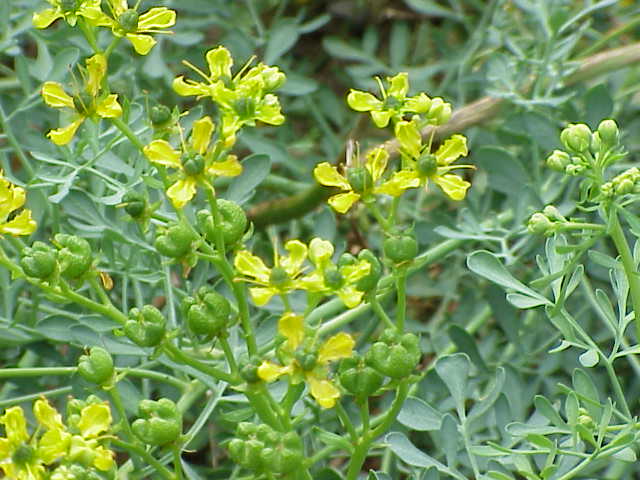 Common rueRuta graveolens
A strong-scented Mediterranean herb with blue-green leaves and yellow flowers
🇱🇹 Lithuania and 8 more · Wildflower
Common rueRuta graveolens
A strong-scented Mediterranean herb with blue-green leaves and yellow flowers
🇱🇹 Lithuania and 8 more · Wildflower
 Greater Pasque FlowerPulsatilla grandis
A violet spring flower of open meadows and hillsides in central Europe
🇫🇷 France and 7 more · Wildflower
Greater Pasque FlowerPulsatilla grandis
A violet spring flower of open meadows and hillsides in central Europe
🇫🇷 France and 7 more · Wildflower
Photo credits on this page
The small pictures above come from Wikimedia Commons under free licences. Some are cropped to fit.
- Fringed pink: Roger Culos, CC BY-SA 3.0, source
- Common rue: Kurt Stüber [1], CC BY-SA 3.0, source
- Greater Pasque Flower: Eleassar, CC BY-SA 3.0, source
- Ukraine: Аимаина хикари, CC0, source