
Italian garden
In its own language: giardino all'italiana
A formal garden style born in Renaissance Italy
The Italian garden is a structured landscape design that extends the geometry of a villa into nature. Originating in 15th-century Italy, it features terraces, fountains, clipped hedges, and axial views, and influenced French and English formal gardens.
- Began in 15th-century Italy during the Renaissance
- Based on descriptions of ancient Roman gardens
- Features terraces, fountains, and geometric planting
- Influenced French formal gardens like Versailles
- Oldest surviving example is at Villa Medici, Fiesole
What is Italian garden?
An Italian garden is a highly ordered outdoor space linked to a villa or palace. It uses straight lines, symmetry, and level changes through terraces. Common elements include geometric flowerbeds, evergreen hedges shaped into cones or spheres, fountains, statues, grottoes, and long sightlines that draw the eye outward to the surrounding landscape.
Where does Italian garden come from?
This garden style arose in late 15th-century Italy during the Renaissance. Designers looked back to ancient Roman models described by Pliny the Younger and others. They sought to recreate classical ideals of harmony and proportion. The earliest surviving example is at the Medici Villa in Fiesole, built between 1455 and 1461.
How Italian garden is made
Italian gardens are built on sloping land, using retaining walls to create flat terraces connected by stairs or ramps. Water features like fountains and cascades are fed by gravity-fed channels. Plants are chosen for structure and form, often boxwood, cypress, laurel, and orange trees, trimmed precisely to reinforce geometry rather than for seasonal bloom.


When and where Italian garden is used
Originally made for wealthy families like the Medici, these gardens served as places for quiet reflection, scholarly discussion, and display of power. Today, historic examples are preserved as cultural landmarks. The style is also recreated worldwide as a symbol of Mediterranean elegance and classical order.
Forms of Italian garden
Early versions, like at Fiesole, were modest and contemplative. Later ones, such as the Vatican’s Cortile del Belvedere or Villa di Castello, became grand theatrical spaces filled with sculpture and hydraulic marvels. Regional differences arose due to Italy’s varied climate, from alpine north to arid south.
What Italian garden means
The Italian garden shaped European landscape design for centuries. It directly inspired the French formal garden, seen at Versailles. Though many original Italian gardens were later altered into English-style landscapes, their core principles, symmetry, axial planning, and integration with architecture, remain influential in garden history.
Questions people ask about Italian garden
Where did the Italian garden originate?
It originated in Italy during the late 15th century, inspired by rediscovered writings about Roman gardens and classical ideals of order and beauty.
What are the key features of an Italian garden?
Terraces, axial symmetry, geometric beds, clipped evergreens, fountains, statues, and long views that connect the villa to the surrounding landscape.
How did it influence other garden styles?
It directly shaped the French formal garden, especially through designers like Le Nôtre, and early English gardens adopted its water features and layout principles.
Are Italian gardens still made today?
Historic examples are preserved as heritage sites, and the style is often recreated globally using Mediterranean plants and formal geometry.
Good reading and sources
- Italian garden on WikipediaEncyclopedia
- More photos on Wikimedia CommonsPhotos
- Wikidata recordOpen data
The facts on this page come from the Wikipedia article "Italian garden", written by its contributors and used under the CC BY-SA 4.0 licence, and from its Wikidata record (CC0). Phool rewrote the text in its own words, with AI assistance, and compares every page with the article to make sure no passage is copied. It may be reused under the same CC BY-SA 4.0 licence with a link back.
It may contain mistakes. If something is wrong, tell us. Last refreshed 2026-10-03.
More of the same kind
 Decoration
Korean garden
A natural garden style shaped by rocks, ponds, and harmony with the land
🇰🇷 South Korea and 5 more · Garden style
Decoration
Korean garden
A natural garden style shaped by rocks, ponds, and harmony with the land
🇰🇷 South Korea and 5 more · Garden style
 Decoration
Islamic garden
A walled garden of water, shade and scent inspired by paradise
🇮🇷 Iran and 5 more · Garden style
Decoration
Islamic garden
A walled garden of water, shade and scent inspired by paradise
🇮🇷 Iran and 5 more · Garden style
 Decoration
Mughal garden
A formal garden style of pools, canals, and symmetry from the Mughal era
🇮🇳 India and 3 more · Garden style
Decoration
Mughal garden
A formal garden style of pools, canals, and symmetry from the Mughal era
🇮🇳 India and 3 more · Garden style
 Decoration
Bonsai盆栽
The Japanese art of shaping miniature trees in shallow pots
🇯🇵 Japan and 7 more · Art or design
Decoration
Bonsai盆栽
The Japanese art of shaping miniature trees in shallow pots
🇯🇵 Japan and 7 more · Art or design
More from Italy
All the flowers of Italy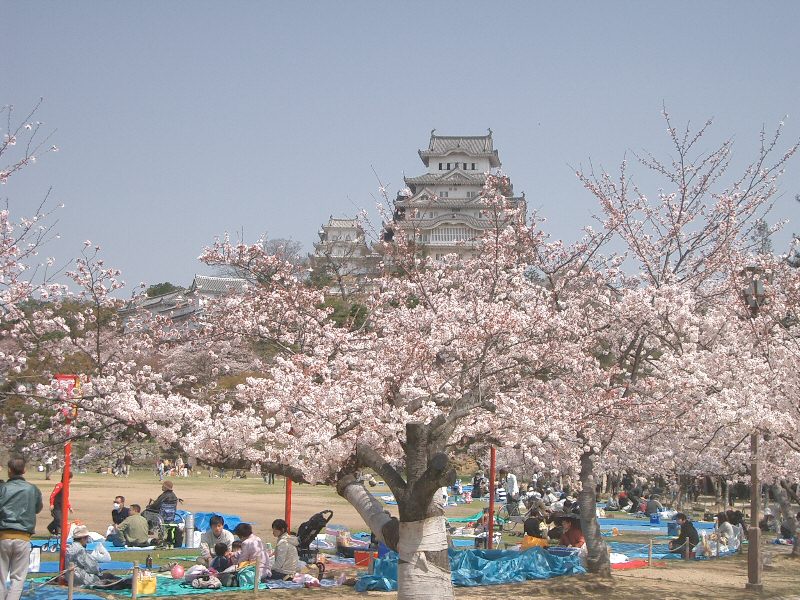 Decoration
Hanami花見
The Japanese tradition of gathering to enjoy cherry blossoms in spring
🇯🇵 Japan and 7 more · Custom, Jan to May
Decoration
Hanami花見
The Japanese tradition of gathering to enjoy cherry blossoms in spring
🇯🇵 Japan and 7 more · Custom, Jan to May
 Decoration
May Day Festival
A spring festival with flowers, greenery, maypoles and bonfires on the first of May
🇮🇪 Ireland and 5 more · Custom, May
Decoration
May Day Festival
A spring festival with flowers, greenery, maypoles and bonfires on the first of May
🇮🇪 Ireland and 5 more · Custom, May
 Decoration
May devotions to the Blessed Virgin Mary
Month-long Catholic customs honouring Mary with flowers, altars, and processions
🇮🇹 Italy and 7 more · Custom, May
Decoration
May devotions to the Blessed Virgin Mary
Month-long Catholic customs honouring Mary with flowers, altars, and processions
🇮🇹 Italy and 7 more · Custom, May
 Decoration
Arabesque
A rhythmic pattern of scrolling foliage and lines in Islamic and European art
🇪🇬 Egypt and 3 more · Art or design
Decoration
Arabesque
A rhythmic pattern of scrolling foliage and lines in Islamic and European art
🇪🇬 Egypt and 3 more · Art or design