
Rockery
A garden feature with rocks, gravel, and plants suited to dry, stony ground
A rockery is a garden feature made with rocks, stones, and gravel, planted with species that thrive in well-drained soil. These gardens often use alpine plants and can be designed to look like natural rocky outcrops or as stylized dry landscapes, as in Japanese Zen gardens.
- Rockeries use rocks, gravel, and plants that need little water
- Japanese Zen gardens are a special type of rockery with raked gravel and few plants
- Victorian England saw a craze for building rock gardens with alpine plants
- Chinese gardens value large, fantastically shaped rocks
- Modern rockeries are popular in tropical countries for easy maintenance
What is Rockery?
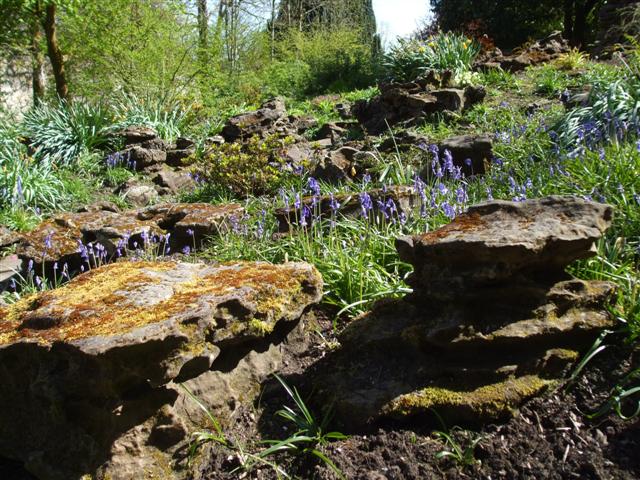
A rockery is a part of a garden where rocks, stones, and gravel are arranged to create a natural-looking or stylized landscape. Plants that thrive in these settings are usually small, hardy species that need little soil or water, such as alpine plants. Some rockeries are designed to mimic natural rock outcrops, with stones placed to suggest layers of bedrock and plants tucked into crevices. Others, like Japanese dry gardens, use gravel and a few large rocks, sometimes with no plants at all.
Where does Rockery come from?
Rock gardens have a long history, with roots in Chinese and Japanese gardens over 1,500 years ago, where rocks were valued for their decorative and symbolic meaning. In Europe, early rockeries from the late 17th century used exotic minerals and shells, but by the 19th century, the focus shifted to growing alpine plants. Victorian England saw a craze for rock gardens, with firms supplying complete rockeries. Japanese dry gardens, or Zen gardens, developed as a distinct style, using rocks and gravel to create serene landscapes.
How Rockery is made
To make a rockery, rocks and stones are arranged in piles or layers, leaving gaps for planting. The soil is well-drained, and the plants chosen are usually low-growing species suited to dry, stony ground. In woodland rock gardens, small trees or shrubs may be added for shade. Japanese rock gardens use raked gravel and a few large rocks, often without any plants. Modern rockeries may use plastic liners to control unwanted growth and improve drainage.


When and where Rockery is used
Rockeries are found in private gardens, public parks, and commercial landscapes. They are valued for their appearance and for making use of dry or sloped ground. In tropical countries, rockeries help with drainage and are easy to maintain. In Canada, they can help cool yards in summer. Japanese dry gardens are used for contemplation and meditation. Some famous rockeries, like the one in Chandigarh, India, have become tourist attractions.
Forms of Rockery
Western rockeries include alpine gardens and scree gardens, which use different sizes of stones and plant types. Japanese rock gardens, or Zen gardens, focus on rocks and gravel with few or no plants. Chinese gardens feature large, fantastically shaped rocks. Woodland rock gardens use small trees and shrubs for shade. Materials and styles vary by region and tradition.
What Rockery means
Rockeries are linked to garden traditions in China, Japan, and Europe. In China and Japan, rocks have symbolic meaning and are used in both outdoor and indoor displays. The Victorian era in England saw rockeries become fashionable, especially for growing alpine plants. Japanese Zen gardens are known for their calm and simplicity. Collecting rocks and plants from the wild for rockeries has led to legal protections in some places.
Questions people ask about Rockery
What is a rockery?
A rockery is a garden feature made with rocks, stones, and gravel, planted with species that grow well in dry, well-drained soil. It can be designed to look natural or stylized, and often uses alpine plants.
Where did rockeries originate?
Rockeries have a long history in Chinese and Japanese gardens, where rocks were used decoratively and symbolically for over 1,500 years. In Europe, they became popular in the 18th and 19th centuries, especially for growing alpine plants.
What kinds of plants are used in rockeries?
Most rockeries use small, hardy plants that thrive in well-drained, stony soil, such as alpine plants and ferns. Some styles, like Japanese Zen gardens, use very few or no plants at all.
Are rockeries used for anything besides decoration?
Yes, rockeries can help with garden drainage, make use of dry or sloped areas, and in some climates, help cool yards. Japanese rock gardens are also used for meditation and contemplation.
What is special about Japanese rock gardens?
Japanese rock gardens, or Zen gardens, use a few large rocks and raked gravel to create a calm, stylized landscape. They often have no plants and are designed for quiet reflection.
Good reading and sources
The facts on this page come from the Wikipedia article "Rock garden", written by its contributors and used under the CC BY-SA 4.0 licence, and from its Wikidata record (CC0). Phool rewrote the text in its own words, with AI assistance, and compares every page with the article to make sure no passage is copied. It may be reused under the same CC BY-SA 4.0 licence with a link back.
It may contain mistakes. If something is wrong, tell us. Last refreshed 2026-10-03.
More of the same kind
 Decoration
Islamic garden
A walled garden of water, shade and scent inspired by paradise
🇮🇷 Iran and 5 more · Garden style
Decoration
Islamic garden
A walled garden of water, shade and scent inspired by paradise
🇮🇷 Iran and 5 more · Garden style
 Decoration
Mughal garden
A formal garden style of pools, canals, and symmetry from the Mughal era
🇮🇳 India and 3 more · Garden style
Decoration
Mughal garden
A formal garden style of pools, canals, and symmetry from the Mughal era
🇮🇳 India and 3 more · Garden style
 Decoration
Trellis
An open lattice framework for supporting climbing plants
Garden style
Decoration
Trellis
An open lattice framework for supporting climbing plants
Garden style
 Decoration
Korean garden
A natural garden style shaped by rocks, ponds, and harmony with the land
🇰🇷 South Korea and 5 more · Garden style
Decoration
Korean garden
A natural garden style shaped by rocks, ponds, and harmony with the land
🇰🇷 South Korea and 5 more · Garden style
More from Japan
All the flowers of Japan Decoration
Dry landscape garden枯山水
A Japanese garden of rocks, moss, and raked gravel for meditation
🇯🇵 Japan · Garden style
Decoration
Dry landscape garden枯山水
A Japanese garden of rocks, moss, and raked gravel for meditation
🇯🇵 Japan · Garden style
 Decoration
Kokedama苔玉
A Japanese moss ball with a plant growing from it, displayed or hung as living decor
🇯🇵 Japan · Arrangement
Decoration
Kokedama苔玉
A Japanese moss ball with a plant growing from it, displayed or hung as living decor
🇯🇵 Japan · Arrangement
 Decoration
Bonsai盆栽
The Japanese art of shaping miniature trees in shallow pots
🇯🇵 Japan and 7 more · Art or design
Decoration
Bonsai盆栽
The Japanese art of shaping miniature trees in shallow pots
🇯🇵 Japan and 7 more · Art or design
 Decoration
Kusamono and shitakusa草物, 下草
Japanese potted plant displays shown alone or with bonsai
🇯🇵 Japan · Arrangement
Decoration
Kusamono and shitakusa草物, 下草
Japanese potted plant displays shown alone or with bonsai
🇯🇵 Japan · Arrangement