Aerangis
A genus of star-shaped, night-scented orchids from tropical Africa and nearby islands
Aerangis is a group of small orchids with star-like, waxy flowers, mainly found in tropical Africa, the Comoro Islands, Madagascar, and Sri Lanka. Their blooms are usually white, cream, or yellow, and release a pleasant scent at night. These orchids are mostly epiphytes and are known for their long, nectar-filled spurs.
- Aerangis orchids have star-shaped, waxy flowers with long nectar spurs.
- Most species are native to tropical Africa, with some in Madagascar and Sri Lanka.
- Their flowers release a pleasant scent during the night.
- About 50 species are known, but only around 15 are commonly grown.
- Aerangis is the type genus of its orchid subtribe.
What does Aerangis look like?
Aerangis orchids are small plants that often grow on trees (epiphytic) or rocks (lithophytic). They have six to ten fleshy, evergreen leaves with parallel veins. Their flowers are large for the plant’s size, waxy, and shaped like stars, usually in shades of white, cream, or yellow. The flowers are arranged on a long stem, and each one has a flat lip similar to its petals and sepals. A long, nectar-filled spur extends from the flower, sometimes longer than the flower itself. At night, the flowers release a pleasant fragrance.
Where does Aerangis come from?
The genus Aerangis was described in 1865 by Heinrich Gustav Reichenbach, with Aerangis flabellifolia as the type species. Its name comes from Greek, meaning 'air urn,' which refers to the shape of the flower’s lip. Aerangis species are native mostly to tropical Africa, but some are found on the Comoro Islands, Madagascar, and Sri Lanka. These orchids are adapted to humid, forested environments, growing mainly on trees or rocks.
When and how Aerangis blooms
Aerangis orchids bloom on long racemes, with many flowers opening along a single stem. They are typically grown as ornamental plants, though they are not common in collections. Around 15 species are regularly available to growers. These orchids thrive in humid conditions and are usually grown mounted or in well-draining media. They can be propagated from seed or by division.
How Aerangis is used
Aerangis orchids are mainly grown for their attractive, star-shaped flowers and their strong night-time scent. They are kept as ornamental plants by enthusiasts and collectors. Their unique appearance and fragrance make them a choice for home decoration, though they are not widely used in commercial floristry.
Kinds of Aerangis
There are about 50 species in the Aerangis genus. Some species are more commonly grown and available than others. Aerangis has also been used in intergeneric hybridization, resulting in hybrids such as ×Aerangaeris, ×Amesangis, and ×Angrangis, among others. These hybrids combine traits from Aerangis and related orchid genera.
What Aerangis means
Aerangis orchids are valued for their star-shaped flowers and night fragrance. While not widely used in cultural or religious practices, they are appreciated by orchid collectors and growers. The genus is important in orchid taxonomy as the type genus of its subtribe. Its name and unique floral structure are noted in botanical literature.
Questions people ask about Aerangis
Where do Aerangis orchids come from?
Aerangis orchids are mostly native to tropical Africa, but some species are also found in the Comoro Islands, Madagascar, and Sri Lanka.
What do Aerangis flowers look like?
Their flowers are star-shaped, waxy, and usually white, cream, or yellow. Each flower has a long, nectar-filled spur and is arranged on a long stem.
Do Aerangis orchids have a scent?
Yes, Aerangis flowers give off a pleasant fragrance at night.
How are Aerangis orchids used?
They are mainly grown as ornamental plants for their attractive flowers and fragrance, mostly by collectors and enthusiasts.
Are there different types of Aerangis?
Yes, there are about 50 species in the genus, and several intergeneric hybrids have also been created with related orchids.
Good reading and sources
- Plants of the World OnlineRoyal Botanic Gardens, Kew, Plant database
- Where it has been recordedGBIF, Plant database
- Sightings and photos by naturalistsiNaturalist, Plant database
The facts on this page come from the Wikipedia article "Aerangis", written by its contributors and used under the CC BY-SA 4.0 licence, and from its Wikidata record (CC0). EveryPhool rewrote the text in its own words, with AI assistance, and compares every page with the article to make sure no passage is copied. It may be reused under the same CC BY-SA 4.0 licence with a link back.
It may contain mistakes. It is not medical or foraging advice: many flowers are poisonous, and traditional uses are reported, not recommended. If something is wrong, tell us. Last refreshed 2026-10-03.
Others in the family Orchidaceae
The whole family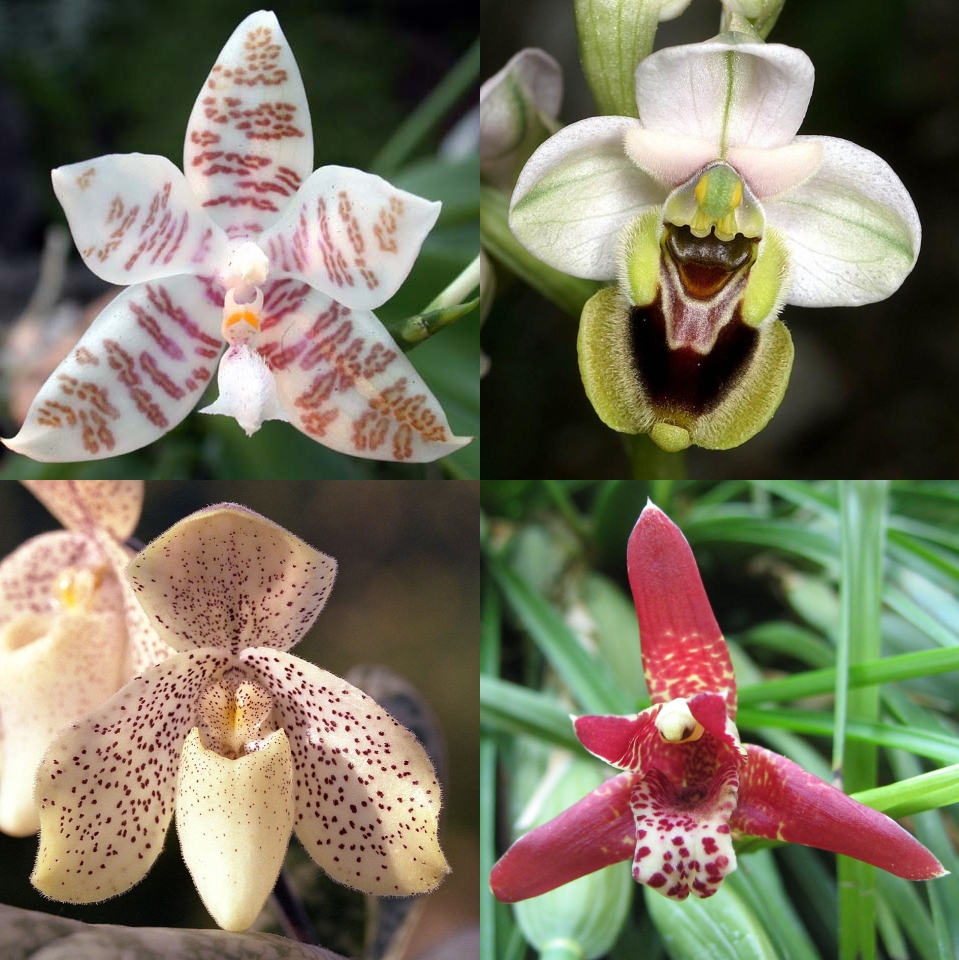 OrchidOrchidaceae
A vast family of colourful, often fragrant flowers found almost everywhere on earth
Orchidaceae · Wildflower
OrchidOrchidaceae
A vast family of colourful, often fragrant flowers found almost everywhere on earth
Orchidaceae · Wildflower
 Vanilla
Climbing orchids with pods used for the world’s most popular flavor
🇲🇽 Mexico and 7 more · Wildflower
Vanilla
Climbing orchids with pods used for the world’s most popular flavor
🇲🇽 Mexico and 7 more · Wildflower
 Orchis
A group of wild orchids with tuberous roots from Europe, North Africa and Asia
🇹🇷 Turkey and 7 more · Wildflower
Orchis
A group of wild orchids with tuberous roots from Europe, North Africa and Asia
🇹🇷 Turkey and 7 more · Wildflower
 VanillaVanilla planifolia
The climbing orchid behind most of the world’s vanilla flavour
🇲🇽 Mexico and 8 more · Wildflower
VanillaVanilla planifolia
The climbing orchid behind most of the world’s vanilla flavour
🇲🇽 Mexico and 8 more · Wildflower