Orchid
Orchidaceae, family Orchidaceae
A vast family of colourful, often fragrant flowers found almost everywhere on earth
Orchids are a huge family of flowering plants with about 28,000 species in 700 genera. Their blooms are often colourful and sometimes scented, with many species growing on trees in tropical regions, but orchids are found on every continent except Antarctica. People grow them for their striking flowers, and many societies have formed around their cultivation.
- Orchids make up about 6–11% of all seed plant species
- Most orchids need fungi to germinate their tiny seeds
- Many orchids grow on trees as epiphytes
- Orchid flowers often have a specialized lip to attract pollinators
What does Orchid look like?
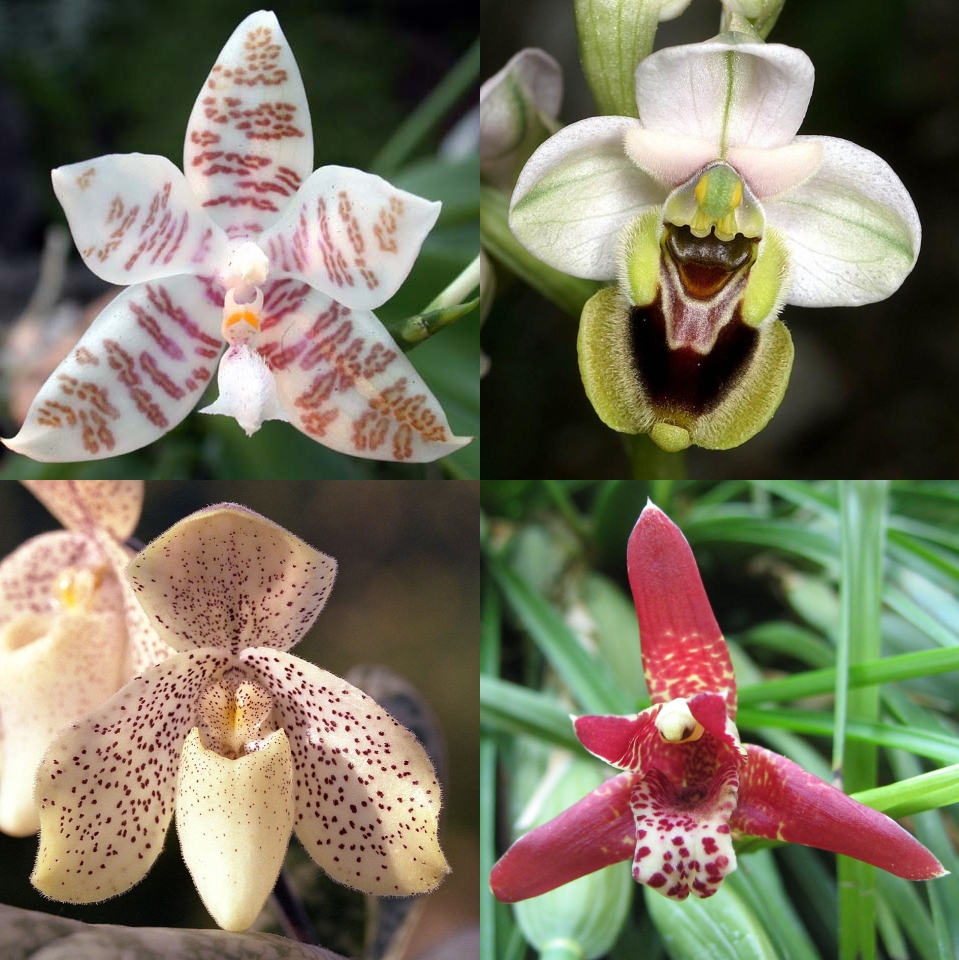
Orchids are perennial herbs with no permanent woody parts. Their flowers are usually bilaterally symmetrical, with three sepals and three petals, one of which forms a distinct lip or labellum. The flowers can be colourful and sometimes have a strong or subtle scent. Many orchids grow on trees (epiphytes), with aerial roots covered in a spongy layer called velamen. Some have swollen stems called pseudobulbs. Leaves are often simple, with parallel veins, and can be arranged in two rows or spirals. Some orchids are leafless and photosynthesise through their roots.
Where does Orchid come from?
The orchid family is ancient, with fossil evidence dating back 15–20 million years and genetic studies suggesting origins up to 100 million years ago. Orchids likely originated in the supercontinent Laurasia. They are now found worldwide, with the greatest variety in the tropics. The family was formally named Orchidaceae in the 18th century, and the word 'orchid' comes from the Greek for 'testicle', referring to the shape of some tubers.
When and how Orchid blooms
Orchids flower in various seasons depending on the species. They can grow in soil or on trees, and most need a partnership with fungi to germinate their tiny, dust-like seeds. Some reproduce by producing plantlets, called keiki, from their stems. Flowers are pollinated by insects, often through complex mechanisms involving colour, scent, or mimicry. After pollination, the ovary forms a capsule that releases many tiny seeds.


How Orchid is used
Orchids are grown worldwide for their decorative flowers, both as houseplants and cut flowers. Many societies and clubs are dedicated to their cultivation and breeding. Some species are used as emblems or symbols, and orchid shows are popular events. Their flowers are often given as gifts and used in home decoration.
Kinds of Orchid
There are about 28,000 species in roughly 700 genera, with many hybrids and cultivars bred by enthusiasts. Orchids vary greatly in size, shape, and colour. Some, like Phalaenopsis and Dendrobium, are popular in cultivation. Others, such as slipper orchids (Paphiopedilum), have unique flower shapes. Some orchids are leafless or rely entirely on fungi for food.
What Orchid means
Orchids are admired for their beauty and variety, inspiring clubs, societies, and shows around the world. The family is one of the largest among flowering plants. The name 'orchid' has roots in Greek and Middle English. Orchids are often symbols of beauty and rarity, and some regions use them as floral emblems. Their complex pollination has fascinated scientists since Darwin.
Where Orchid is used and seen
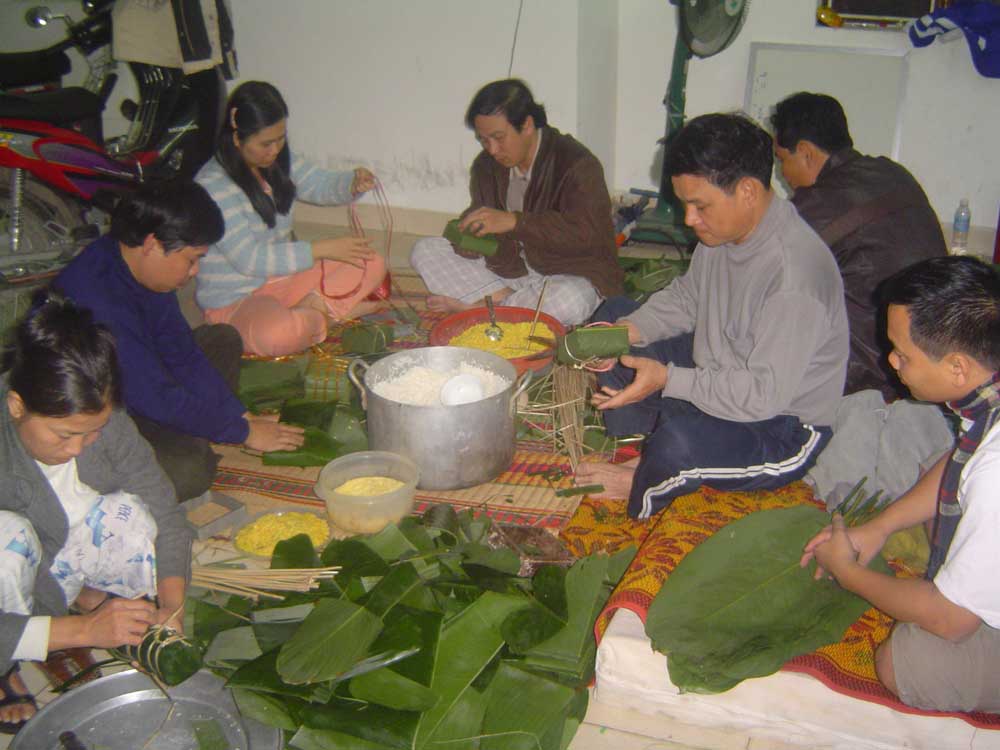 TếtVietnam's spring new year festival with flowers, family, and lucky customs
 Ward's LakeA man-made lake and garden in the heart of Shillong, Meghalaya
 China National Botanical GardenA vast botanical garden in Beijing with research, rare plants, and public displays
 Potatso National ParkA highland park of lakes, forests, and rare plants near Shangri-La, Yunnan
 Hong Kong Zoological and Botanical GardensA historic garden and zoo in Central, Hong Kong with themed plant collections
 Da LatVietnam’s highland city famous for flowers, cool climate, and French villas
 National Kandawgyi Botanical GardensA large botanical garden in the hill town of Pyin U Lwin, Myanmar
 BouquetA creative arrangement of flowers, given or displayed for many occasions
Where to see Orchid
 🇫🇷 Paris · All yearThe flower market on the Île de la CitéGreen iron pavilions of plants and flowers on the island at the centre of Paris, a short walk from Notre-Dame.
 🇵🇹 Funchal · All yearFlower sellers at the Mercado dos LavradoresFunchal's 1940 farmers' market, where women in striped Madeiran dress sell bird of paradise, proteas and orchids.
 🇩🇪 Konstanz · Mar to OctMainau, the flower island of Lake ConstanceA small island reached by a footbridge, planted as one large garden with a flower calendar from tulips to dahlias.
🇺🇸 Los Angeles · All yearThe Los Angeles Flower District at dawnSeveral blocks of wholesale flower halls in downtown Los Angeles, open to the public and busiest before sunrise.
🇩🇪 Konstanz · Mar to OctMainau, the flower island of Lake ConstanceA small island reached by a footbridge, planted as one large garden with a flower calendar from tulips to dahlias.
🇺🇸 Los Angeles · All yearThe Los Angeles Flower District at dawnSeveral blocks of wholesale flower halls in downtown Los Angeles, open to the public and busiest before sunrise. 🇺🇸 New York City · All yearThe flower block on West 28th StreetA single Manhattan block where wholesale florists put trees, branches and buckets of flowers out on the pavement each morning.
 🇺🇸 Kennett Square · All yearLongwood Gardens and its conservatoryThe former du Pont estate in Pennsylvania, with a vast glass conservatory, fountains and flower displays in every season.
Questions people ask about Orchid
Where do orchids come from?
Orchids are found on every continent except Antarctica, with the greatest diversity in the tropics. Their family likely originated in the ancient supercontinent Laurasia.
What do orchid flowers look like?
Orchid flowers are usually bilaterally symmetrical, with three sepals and three petals. One petal forms a distinct lip, and the flowers can be colourful and sometimes scented.
How do orchids reproduce?
Orchids often rely on insect pollinators attracted by colour, scent, or mimicry. Their seeds are tiny and need a fungal partner to germinate. Some can also produce plantlets from their stems.
Why are orchids special among plants?
Orchids are one of the largest and most diverse plant families, with highly specialized flowers and pollination methods. Their beauty and variety have inspired many growers and societies.
What do orchids symbolise?
Orchids are often seen as symbols of beauty and rarity. Some regions use them as floral emblems.
Good reading and sources
- Encyclopaedia BritannicaArticle
- Repotting Phalaenopsis (Moth) & Other Monopodial OrchidsMissouri Botanical Garden, Article
- BBC NEWS | Science/NatureBBC, Article
- Plants of the World OnlineRoyal Botanic Gardens, Kew, Plant database
- Where it has been recordedGBIF, Plant database
- Sightings and photos by naturalistsiNaturalist, Plant database
The facts on this page come from the Wikipedia article "Orchid", written by its contributors and used under the CC BY-SA 4.0 licence, and from its Wikidata record (CC0). Phool rewrote the text in its own words, with AI assistance, and compares every page with the article to make sure no passage is copied. It may be reused under the same CC BY-SA 4.0 licence with a link back.
It may contain mistakes. It is not medical or foraging advice: many flowers are poisonous, and traditional uses are reported, not recommended. If something is wrong, tell us. Last refreshed 2026-10-03.
Others in the family Orchidaceae
The whole family Vanilla
Climbing orchids with pods used for the world’s most popular flavor
🇲🇽 Mexico and 7 more · Wildflower
Vanilla
Climbing orchids with pods used for the world’s most popular flavor
🇲🇽 Mexico and 7 more · Wildflower
 Orchis
A group of wild orchids with tuberous roots from Europe, North Africa and Asia
🇹🇷 Turkey and 7 more · Wildflower
Orchis
A group of wild orchids with tuberous roots from Europe, North Africa and Asia
🇹🇷 Turkey and 7 more · Wildflower
 Blue orchidVanda coerulea
A rare orchid with long-lasting bluish purple flowers from Northeast India and Yunnan
🇮🇳 India and 2 more · Orchid
Blue orchidVanda coerulea
A rare orchid with long-lasting bluish purple flowers from Northeast India and Yunnan
🇮🇳 India and 2 more · Orchid
 Waling-walingVanda sanderiana
A rare orchid known as the 'Queen of Philippine flowers'
🇵🇭 Philippines · Orchid
Waling-walingVanda sanderiana
A rare orchid known as the 'Queen of Philippine flowers'
🇵🇭 Philippines · Orchid