
Lipstick plant
Aeschynanthus, family Gesneriaceae
Tropical trailing plants with vivid flowers that peek from tube-like calyces
Aeschynanthus is a group of around 150 evergreen tropical and subtropical plants, mostly epiphytic vines. Their showy blooms, often red or orange, emerge from dark calyces, giving some species the nickname 'lipstick plant'. They are grown indoors in cooler regions for their ornamental flowers.
- Flowers emerge from dark calyces like lipstick from a tube
- Most species are epiphytic vines in tropical forests
- Over 190 accepted species as of mid-2026
- Popular indoor plants in temperate climates
What does Lipstick plant look like?
These plants grow as trailing or climbing vines, often clinging to trees in humid forests. Their leaves vary, some thick and waxy, others soft and thin. The flowers are bright, tubular, and emerge from darker, cup-like calyces, resembling lipstick being pushed from its case.
Where does Lipstick plant come from?
Aeschynanthus belongs to the Gesneriaceae family and includes many species native to tropical Asia. The name combines Greek words meaning 'ashamed flower', possibly referring to how the bloom hides within its calyx before opening.
When and how Lipstick plant blooms
In cultivation, these plants need warmth, high humidity, and bright but indirect light. They thrive in well-drained soil kept lightly moist. Growth habits differ: some spread widely while others stay compact and trailing.
How Lipstick plant is used
Certain species, like A. radicans and A. pulcher, are popular as indoor ornamentals in temperate zones. Their striking flowers make them decorative houseplants, especially in hanging baskets where their vines can cascade.
Kinds of Lipstick plant
The genus shows wide diversity. A. speciosus grows large with bold foliage, while A. micranthus remains small and delicate. Over 190 species are currently recognized, each with unique leaf texture and flower shape.
What Lipstick plant means
Known mainly for horticultural appeal, Aeschynanthus has no noted religious or ceremonial role in the sources. Its cultural presence lies in its use as an attractive, easy-to-grow houseplant in non-tropical homes.
Questions people ask about Lipstick plant
Where does the lipstick plant come from?
It originates in tropical and subtropical regions of Asia, growing as an epiphyte on trees in humid forests.
Why is it called the lipstick plant?
The unopened flower buds push out from dark, tube-like calyces, resembling a lipstick emerging from its case.
How is it used by people?
Selected species are grown as ornamental houseplants in temperate areas, valued for their bright, unusual flowers.
What conditions does it need to grow?
It prefers warm, humid air, bright indirect light, and well-drained soil kept slightly moist.
Good reading and sources
- Plants of the World OnlineRoyal Botanic Gardens, Kew, Plant database
- Where it has been recordedGBIF, Plant database
- Sightings and photos by naturalistsiNaturalist, Plant database
- Aeschynanthus on WikipediaEncyclopedia
- More photos on Wikimedia CommonsPhotos
- Wikidata recordOpen data
The facts on this page come from the Wikipedia article "Aeschynanthus", written by its contributors and used under the CC BY-SA 4.0 licence, and from its Wikidata record (CC0). Phool rewrote the text in its own words, with AI assistance, and compares every page with the article to make sure no passage is copied. It may be reused under the same CC BY-SA 4.0 licence with a link back.
It may contain mistakes. It is not medical or foraging advice: many flowers are poisonous, and traditional uses are reported, not recommended. If something is wrong, tell us. Last refreshed 2026-10-03.
Others in the family Gesneriaceae
The whole family HaberleaHaberlea rhodopensis
A rare Balkan flower that revives after years without water
🇧🇬 Bulgaria and 1 more · Wildflower
HaberleaHaberlea rhodopensis
A rare Balkan flower that revives after years without water
🇧🇬 Bulgaria and 1 more · Wildflower
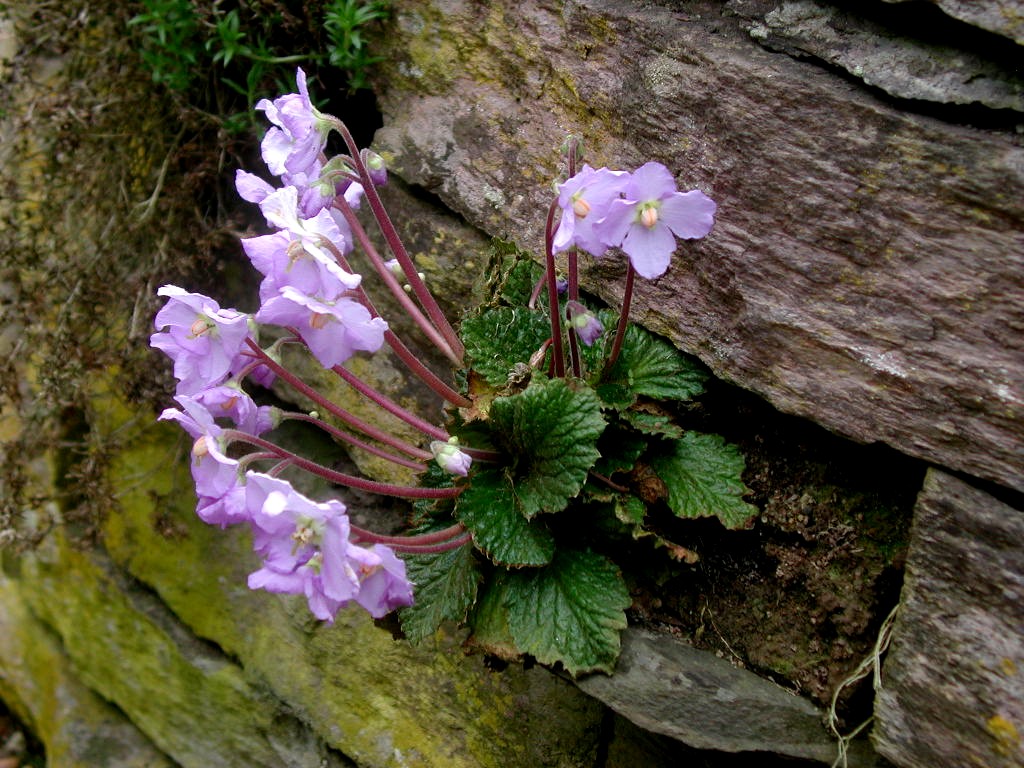 Ramonda nathaliaeНаталијина рамонда
A small Balkan flower that can survive drying out and revive with water
🇷🇸 Serbia and 2 more · Wildflower
Ramonda nathaliaeНаталијина рамонда
A small Balkan flower that can survive drying out and revive with water
🇷🇸 Serbia and 2 more · Wildflower
 African violetSaintpaulia
A small, velvety-leaved house plant with violet, blue or white flowers from East Africa
🇹🇿 Tanzania and 1 more · Wildflower
African violetSaintpaulia
A small, velvety-leaved house plant with violet, blue or white flowers from East Africa
🇹🇿 Tanzania and 1 more · Wildflower
 Brazilian gloxiniaSinningia speciosa
A tuberous houseplant with large, velvety flowers from Brazil
🇧🇷 Brazil and 1 more · Garden flower
Brazilian gloxiniaSinningia speciosa
A tuberous houseplant with large, velvety flowers from Brazil
🇧🇷 Brazil and 1 more · Garden flower