
Persian silk tree
Albizia julibrissin, family Fabaceae
A small tree with pink, silky starburst flowers and fern-like leaves
The Persian silk tree is a small deciduous tree from southwestern and eastern Asia, grown for its airy, pink, thread-like flowers and ferny leaves. It is planted in parks and gardens for its broad, spreading crown and dappled shade, and is known for its rapid growth and drought tolerance.
- Produces pink, silky, starburst-like flowers in summer
- Native from Iran and Azerbaijan to China and Korea
- Leaves fold at night and during rain
- Used in Chinese medicine and for bonsai in Japan
- Can become invasive in parts of the United States
What does Persian silk tree look like?
The Persian silk tree grows as a small deciduous tree with a broad, spreading crown and level or arching branches. Its bark is dark greenish-grey, becoming striped with age. The leaves are large, feathery, and finely divided, giving a fern-like look. In summer, it produces dense clusters of silky, thread-like flowers that resemble pink starbursts, with long white or pink stamens. The tree forms flat, brown seed pods after flowering.
Where does Persian silk tree come from?
Albizia julibrissin is native to regions from Iran and Azerbaijan to China and Korea, thriving in dry plains, sandy valleys, and uplands. The species was introduced to Europe in the 18th century by Filippo degli Albizzi, after whom the genus is named. Its scientific name comes from a Persian phrase meaning 'silk flower.' Today, it is widely planted in many countries as an ornamental tree.
When and how Persian silk tree blooms
The tree blooms through the summer, producing its distinctive pink, silky flowers. It grows best in full sun and hot summer climates, tolerating drought but needing occasional deep watering for healthy growth. It is often propagated from seed, and its fast growth and broad canopy make it popular for shade in parks and gardens.


How Persian silk tree is used
Persian silk tree is valued as an ornamental for its attractive flowers and foliage, and is planted in gardens and parks for shade. Its wood can be used for furniture. The flowers are used to make teas, and in Chinese medicine, they are considered to have antidepressant properties. In Japan, smaller forms are used for bonsai.
Kinds of Persian silk tree
There are several forms and cultivars. Albizia julibrissin var. mollis has hairy shoots. The form A. julibrissin f. rosea is smaller, with always pink flowers and greater cold tolerance, and is used for bonsai in Japan. Cultivars like 'Summer Chocolate' have red to bronze foliage, while 'Ishii Weeping' has a drooping habit. Flower colour can range from white to red-tipped, cream, or pale yellow.
What Persian silk tree means
The Persian silk tree has symbolic names in Persian, Chinese, and Japanese, often referring to sleep or happiness. In Japan, it appears in poetry as a symbol of summer evenings. The tree is an emblem in some regions and attracts pollinators like bees and butterflies. In the United States, it is considered invasive in some areas due to its prolific seed production.
Where Persian silk tree is used and seen

Questions people ask about Persian silk tree
Where does the Persian silk tree come from?
The Persian silk tree is native to southwestern and eastern Asia, including regions from Iran and Azerbaijan through China and Korea. It grows wild in dry plains, sandy valleys, and uplands.
What does the Persian silk tree look like?
It is a small deciduous tree with a broad, spreading crown and feathery, fern-like leaves. In summer, it produces dense clusters of pink, silky, thread-like flowers that look like starbursts.
How is the Persian silk tree used?
It is widely planted as an ornamental tree in parks and gardens for its shade and flowers. Its wood is used for furniture, and its flowers are made into teas and used in Chinese medicine. In Japan, it is also grown as bonsai.
Is the Persian silk tree invasive?
Yes, in the United States, it has become invasive in some regions, spreading rapidly and producing many seeds that disperse easily. It is still planted as an ornamental in other parts of the world.
What does the Persian silk tree symbolize?
Its names in Persian, Chinese, and Japanese often refer to sleep or happiness. In Japan, it is a poetic symbol of summer evenings and is associated with peacefulness.
Good reading and sources
- Encyclopaedia BritannicaArticle
- Albizia julibrissin f. roseaRoyal Horticultural Society, Article
- Plants of the World OnlineRoyal Botanic Gardens, Kew, Plant database
- Where it has been recordedGBIF, Plant database
- Sightings and photos by naturalistsiNaturalist, Plant database
- Albizia julibrissin on WikipediaEncyclopedia
- More photos on Wikimedia CommonsPhotos
- Wikidata recordOpen data
The facts on this page come from the Wikipedia article "Albizia julibrissin", written by its contributors and used under the CC BY-SA 4.0 licence, and from its Wikidata record (CC0). Phool rewrote the text in its own words, with AI assistance, and compares every page with the article to make sure no passage is copied. It may be reused under the same CC BY-SA 4.0 licence with a link back.
It may contain mistakes. It is not medical or foraging advice: many flowers are poisonous, and traditional uses are reported, not recommended. If something is wrong, tell us. Last refreshed 2026-10-03.
Others in the family Fabaceae
The whole family Acacia
Shrubs and trees with golden or cream puffball flowers, native mostly to Australia
🇦🇺 Australia and 6 more · Wildflower
Acacia
Shrubs and trees with golden or cream puffball flowers, native mostly to Australia
🇦🇺 Australia and 6 more · Wildflower
 Sensitive PlantMimosa pudica
A touch-sensitive plant whose leaves fold up when disturbed
🇧🇷 Brazil and 8 more · Wildflower
Sensitive PlantMimosa pudica
A touch-sensitive plant whose leaves fold up when disturbed
🇧🇷 Brazil and 8 more · Wildflower
 Black locustRobinia pseudoacacia
A tall, fragrant-flowered tree native to eastern North America
🇺🇸 United States and 7 more · Flowering tree
Black locustRobinia pseudoacacia
A tall, fragrant-flowered tree native to eastern North America
🇺🇸 United States and 7 more · Flowering tree
 LupinLupinus
Tall, spiky-flowered legumes grown for gardens, food, and soil health
🇺🇸 United States and 7 more · Wildflower
LupinLupinus
Tall, spiky-flowered legumes grown for gardens, food, and soil health
🇺🇸 United States and 7 more · Wildflower
More from China
All the flowers of China PeachPrunus persica
A flowering fruit tree from China, grown for its pink blossoms and sweet fruit
🇨🇳 China and 7 more · Flowering tree
PeachPrunus persica
A flowering fruit tree from China, grown for its pink blossoms and sweet fruit
🇨🇳 China and 7 more · Flowering tree
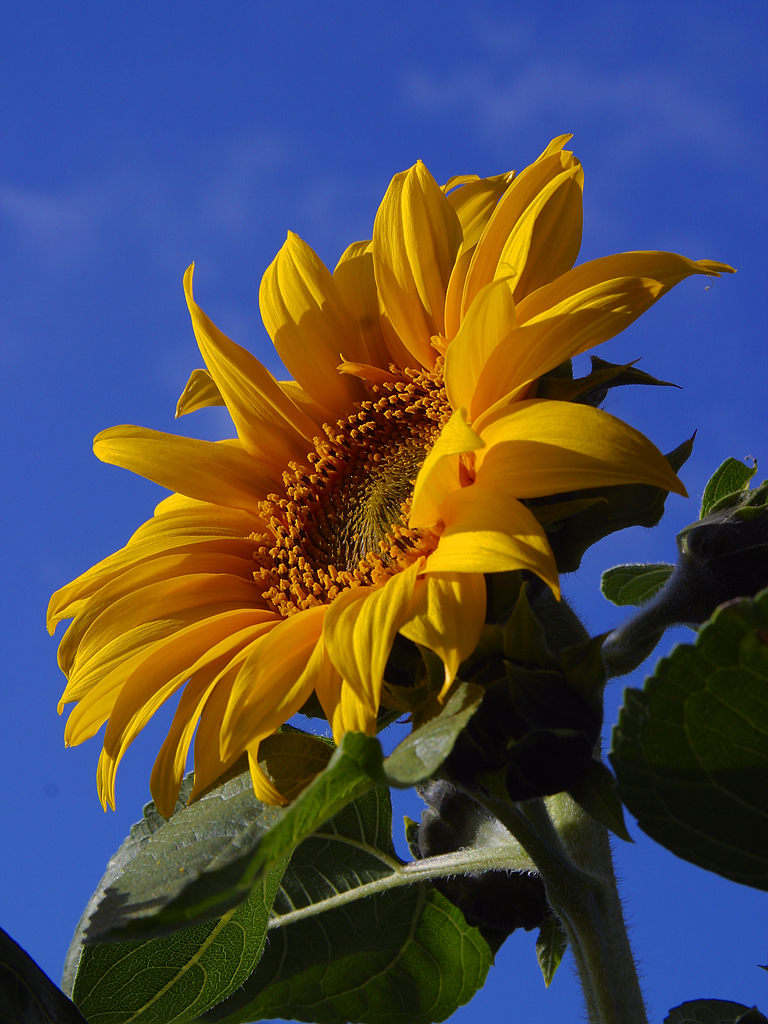 Common sunflowerHelianthus annuus
A tall annual plant grown for its large yellow flower heads and edible seeds
🇨🇦 Canada and 4 more · Wildflower
Common sunflowerHelianthus annuus
A tall annual plant grown for its large yellow flower heads and edible seeds
🇨🇦 Canada and 4 more · Wildflower
 PomegranatePunica granatum
A shrub with bright red flowers and a fruit full of edible seeds
🇮🇷 Iran and 9 more · Flowering shrub
PomegranatePunica granatum
A shrub with bright red flowers and a fruit full of edible seeds
🇮🇷 Iran and 9 more · Flowering shrub
 BirchBetula
Slender trees with papery bark found across the northern world
🇨🇳 China and 7 more · Wildflower
BirchBetula
Slender trees with papery bark found across the northern world
🇨🇳 China and 7 more · Wildflower