
Leopard orchid
Ansellia africana, family Orchidaceae
A large African orchid with spotted yellow flowers and basket-like roots
Leopard orchid is a massive epiphytic orchid from tropical and southern Africa. It forms towering clumps on tree branches, using upward-growing aerial roots to trap leaf litter for nutrients, and bears many short-lived, delicately scented yellow flowers marked with brown.
- Forms massive clumps sometimes used as nests by eagle owls
- Uses aerial roots to build a 'trash basket' for collecting leaf litter
- Flowers are short-lived but appear in abundance under bright light
- Can bloom multiple times a year if given dry spells and high light
- Leaves turn yellow when receiving enough light due to CAM photosynthesis
What does Leopard orchid look like?
This orchid grows in huge clumps on tall trees, sometimes weighing over a tonne. Its yellow, cane-like pseudobulbs can reach 60 cm long and carry six or seven leathery leaves. From these rise flower spikes up to 85 cm tall, bearing 10 to 100 fragrant blooms about 6 cm wide. Each flower has yellow or greenish-yellow petals and sepals dotted with brown, and a three-lobed lip ending in yellow tips.
Where does Leopard orchid come from?
First collected in 1841 by English botanist John Ansell on Fernando Po Island off West Africa, the plant was named after him. Though long treated as a single species, it may actually be a group of closely related plants sharing similar form and flowers. It occurs widely across tropical and southern Africa.
When and how Leopard orchid blooms
In the wild, it anchors to tree branches with thick, cord-like roots while forming a basket of white, needle-like aerial roots above to catch falling debris. It thrives in bright light and tolerates dry periods, blooming after dry spells. In cultivation, it needs strong light, around 2000 foot-candles, and a dry rest in autumn to encourage flowering.


How Leopard orchid is used
Grown by orchid enthusiasts for its dramatic size and showy blooms, it is valued as a striking specimen plant in greenhouses and conservatories. Its unusual nutrient-collecting root system makes it a curiosity among growers, though it requires ample space due to its potential size.
Kinds of Leopard orchid
Numerous synonyms exist, including Ansellia gigantea and A. nilotica, suggesting hidden diversity. Flower colour, spotting intensity, and shape vary widely across its range, supporting the idea that what is called Ansellia africana may actually be several similar species.
Questions people ask about Leopard orchid
Where does the leopard orchid come from?
It is native to tropical and southern Africa, growing on trees near coasts and rivers, usually below 700 metres elevation.
Why is it called a 'trash basket' orchid?
It weaves a basket of upward-pointing aerial roots to trap falling leaves and debris, which fungi then break down into nutrients.
How often does it flower?
In nature it blooms after dry periods; in cultivation it can flower several times a year if given bright light and short dry rests.
What do the flowers look like?
They are about 6 cm wide, yellow or greenish-yellow with brown spots, lightly fragrant, and last fewer than 10 days.
Is it hard to grow?
It is considered easy but needs very bright light and occasional dry periods; without enough light, it rarely flowers.
Good reading and sources
- IUCN Red List of Threatened SpeciesIUCN Red List, Article
- Plants of the World OnlineRoyal Botanic Gardens, Kew, Plant database
- Where it has been recordedGBIF, Plant database
- Sightings and photos by naturalistsiNaturalist, Plant database
The facts on this page come from the Wikipedia article "Ansellia", written by its contributors and used under the CC BY-SA 4.0 licence, and from its Wikidata record (CC0). Phool rewrote the text in its own words, with AI assistance, and compares every page with the article to make sure no passage is copied. It may be reused under the same CC BY-SA 4.0 licence with a link back.
It may contain mistakes. It is not medical or foraging advice: many flowers are poisonous, and traditional uses are reported, not recommended. If something is wrong, tell us. Last refreshed 2026-10-03.
Others in the family Orchidaceae
The whole family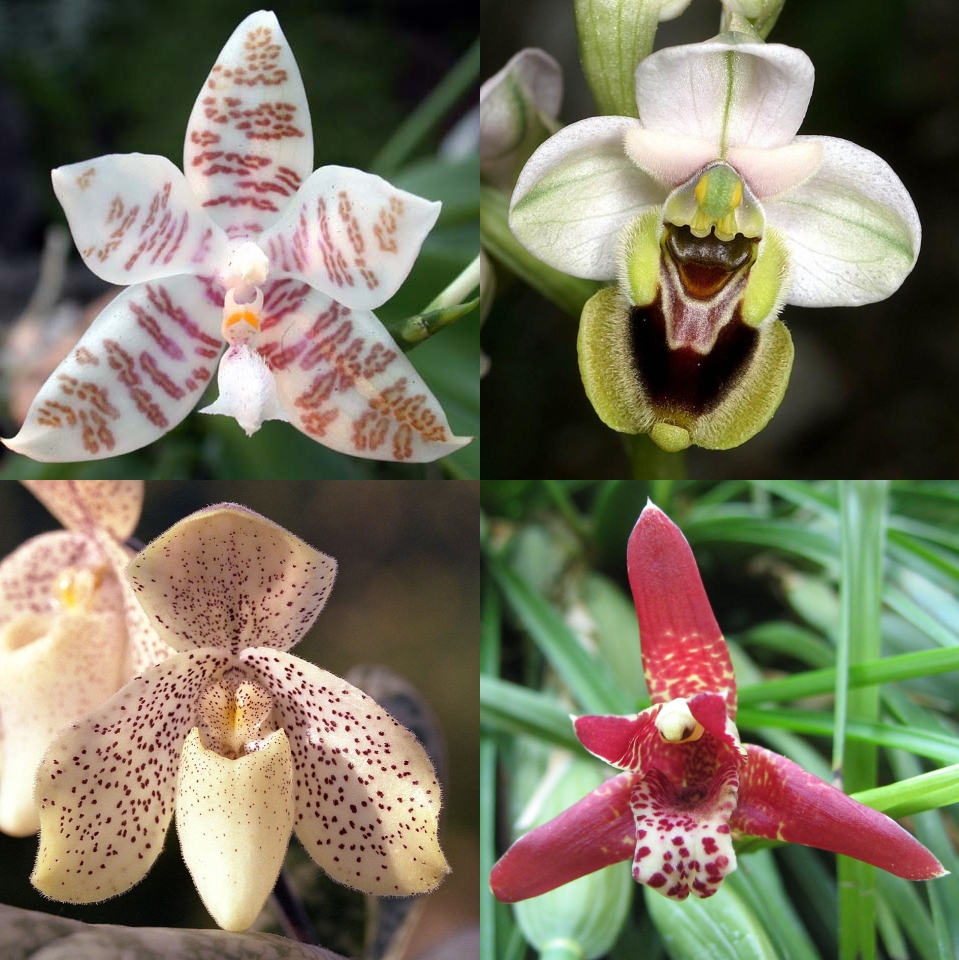 OrchidOrchidaceae
A vast family of colourful, often fragrant flowers found almost everywhere on earth
Orchidaceae · Wildflower
OrchidOrchidaceae
A vast family of colourful, often fragrant flowers found almost everywhere on earth
Orchidaceae · Wildflower
 Vanilla
Climbing orchids with pods used for the world’s most popular flavor
🇲🇽 Mexico and 7 more · Wildflower
Vanilla
Climbing orchids with pods used for the world’s most popular flavor
🇲🇽 Mexico and 7 more · Wildflower
 Orchis
A group of wild orchids with tuberous roots from Europe, North Africa and Asia
🇹🇷 Turkey and 7 more · Wildflower
Orchis
A group of wild orchids with tuberous roots from Europe, North Africa and Asia
🇹🇷 Turkey and 7 more · Wildflower
 Pansy orchidMiltoniopsis
An orchid with flowers that resemble garden pansies
🇨🇷 Costa Rica and 5 more · Orchid
Pansy orchidMiltoniopsis
An orchid with flowers that resemble garden pansies
🇨🇷 Costa Rica and 5 more · Orchid