
Pansy orchid
Miltoniopsis, family Orchidaceae
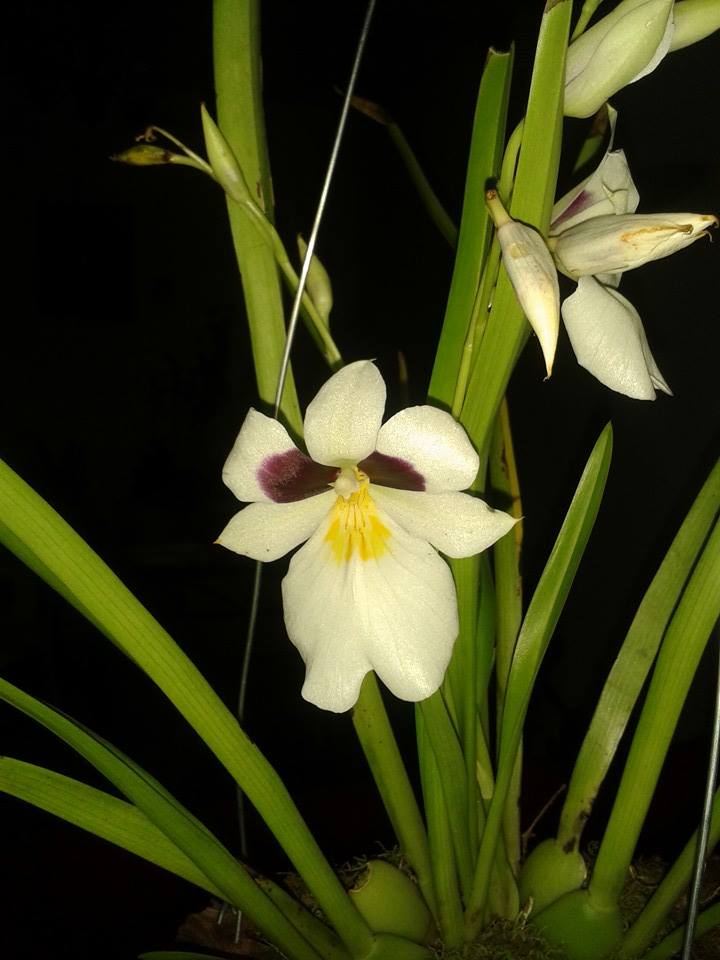
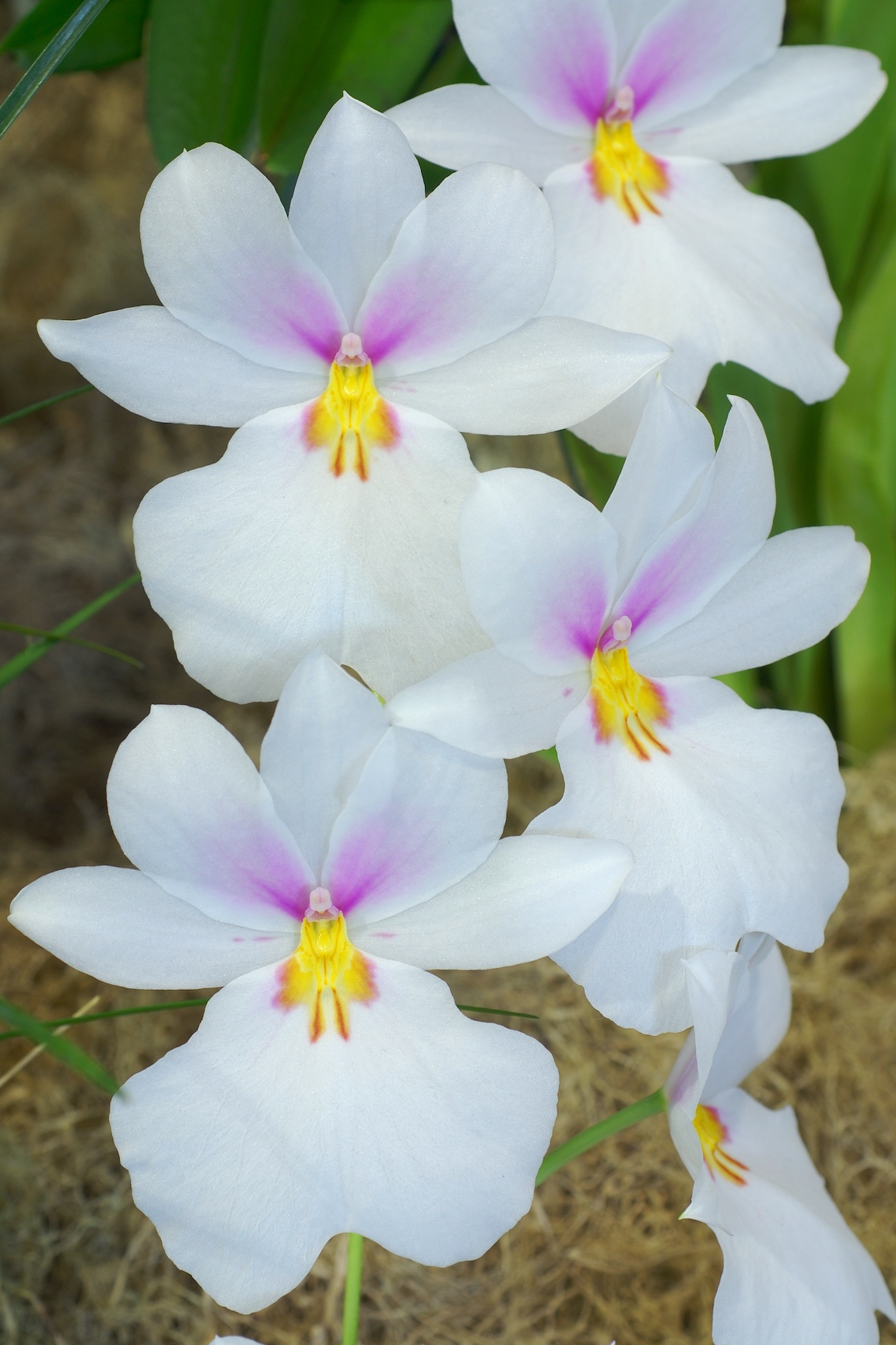
An orchid with flowers that resemble garden pansies
Miltoniopsis is a small orchid genus of five species, often called pansy orchids for their face-like blooms. It grows in the wild across parts of Central and South America and is cultivated by orchid enthusiasts for its showy flowers.
- Commonly known as the pansy orchid
- Has five recognized species
- Each pseudobulb bears only one leaf
- Column fused to labellum by a keel
- Abbreviated as Mps. in horticulture
What does Pansy orchid look like?
Miltoniopsis orchids produce flowers that look like pansies, with broad, rounded petals and a distinctive central lip. Each pseudobulb carries a single leaf, and the column, the reproductive structure, is lobed and fused to the labellum by a ridge called a keel.
Where does Pansy orchid come from?
This orchid genus occurs naturally from southern Central America through the northwestern part of South America. Though similar to Miltonia, it was separated based on structural differences in its column and leaf arrangement.
When and how Pansy orchid blooms
Miltoniopsis plants grow as epiphytes or terrestrials in humid mountain forests. They develop pseudobulbs topped by one leaf each and bloom on upright stems bearing one or more flowers.


Kinds of Pansy orchid
The genus includes five accepted species. In horticulture, it is abbreviated as Mps. and valued for breeding hybrids with large, flat, pansy-like flowers.
Questions people ask about Pansy orchid
Where does Miltoniopsis come from?
It is found in the wild from Costa Rica through Panama and into Colombia, Venezuela, Ecuador, and Peru.
Why is it called the pansy orchid?
Its flowers resemble those of the common garden pansy, with a similar face-like appearance.
How is Miltoniopsis different from Miltonia?
Miltoniopsis has one leaf per pseudobulb and a column joined to the labellum by a keel; Miltonia does not.
How many species are in this genus?
There are five species in the Miltoniopsis genus.
Good reading and sources
- Plants of the World OnlineRoyal Botanic Gardens, Kew, Plant database
- Where it has been recordedGBIF, Plant database
- Sightings and photos by naturalistsiNaturalist, Plant database
The facts on this page come from the Wikipedia article "Miltoniopsis", written by its contributors and used under the CC BY-SA 4.0 licence, and from its Wikidata record (CC0). Phool rewrote the text in its own words, with AI assistance, and compares every page with the article to make sure no passage is copied. It may be reused under the same CC BY-SA 4.0 licence with a link back.
It may contain mistakes. It is not medical or foraging advice: many flowers are poisonous, and traditional uses are reported, not recommended. If something is wrong, tell us. Last refreshed 2026-10-03.
Others in the family Orchidaceae
The whole family OrchidOrchidaceae
A vast family of colourful, often fragrant flowers found almost everywhere on earth
Orchidaceae · Wildflower
OrchidOrchidaceae
A vast family of colourful, often fragrant flowers found almost everywhere on earth
Orchidaceae · Wildflower
 Vanilla
Climbing orchids with pods used for the world’s most popular flavor
🇲🇽 Mexico and 7 more · Wildflower
Vanilla
Climbing orchids with pods used for the world’s most popular flavor
🇲🇽 Mexico and 7 more · Wildflower
 Orchis
A group of wild orchids with tuberous roots from Europe, North Africa and Asia
🇹🇷 Turkey and 7 more · Wildflower
Orchis
A group of wild orchids with tuberous roots from Europe, North Africa and Asia
🇹🇷 Turkey and 7 more · Wildflower
 Fire star orchidEpidendrum radicans
A bright orange orchid that roots along its whole stem
🇲🇽 Mexico and 7 more · Orchid
Fire star orchidEpidendrum radicans
A bright orange orchid that roots along its whole stem
🇲🇽 Mexico and 7 more · Orchid
More from Costa Rica
All the flowers of Costa Rica Penstemon
A North American genus with tubular, often bearded flowers in many colors
🇨🇦 Canada and 4 more · Wildflower
Penstemon
A North American genus with tubular, often bearded flowers in many colors
🇨🇦 Canada and 4 more · Wildflower
 Tree dahliaDahlia imperialis
A towering dahlia with lavender-pink flowers from the mountains of Central America
🇲🇽 Mexico and 7 more · Wildflower
Heliopsis
Bright yellow sunflower-like flowers of the Americas
🇺🇸 United States and 7 more · Wildflower
Tree dahliaDahlia imperialis
A towering dahlia with lavender-pink flowers from the mountains of Central America
🇲🇽 Mexico and 7 more · Wildflower
Heliopsis
Bright yellow sunflower-like flowers of the Americas
🇺🇸 United States and 7 more · Wildflower
 Cattleya
A showy orchid genus from Central and South America
🇨🇷 Costa Rica and 2 more · Wildflower
Cattleya
A showy orchid genus from Central and South America
🇨🇷 Costa Rica and 2 more · Wildflower