
Cattleya
A showy orchid genus from Central and South America
Cattleya is a group of orchids found from Costa Rica down to Argentina. These orchids grow on trees or on the ground, with thick roots and upright stems topped by fleshy leaves. Their flowers are known for their striking lip and are popular with growers and collectors.
- Named after horticulturist William Cattley in 1824
- Native from Costa Rica to Argentina
- Flowers have a showy lip called the labellum
- Grows both on trees and on the ground
- Parent to many popular orchid hybrids
What does Cattleya look like?
Cattleya orchids can grow on trees (epiphytic) or on the ground (terrestrial). They have thick, noodle-like roots and upright stems called pseudobulbs, each with one or two fleshy leaves at the top. The leaves are smooth-edged and can be oblong, lance-shaped, or elliptical. Their flower stalks end in a cluster of a few to several blooms. Each flower has free sepals and petals, with the lower petal (the lip or labellum) often a different color and shape, partly forming a tube over the flower's column.
Where does Cattleya come from?
The genus Cattleya was named in 1824 by botanist John Lindley for William Cattley, who first grew and flowered the type species, Cattleya labiata, from a specimen collected in Pernambuco, Brazil. Cattleya orchids are native to a wide area from Costa Rica to Argentina. Over time, they have become popular with orchid enthusiasts and have been bred into many hybrids.
When and how Cattleya blooms
Cattleyas bloom from upright pseudobulbs, usually producing flowers at the tip. They need light but should be protected from direct sun, and prefer warm days and cooler nights. Humidity between 40–70% and good air movement are important. They grow best when watered only after the growing medium dries out, and benefit from occasional feeding during their growing season.


How Cattleya is used
Cattleyas are widely grown as ornamental plants, valued for their large and colorful flowers. They are popular with collectors and often used in home decoration. Their striking appearance makes them a favorite in orchid shows and displays.
Kinds of Cattleya
Cattleya is divided into several subgenera and sections, such as Cattleya, Cattleyella, Intermediae, and Maximae. There are also natural hybrids, and many hybrids with other orchid genera, including Brassavola, Laelia, and Rhyncholaelia, resulting in nothogenera like Brassocattleya and Laeliocattleya.
What Cattleya means
Cattleyas have a long history in horticulture and are often featured in art, such as the 1871 painting by Martin Johnson Heade. The genus is well known among orchid growers and is a staple in collections and exhibitions. Its discovery and naming are linked to early 19th-century plant collecting and trade.
Questions people ask about Cattleya
Where do Cattleya orchids come from?
Cattleya orchids are native to a region stretching from Costa Rica in Central America down to Argentina in South America.
What do Cattleya flowers look like?
Cattleya flowers grow in clusters at the tips of upright stems, with free sepals and petals and a distinctive, often differently colored lip (labellum) that partly forms a tube.
How are Cattleya orchids used?
Cattleyas are mainly grown as ornamental plants for their large, colorful flowers. They are popular in home decoration and among orchid collectors.
What is special about the Cattleya genus?
Cattleya is known for its showy flowers and has been used to create many hybrids with other orchid genera. It was named after William Cattley, who first flowered the type species in 1817.
Are there different types of Cattleya orchids?
Yes, the genus includes several subgenera and natural hybrids, and has produced many nothogenera through hybridization with other orchids.
Good reading and sources
- Encyclopaedia BritannicaArticle
- USDA Plants DatabaseUS Department of Agriculture, Article
- Plants of the World OnlineRoyal Botanic Gardens, Kew, Plant database
- Where it has been recordedGBIF, Plant database
- Sightings and photos by naturalistsiNaturalist, Plant database
The facts on this page come from the Wikipedia article "Cattleya", written by its contributors and used under the CC BY-SA 4.0 licence, and from its Wikidata record (CC0). Phool rewrote the text in its own words, with AI assistance, and compares every page with the article to make sure no passage is copied. It may be reused under the same CC BY-SA 4.0 licence with a link back.
It may contain mistakes. It is not medical or foraging advice: many flowers are poisonous, and traditional uses are reported, not recommended. If something is wrong, tell us. Last refreshed 2026-10-03.
Others in the family Orchidaceae
The whole family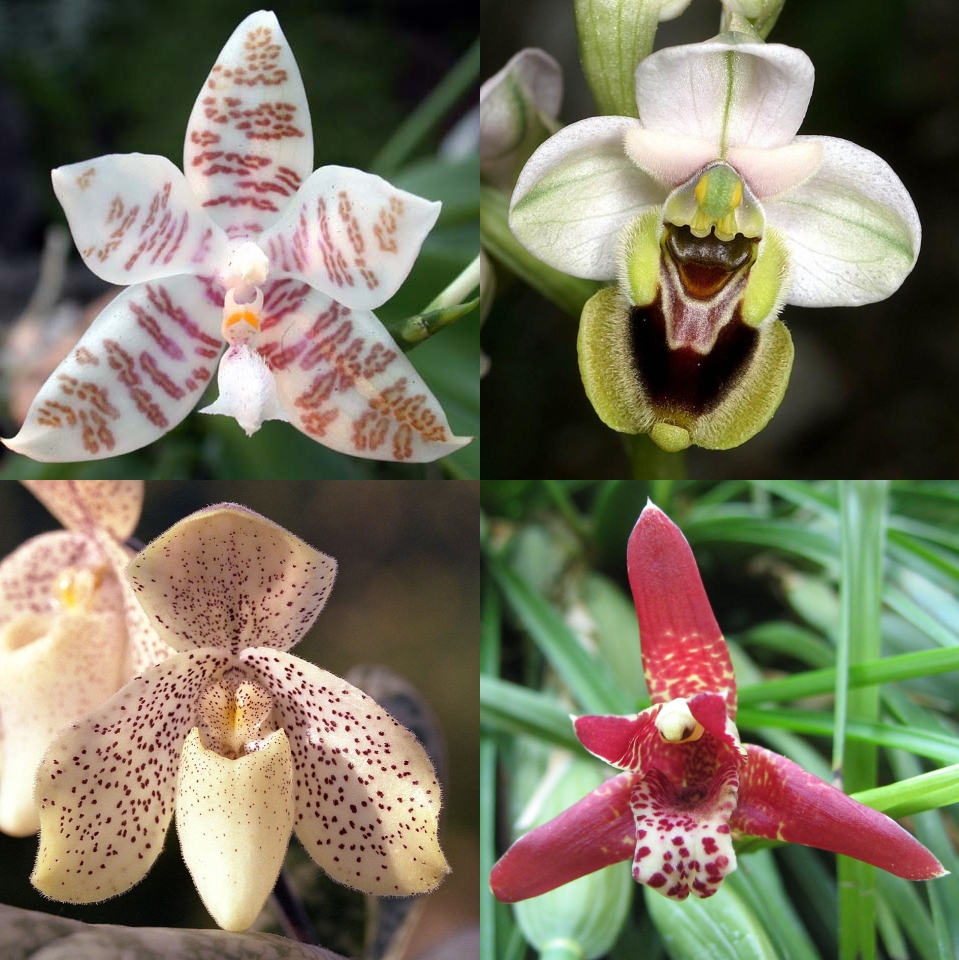 OrchidOrchidaceae
A vast family of colourful, often fragrant flowers found almost everywhere on earth
Orchidaceae · Wildflower
OrchidOrchidaceae
A vast family of colourful, often fragrant flowers found almost everywhere on earth
Orchidaceae · Wildflower
 Vanilla
Climbing orchids with pods used for the world’s most popular flavor
🇲🇽 Mexico and 7 more · Wildflower
Vanilla
Climbing orchids with pods used for the world’s most popular flavor
🇲🇽 Mexico and 7 more · Wildflower
 Orchis
A group of wild orchids with tuberous roots from Europe, North Africa and Asia
🇹🇷 Turkey and 7 more · Wildflower
Orchis
A group of wild orchids with tuberous roots from Europe, North Africa and Asia
🇹🇷 Turkey and 7 more · Wildflower
 VanillaVanilla planifolia
The climbing orchid behind most of the world’s vanilla flavour
🇲🇽 Mexico and 8 more · Wildflower
VanillaVanilla planifolia
The climbing orchid behind most of the world’s vanilla flavour
🇲🇽 Mexico and 8 more · Wildflower
More from Costa Rica
All the flowers of Costa Rica DogwoodCornus
Woody trees and shrubs with showy bracts and colorful berries
🇨🇳 China and 7 more · Wildflower
DogwoodCornus
Woody trees and shrubs with showy bracts and colorful berries
🇨🇳 China and 7 more · Wildflower
 Tree dahliaDahlia imperialis
A towering dahlia with lavender-pink flowers from the mountains of Central America
🇲🇽 Mexico and 7 more · Wildflower
Heliopsis
Bright yellow sunflower-like flowers of the Americas
🇺🇸 United States and 7 more · Wildflower
Tree dahliaDahlia imperialis
A towering dahlia with lavender-pink flowers from the mountains of Central America
🇲🇽 Mexico and 7 more · Wildflower
Heliopsis
Bright yellow sunflower-like flowers of the Americas
🇺🇸 United States and 7 more · Wildflower
 Penstemon
A North American genus with tubular, often bearded flowers in many colors
🇨🇦 Canada and 4 more · Wildflower
Penstemon
A North American genus with tubular, often bearded flowers in many colors
🇨🇦 Canada and 4 more · Wildflower