
Calathea
Tropical houseplant with striking patterned leaves and folding foliage
Calathea is a group of tropical plants from the Americas, known for their large, vividly patterned leaves. Many are grown as indoor plants for their decorative foliage, while in their native regions, their sturdy leaves are used for wrapping and making containers.
- Leaves fold up at night and open in the morning
- Native to tropical regions of the Americas
- Used for wrapping and making containers in Brazil, Colombia, and Thailand
- Flowers are less showy than the colorful bracts
- Some species are threatened by habitat destruction
What does Calathea look like?
Calathea plants are recognized for their broad, oval leaves that often display striking patterns in shades of pink, orange, red, white, and green, with purple undersides. The leaves fold up at night and open in the morning, a movement called nyctinasty, made possible by a flexible joint at the base. Their flowers, which appear in summer, can be yellow, purple, or white, but are less showy than the bracts that surround them.
Where does Calathea come from?
The genus Calathea comes from the tropical regions of the Americas. Over time, some species were reclassified into the related genus Goeppertia, leaving about 60 species in Calathea. In their native habitats, these plants grow on the shaded forest floor. Their leaves have long been used locally for practical purposes, such as wrapping food or crafting containers.
When and how Calathea blooms
Calatheas thrive in warm, humid conditions with filtered light, similar to their natural forest environment. They prefer moist, well-draining soil and are sensitive to both overwatering and mineral-rich tap water. Propagation is usually done by dividing the root clump of a mature plant and potting the sections separately.


How Calathea is used
In tropical America, the tough leaves of Calathea are used to wrap fish or carry small items. In Colombia, indigenous groups craft quivers from the leaves, while in Thailand, villages like Ban Huak make decorative rice containers from them. As houseplants, calatheas are valued for their foliage, though they rarely flower indoors.
Kinds of Calathea
The genus now contains about 60 species, after many were moved to Goeppertia. Calathea zebrina is notable for its use as food for certain butterfly caterpillars. Different species and cultivars display a range of leaf patterns and colors, making them popular among plant collectors.
What Calathea means
Calatheas are popular as decorative houseplants worldwide due to their unique leaf patterns and movements. In some regions, their leaves play a role in traditional crafts and daily life. Several species are now threatened in the wild because of habitat loss.
Questions people ask about Calathea
Where do calatheas come from?
Calatheas are native to the tropical regions of the Americas, especially in countries like Brazil and Colombia, where they grow on the forest floor in humid, shaded areas.
What are calatheas mainly used for?
In their native regions, calathea leaves are used for wrapping food and making containers. As houseplants, they are grown for their decorative, patterned leaves.
Why do calathea leaves move at night?
Calathea leaves fold up at night and open in the morning, a movement called nyctinasty, which is controlled by a joint at the base of each leaf.
What colors do calathea flowers and leaves show?
Calathea leaves can be patterned in pink, orange, red, white, and green, with purple undersides. Their flowers may be yellow, purple, or white, but are less noticeable than the leaves.
Are any calathea species endangered?
Yes, several species of calathea are threatened with extinction in the wild due to habitat destruction.
Good reading and sources
- USDA Plants DatabaseUS Department of Agriculture, Article
- Plants of the World OnlineRoyal Botanic Gardens, Kew, Plant database
- Where it has been recordedGBIF, Plant database
- Sightings and photos by naturalistsiNaturalist, Plant database
The facts on this page come from the Wikipedia article "Calathea", written by its contributors and used under the CC BY-SA 4.0 licence, and from its Wikidata record (CC0). Phool rewrote the text in its own words, with AI assistance, and compares every page with the article to make sure no passage is copied. It may be reused under the same CC BY-SA 4.0 licence with a link back.
It may contain mistakes. It is not medical or foraging advice: many flowers are poisonous, and traditional uses are reported, not recommended. If something is wrong, tell us. Last refreshed 2026-10-03.
More from Brazil
All the flowers of Brazil CactusCactaceae
Succulent plants with spines, native to the Americas
🇲🇽 Mexico and 7 more · Wildflower
CactusCactaceae
Succulent plants with spines, native to the Americas
🇲🇽 Mexico and 7 more · Wildflower
 Eucalyptus
The tall, aromatic trees and shrubs known as gum trees or eucalypts
🇦🇺 Australia and 7 more · Flowering tree
Eucalyptus
The tall, aromatic trees and shrubs known as gum trees or eucalypts
🇦🇺 Australia and 7 more · Flowering tree
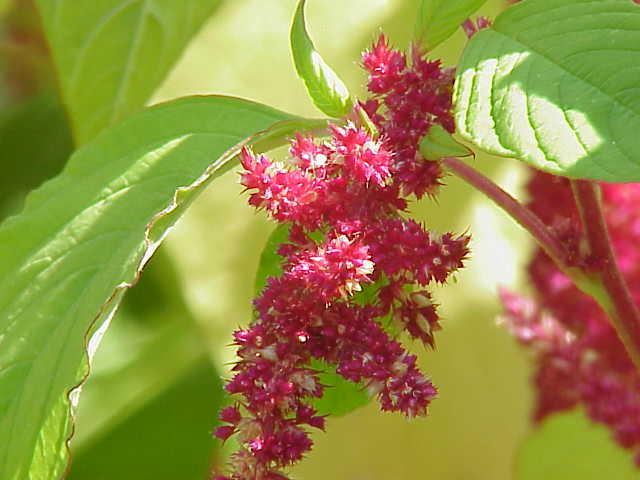 AmaranthAmaranthus
A tall, colourful plant grown for its flowers, leaves and edible seeds
🇲🇽 Mexico and 7 more · Wildflower
AmaranthAmaranthus
A tall, colourful plant grown for its flowers, leaves and edible seeds
🇲🇽 Mexico and 7 more · Wildflower
 Sensitive PlantMimosa pudica
A touch-sensitive plant whose leaves fold up when disturbed
🇧🇷 Brazil and 8 more · Wildflower
Sensitive PlantMimosa pudica
A touch-sensitive plant whose leaves fold up when disturbed
🇧🇷 Brazil and 8 more · Wildflower