
Camassia
A North American wildflower with star-shaped blue to white blooms and edible bulbs
Camassia is a group of perennial plants native to North America, known for their star-like flowers in shades of blue, purple, or white. They grow wild in moist meadows and have long been valued by Indigenous peoples for their edible bulbs and by gardeners for their ability to naturalize in gardens.
- Camassia flowers can turn whole meadows blue or purple in spring.
- Indigenous peoples of the Pacific Northwest cultivated and traded Camassia bulbs.
- The bulbs are edible when cooked but resemble toxic deathcamas bulbs.
- Camassia is now grown as a garden plant for its showy, star-shaped flowers.
What does Camassia look like?
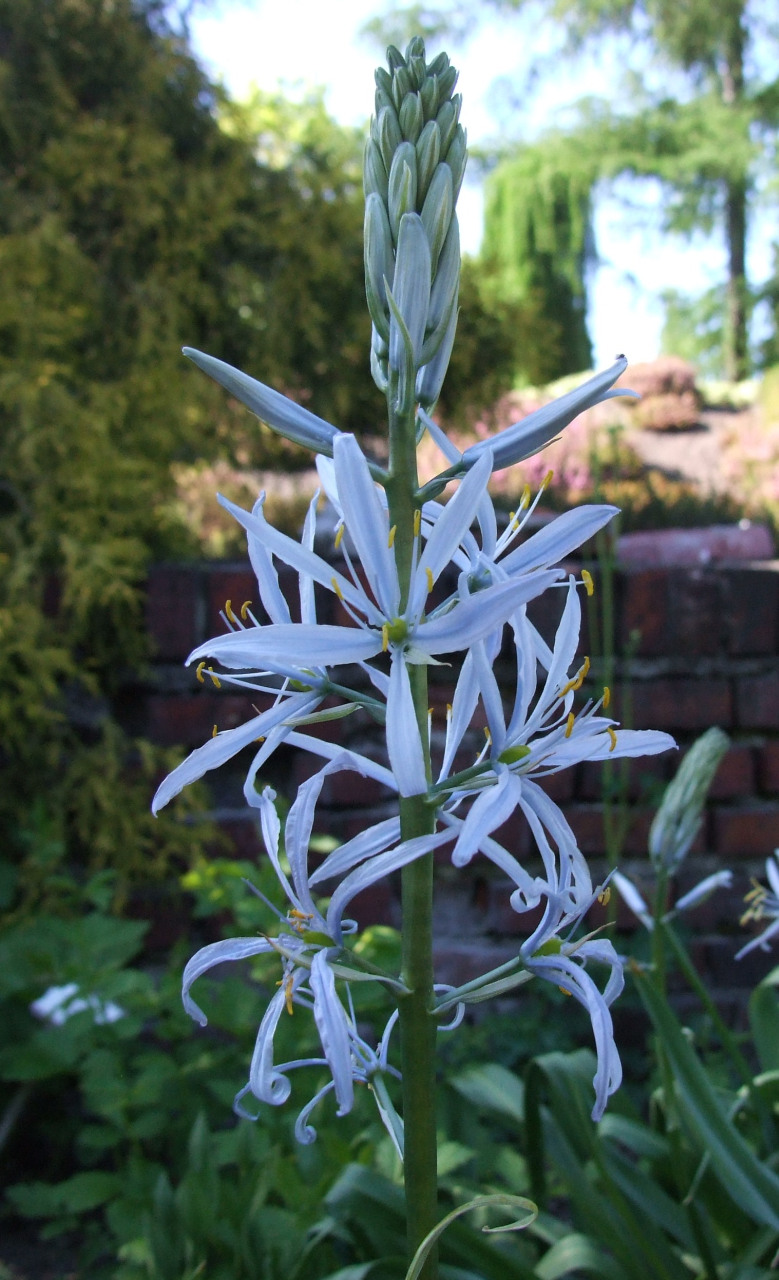
Camassia plants grow from bulbs and have long, narrow leaves that form a base close to the ground. Their flowering stems can reach up to 130 cm, topped with clusters of star-shaped flowers. Each flower has six petals and can be pale lilac, white, deep purple, or blue-violet. When in bloom, large groups of Camassia can color entire meadows. The flowers appear in late spring to early summer.
Where does Camassia come from?
Camassia is native to North America, especially the moist meadows and prairies of the Pacific Northwest. The plant was once classified in the lily family but is now placed in the asparagus family, Asparagaceae. Indigenous peoples have long managed and cultivated Camassia, especially blue camas, using controlled burning and other methods to maintain productive plots. The plant’s bulbs were a staple food and widely traded among native groups.
When and how Camassia blooms
Camassia grows best in moist, well-drained soils, often in meadows, along streams, or in lightly shaded woods. Bulbs are planted in autumn and sprout early in spring, with flowers rising above the leaves in late spring or early summer. The plant spreads by seed rather than runners, and bulbs can be divided after the leaves die back. In the wild, it thrives in natural prairies and marshes.


How Camassia is used
Indigenous peoples harvested Camassia bulbs for food, roasting or boiling them for long periods to make them sweet and digestible. The bulbs were also traded and formed an important part of ceremonies and feasts. Today, Camassia is grown as an ornamental plant in gardens, valued for its ability to naturalize and its showy spring flowers. The bulbs are edible, but care is needed to distinguish them from toxic lookalikes.
Kinds of Camassia
There are six recognized species of Camassia. The most well-known is blue camas (Camassia quamash), which was especially important as a food source. Some species have pale or white flowers, while others are deep blue or purple. The name Camassia esculenta has been used for more than one species, causing confusion in horticulture.
What Camassia means
Camassia holds cultural significance for many Indigenous peoples of the Pacific Northwest, who managed and harvested it for generations. It appears in place names across the region, such as Camas Valley and Camas Prairie. The bulbs were vital for survival and trade, and the plant remains a symbol of traditional foodways and stewardship.
Where to see Camassia

Questions people ask about Camassia
Where does Camassia come from?
Camassia is native to North America, especially the moist meadows and prairies of the Pacific Northwest. It grows wild in these regions and has been managed by Indigenous peoples for generations.
What do Camassia flowers look like?
Camassia produces tall stems with clusters of star-shaped flowers in shades of blue, purple, or white. The leaves are long and narrow, forming a base close to the ground.
How have people used Camassia?
Indigenous peoples harvested and cooked Camassia bulbs as a staple food and traded them widely. Today, the plant is also grown in gardens for its attractive spring flowers.
Is Camassia edible?
Yes, Camassia bulbs are edible when properly cooked, but they resemble the toxic bulbs of deathcamas, so careful identification is important.
What does Camassia symbolise?
Camassia is a symbol of traditional foodways, Indigenous stewardship, and the cultural history of the Pacific Northwest.
Good reading and sources
- USDA Plants DatabaseUS Department of Agriculture, Article
- Plants of the World OnlineRoyal Botanic Gardens, Kew, Plant database
- Where it has been recordedGBIF, Plant database
- Sightings and photos by naturalistsiNaturalist, Plant database
The facts on this page come from the Wikipedia article "Camassia", written by its contributors and used under the CC BY-SA 4.0 licence, and from its Wikidata record (CC0). EveryPhool rewrote the text in its own words, with AI assistance, and compares every page with the article to make sure no passage is copied. It may be reused under the same CC BY-SA 4.0 licence with a link back.
It may contain mistakes. It is not medical or foraging advice: many flowers are poisonous, and traditional uses are reported, not recommended. If something is wrong, tell us. Last refreshed 2026-10-03.
Others in the family Asparagaceae
The whole family Lily-of-the-valleyConvallaria majalis
A woodland plant with sweet-scented white bell flowers in late spring
🇫🇮 Finland and 4 more · Wildflower
Lily-of-the-valleyConvallaria majalis
A woodland plant with sweet-scented white bell flowers in late spring
🇫🇮 Finland and 4 more · Wildflower
 HyacinthHyacinthus
A spring-blooming bulb with fragrant, colourful flower spikes
🇹🇷 Turkey and 7 more · Bulb flower
HyacinthHyacinthus
A spring-blooming bulb with fragrant, colourful flower spikes
🇹🇷 Turkey and 7 more · Bulb flower
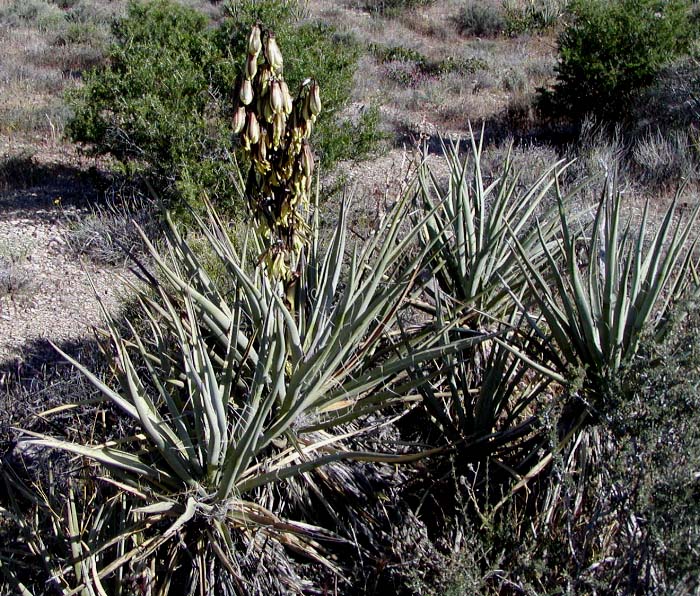 Yucca
Dry-climate plants with pointed leaves and clusters of creamy white flowers
🇲🇽 Mexico and 4 more · Wildflower
Yucca
Dry-climate plants with pointed leaves and clusters of creamy white flowers
🇲🇽 Mexico and 4 more · Wildflower
 Star-of-BethlehemOrnithogalum umbellatum
A white, star-shaped spring flower that opens late in the day
🇫🇷 France and 7 more · Wildflower
Star-of-BethlehemOrnithogalum umbellatum
A white, star-shaped spring flower that opens late in the day
🇫🇷 France and 7 more · Wildflower