Yucca
Dry-climate plants with pointed leaves and clusters of creamy white flowers
Yucca is a group of perennial plants with sharp-tipped leaves and tall stalks of white to cream flowers. Native to dry parts of North and Central America, yuccas range from small shrubs to tree-sized species and are grown for gardens, food, and traditional crafts.
- Yucca includes about 50 species, from small shrubs to tree-sized plants.
- Its flowers are pollinated by specialized yucca moths in a unique partnership.
- The plant's fibers have been used for making baskets, mats, and sandals.
- Some yucca flowers are eaten in Mexico and Central America.
- Yucca is adapted to dry, harsh environments.
What does Yucca look like?
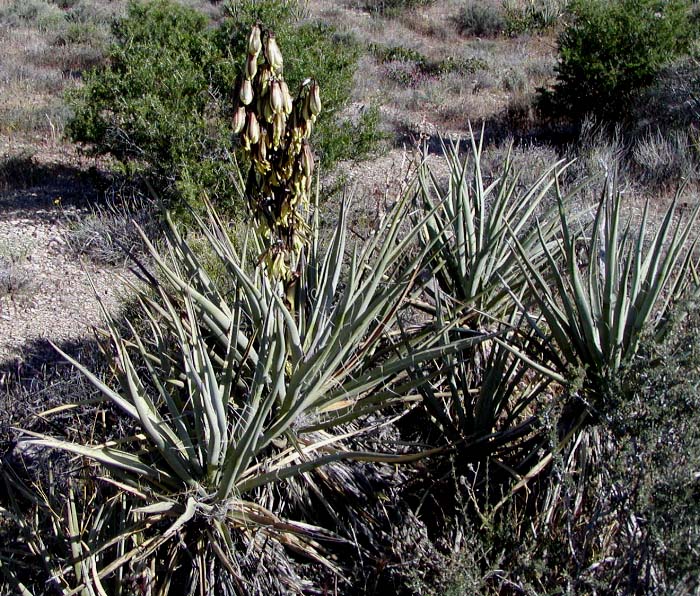
Yucca plants grow as either shrubs or tall, tree-like forms. Their leaves are long, narrow, and end in a sharp point, arranged in rosettes at the tips of stems or branches. Most leaves are tough and fibrous, though some species have softer, fleshy leaves. The color of the leaves varies from bright green to bluish or grayish tones. Flower stalks rise above the plant, carrying many large, waxy flowers that are bell-shaped or rounded. These flowers are usually white or cream, sometimes with streaks of pink, maroon, or purple. The fruit can be either dry and upright or fleshy and drooping, with flat black seeds inside.
Where does Yucca come from?
Yucca species are native to a broad area stretching from Panama through Mexico and the United States up to southern Canada. They are especially common in dry regions like deserts and grasslands, but some grow in colder or more humid places. The genus was first described by Carl Linnaeus in 1753. Over time, botanists have reclassified yuccas, moving them from the lily family to the asparagus family, grouping them with agaves. The name 'yucca' comes from a word in the Carib language, though it was first used for a different plant.
When and how Yucca blooms
Yuccas thrive in dry, well-drained soils and are adapted to survive with little water. They can be grown from seeds or by dividing offshoots. Some species spread by underground stems, forming colonies. The plants flower many times over their lives, sending up tall stalks covered in blooms. After flowering and producing seed, each flower stalk dies back, but the plant continues to grow.


How Yucca is used
People grow yuccas in gardens for their dramatic shape and drought tolerance. In Mexico and Central America, the flowers of some species are cooked and eaten. Yucca fibers have long been used by Indigenous peoples to make rope, baskets, mats, and sandals. Some species are also used for making soap from their roots or leaves. The plant has a role in traditional crafts and as a food source in its native regions.
Kinds of Yucca
There are about 50 recognized species of yucca, ranging from small, stemless types to large, branching trees like the Joshua tree (Yucca brevifolia). Some species are adapted to cold climates, while others are found in deserts or subtropical areas. The group includes both dry-fruited and fleshy-fruited types, and hybrids also occur. Yucca aloifolia, known as aloe yucca, is common in cultivation.
What Yucca means
Yucca plants are a key part of desert and grassland ecosystems in North America, providing shelter for animals and supporting a unique relationship with yucca moths, which pollinate the flowers. This partnership is a classic example of mutualism in nature. Yuccas are also valued for their traditional uses and are sometimes called by local names in Indigenous languages.
Where Yucca is used and seen


Questions people ask about Yucca
Where does yucca come from?
Yucca plants are native to a wide area from Panama in Central America through Mexico and the United States up to southern Canada. They are especially common in dry regions such as deserts and grasslands.
What does a yucca plant look like?
Yucca plants have long, pointed leaves arranged in rosettes, and produce tall stalks with clusters of large, white or cream flowers. Some species grow as shrubs, while others can become tree-like.
How are yuccas used by people?
People use yuccas as garden plants, for their edible flowers in some regions, and for their strong fibers, which are made into items like baskets, mats, and sandals. Some species are also used to make soap.
What is special about yucca pollination?
Yucca flowers are pollinated by yucca moths, which have a close, mutual relationship with the plants. The moths lay their eggs in the flowers and, in the process, ensure pollination.
Are there different types of yucca?
Yes, there are about 50 species, ranging from small, stemless plants to large trees like the Joshua tree. Some are adapted to deserts, while others grow in colder or more humid regions.
Good reading and sources
- Encyclopaedia BritannicaArticle
- USDA Plants DatabaseUS Department of Agriculture, Article
- Library of Congress CatalogLibrary of Congress, Article
- The giant yucca's edible bounty: seeds, fruit, even flowersLos Angeles Times, Article
- Plants of the World OnlineRoyal Botanic Gardens, Kew, Plant database
- Where it has been recordedGBIF, Plant database
- Sightings and photos by naturalistsiNaturalist, Plant database
The facts on this page come from the Wikipedia article "Yucca", written by its contributors and used under the CC BY-SA 4.0 licence, and from its Wikidata record (CC0). Phool rewrote the text in its own words, with AI assistance, and compares every page with the article to make sure no passage is copied. It may be reused under the same CC BY-SA 4.0 licence with a link back.
It may contain mistakes. It is not medical or foraging advice: many flowers are poisonous, and traditional uses are reported, not recommended. If something is wrong, tell us. Last refreshed 2026-10-03.
Others in the family Asparagaceae
The whole family Lily-of-the-valleyConvallaria majalis
A woodland plant with sweet-scented white bell flowers in late spring
🇫🇮 Finland and 4 more · Wildflower
Lily-of-the-valleyConvallaria majalis
A woodland plant with sweet-scented white bell flowers in late spring
🇫🇮 Finland and 4 more · Wildflower
 HyacinthHyacinthus
A spring-blooming bulb with fragrant, colourful flower spikes
🇹🇷 Turkey and 7 more · Bulb flower
HyacinthHyacinthus
A spring-blooming bulb with fragrant, colourful flower spikes
🇹🇷 Turkey and 7 more · Bulb flower
 Star-of-BethlehemOrnithogalum umbellatum
A white, star-shaped spring flower that opens late in the day
🇫🇷 France and 7 more · Wildflower
Star-of-BethlehemOrnithogalum umbellatum
A white, star-shaped spring flower that opens late in the day
🇫🇷 France and 7 more · Wildflower
 Ornithogalum thyrsoides
A white, long-lasting bulb flower from South Africa’s Cape Province
🇿🇦 South Africa · Bulb flower
Ornithogalum thyrsoides
A white, long-lasting bulb flower from South Africa’s Cape Province
🇿🇦 South Africa · Bulb flower
More from Mexico
All the flowers of Mexico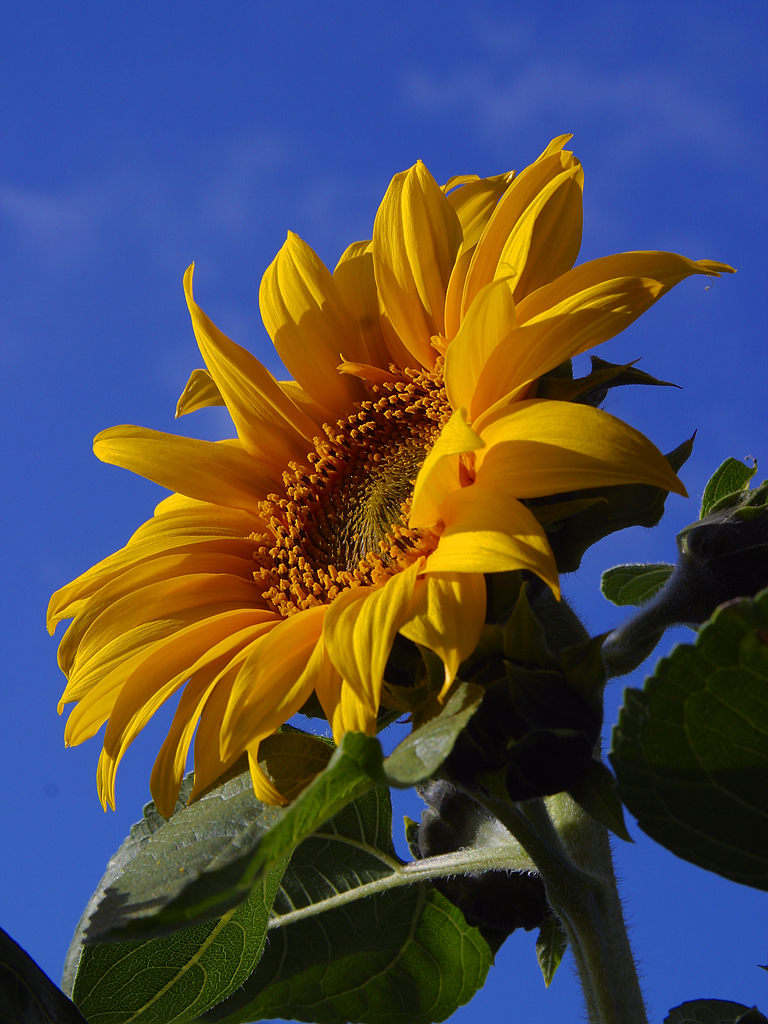 Common sunflowerHelianthus annuus
A tall annual plant grown for its large yellow flower heads and edible seeds
🇨🇦 Canada and 4 more · Wildflower
Common sunflowerHelianthus annuus
A tall annual plant grown for its large yellow flower heads and edible seeds
🇨🇦 Canada and 4 more · Wildflower
 CactusCactaceae
Succulent plants with spines, native to the Americas
🇲🇽 Mexico and 7 more · Wildflower
CactusCactaceae
Succulent plants with spines, native to the Americas
🇲🇽 Mexico and 7 more · Wildflower
 AmaranthAmaranthus
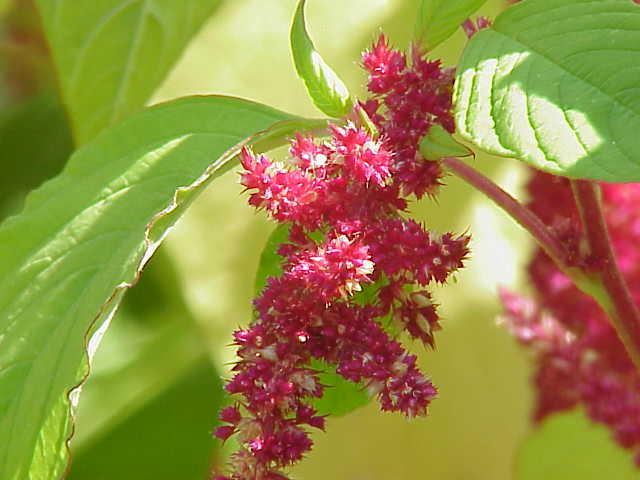
A tall, colourful plant grown for its flowers, leaves and edible seeds
🇲🇽 Mexico and 7 more · Wildflower
AmaranthAmaranthus
A tall, colourful plant grown for its flowers, leaves and edible seeds
🇲🇽 Mexico and 7 more · Wildflower
 HawthornCrataegus
A thorny shrub or tree with white or pink spring flowers and small edible fruits
🇮🇪 Ireland and 7 more · Wildflower
HawthornCrataegus
A thorny shrub or tree with white or pink spring flowers and small edible fruits
🇮🇪 Ireland and 7 more · Wildflower