
Dactylorhiza
Wild orchids with spotted leaves and pink to red flowers
Dactylorhiza is a group of hardy orchids found across Europe and Asia, known for their finger-like tubers, spotted leaves, and compact clusters of pink, red, or white flowers. These marsh or spotted orchids often grow in damp meadows and can hybridise easily, leading to many local forms.
- Dactylorhiza orchids have finger-like tubers that store water.
- Their flowers are white, pink, or red, often with darker speckles.
- Many species hybridise easily, leading to varied local forms.
- Leaves are usually long, narrow, and spotted.
- They can colonise disturbed soils such as industrial waste.
What does Dactylorhiza look like?
Dactylorhiza orchids grow from thick, finger-shaped underground tubers that store water. The plants reach 70–90 cm tall, with long, lance-shaped leaves, often marked with dark spots. Their flower spikes are short compared to the plant, but densely packed with 25–50 small flowers. These blooms range from white through all shades of pink to deep red, usually speckled with darker spots.
Where does Dactylorhiza come from?
The genus Dactylorhiza is native to a wide area across Europe and Asia, with some species reaching as far as Mongolia, China, and even southern Alaska. The name comes from Greek, meaning 'finger root', for the shape of their tubers. Dactylorhiza species were once grouped with Orchis, but are now recognised as a separate genus. They are known for their ability to colonise new habitats, including disturbed soils.
When and how Dactylorhiza blooms
Dactylorhiza orchids are perennial plants that grow from tubers, which help them survive dry periods. They develop flower spikes from axillary buds, usually producing blooms in a compact raceme. The plants thrive in damp meadows and marshes, but some species adapt to other conditions, including industrial waste sites. Their leaves and flowers appear in succession, with upper leaves shorter than those at the base.


How Dactylorhiza is used
These orchids are mainly appreciated in the wild and in gardens for their attractive flowers and foliage. Because of their hybridising nature, they are popular with orchid enthusiasts and botanists. There is no mention of traditional or ceremonial uses in the sources.
Kinds of Dactylorhiza
Dactylorhiza includes about 34 accepted species, such as D. fuchsii (common spotted orchid), D. incarnata (early marsh orchid), D. maculata (heath spotted orchid), and D. majalis (broad-leaved marsh orchid). Many species hybridise naturally, creating swarms of intermediate forms, especially in disturbed habitats. This makes identification and naming complex and changeable.
What Dactylorhiza means
Dactylorhiza orchids are valued for their beauty and diversity in the wild, especially in European and Asian meadows. Their ability to hybridise and adapt to new habitats fascinates botanists. The genus has no widely reported symbolic meaning or religious use, but is important in the study and conservation of wild orchids.
Questions people ask about Dactylorhiza
Where do Dactylorhiza orchids come from?
Dactylorhiza species are native to a broad region across Europe and Asia, with some found as far as Mongolia, China, and southern Alaska.
What do Dactylorhiza orchids look like?
They have tall stems with long, often spotted leaves and compact spikes of 25–50 small flowers in shades of white, pink, or red, usually speckled.
Why are Dactylorhiza orchids called 'finger root'?
The name comes from Greek words meaning 'finger' and 'root', referring to their palm-shaped, finger-like tubers.
Are Dactylorhiza orchids easy to identify?
They are challenging to identify because many species hybridise naturally, creating a range of intermediate forms.
Are Dactylorhiza orchids used in ceremonies or as emblems?
The sources do not mention any ceremonial, religious, or emblematic uses for Dactylorhiza orchids.
Good reading and sources
- Encyclopaedia BritannicaArticle
- USDA Plants DatabaseUS Department of Agriculture, Article
- Plants of the World OnlineRoyal Botanic Gardens, Kew, Plant database
- Where it has been recordedGBIF, Plant database
- Sightings and photos by naturalistsiNaturalist, Plant database
The facts on this page come from the Wikipedia article "Dactylorhiza", written by its contributors and used under the CC BY-SA 4.0 licence, and from its Wikidata record (CC0). Phool rewrote the text in its own words, with AI assistance, and compares every page with the article to make sure no passage is copied. It may be reused under the same CC BY-SA 4.0 licence with a link back.
It may contain mistakes. It is not medical or foraging advice: many flowers are poisonous, and traditional uses are reported, not recommended. If something is wrong, tell us. Last refreshed 2026-10-03.
Others in the family Orchidaceae
The whole family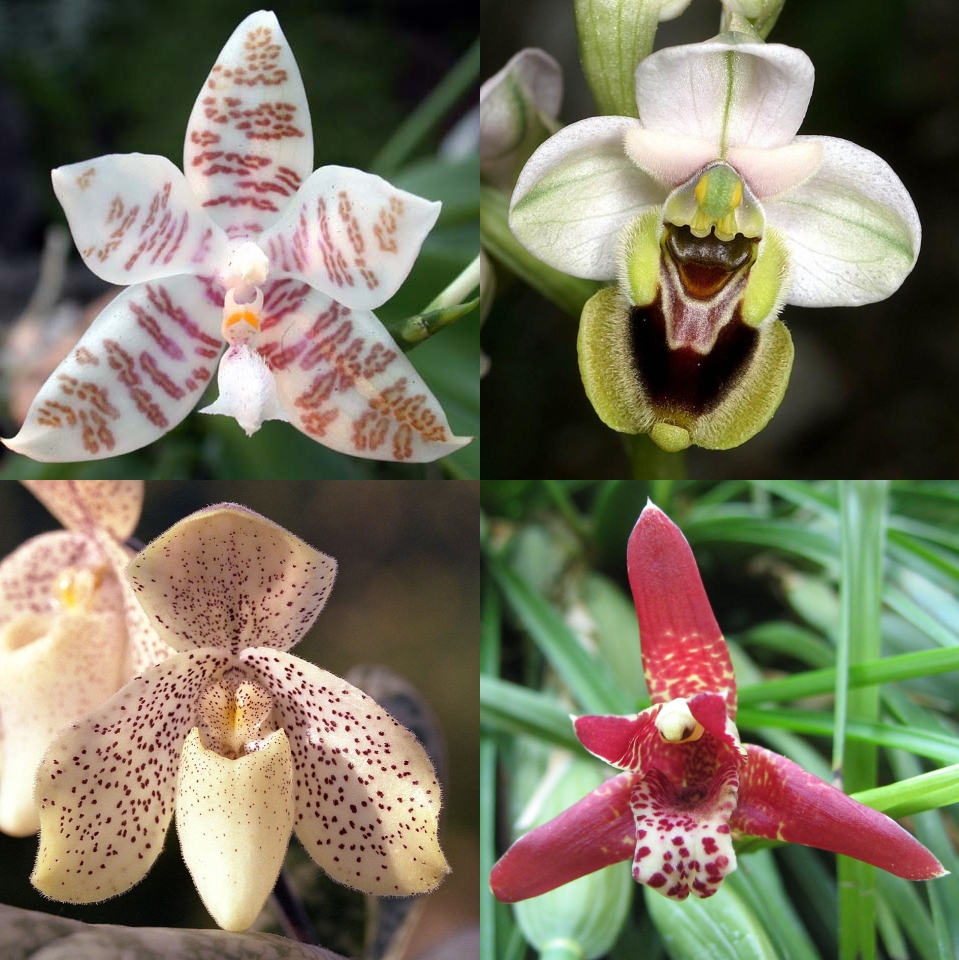 OrchidOrchidaceae
A vast family of colourful, often fragrant flowers found almost everywhere on earth
Orchidaceae · Wildflower
OrchidOrchidaceae
A vast family of colourful, often fragrant flowers found almost everywhere on earth
Orchidaceae · Wildflower
 Vanilla
Climbing orchids with pods used for the world’s most popular flavor
🇲🇽 Mexico and 7 more · Wildflower
Vanilla
Climbing orchids with pods used for the world’s most popular flavor
🇲🇽 Mexico and 7 more · Wildflower
 Orchis
A group of wild orchids with tuberous roots from Europe, North Africa and Asia
🇹🇷 Turkey and 7 more · Wildflower
Orchis
A group of wild orchids with tuberous roots from Europe, North Africa and Asia
🇹🇷 Turkey and 7 more · Wildflower
 Pansy orchidMiltoniopsis
An orchid with flowers that resemble garden pansies
🇨🇷 Costa Rica and 5 more · Orchid
Pansy orchidMiltoniopsis
An orchid with flowers that resemble garden pansies
🇨🇷 Costa Rica and 5 more · Orchid