
Globe thistle
Echinops, family Asteraceae
Spiny perennial with blue or white globe-shaped flower heads
Globe thistles are perennial herbs with spiny leaves and round, blue or white flower heads. Native from central Asia and the Mediterranean to tropical Africa, they grow wild in regions like Mongolia, China, and India. People use some species in traditional medicine across Africa, Asia, and Europe.
- Flower heads are round and usually blue or white
- Leaves are spiny and white-woolly underneath
- Used in traditional medicine in Africa, Asia, and Europe
- Native from central Asia to tropical Africa
- Host plant for weevils of the genus Larinus
What does Globe thistle look like?
Globe thistles are upright, perennial herbs with angular stems and spiny, deeply divided leaves. The leaves are white and woolly underneath. Their flowers form round heads, 4 to 8 centimeters across, made up of many small, tubular blooms. These heads are usually bluish, but can also be white. The plant’s overall look is prickly, with the spherical flower heads standing out above the foliage.
Where does Globe thistle come from?
Echinops, or globe thistles, are native to a wide area stretching from central Asia and Mongolia through northeastern China to the Mediterranean, Eurasia, the Indian subcontinent, and tropical Africa. The genus includes about 130 species. Over time, these plants have spread across temperate and subtropical regions, adapting to various climates and soils.
When and how Globe thistle blooms
Globe thistles grow from rhizomes and return each year as perennials. Their stems rise upright, and the spiny leaves are arranged alternately. The flower heads develop as clusters of small, tubular flowers, blooming from the top down. They thrive in open, sunny places and are often found in wild meadows or grown in gardens for their unique appearance.


How Globe thistle is used
Many Echinops species are used in traditional medicine in Africa, Asia, and Europe. Folk remedies have employed them for inflammation, pain, fever, cough, and other ailments. Extracts and essential oils from these plants are studied for antimicrobial and anti-inflammatory effects. Some species are also grown in gardens for their ornamental, globe-shaped flowers.
Kinds of Globe thistle
The genus Echinops includes about 130 species, such as Echinops ritro, Echinops bannaticus, and Echinops echinatus. Flower color and size can vary by species, but all share the characteristic round, spiny flower heads. Some species are more commonly used in folk medicine, while others are favored in gardens for their striking blue blooms.
What Globe thistle means
Globe thistles are valued in traditional herbal practices across several continents. They are also a host plant for certain weevils. While not tied to specific festivals or emblems in the sources, their unique shape makes them a distinctive feature in gardens and wild landscapes.
Questions people ask about Globe thistle
Where do globe thistles come from?
Globe thistles are native to a broad region from central Asia and Mongolia through northeastern China, the Mediterranean basin, Eurasia, the Indian subcontinent, and tropical Africa.
What do globe thistles look like?
They are upright perennial herbs with spiny, deeply divided leaves and round, spiky flower heads that are usually blue or white. The flower heads are 4 to 8 centimeters across and stand out above the foliage.
How are globe thistles used?
Many species are used in traditional medicine in Africa, Asia, and Europe for various ailments. They are also grown in gardens for their ornamental, globe-shaped flowers.
Are there different types of globe thistles?
Yes, the genus Echinops includes about 130 species, with some like Echinops ritro and Echinops bannaticus known for their blue flower heads and others for their medicinal uses.
What do globe thistles symbolize or mean?
The sources do not mention any specific symbolism or cultural meaning for globe thistles.
Good reading and sources
- Encyclopaedia BritannicaArticle
- USDA Plants DatabaseUS Department of Agriculture, Article
- Plants of the World OnlineRoyal Botanic Gardens, Kew, Plant database
- Where it has been recordedGBIF, Plant database
- Sightings and photos by naturalistsiNaturalist, Plant database
The facts on this page come from the Wikipedia article "Echinops", written by its contributors and used under the CC BY-SA 4.0 licence, and from its Wikidata record (CC0). Phool rewrote the text in its own words, with AI assistance, and compares every page with the article to make sure no passage is copied. It may be reused under the same CC BY-SA 4.0 licence with a link back.
It may contain mistakes. It is not medical or foraging advice: many flowers are poisonous, and traditional uses are reported, not recommended. If something is wrong, tell us. Last refreshed 2026-10-03.
Others in the family Asteraceae
The whole family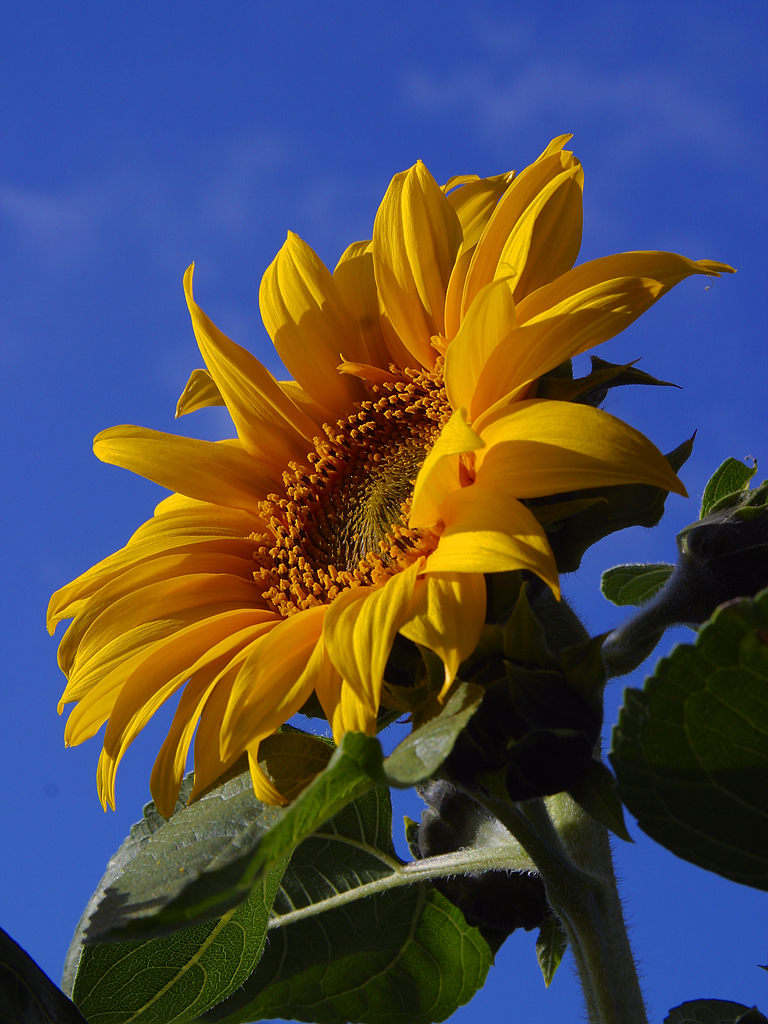 Common sunflowerHelianthus annuus
A tall annual plant grown for its large yellow flower heads and edible seeds
🇨🇦 Canada and 4 more · Wildflower
Common sunflowerHelianthus annuus
A tall annual plant grown for its large yellow flower heads and edible seeds
🇨🇦 Canada and 4 more · Wildflower
 Chrysanthemum菊花
Autumn-blooming flower with thousands of varieties, cherished in East Asia and beyond
🇨🇳 China and 6 more · Wildflower
Chrysanthemum菊花
Autumn-blooming flower with thousands of varieties, cherished in East Asia and beyond
🇨🇳 China and 6 more · Wildflower
 Asteraceae
The vast family of daisies, asters, and sunflowers with star-like flower heads
Asteraceae · Wildflower
Asteraceae
The vast family of daisies, asters, and sunflowers with star-like flower heads
Asteraceae · Wildflower
 DandelionTaraxacum
A yellow-flowered perennial found in fields, lawns, and gardens worldwide
Taraxacum · Wildflower
DandelionTaraxacum
A yellow-flowered perennial found in fields, lawns, and gardens worldwide
Taraxacum · Wildflower