
Trailing arbutus
Epigaea repens, family Ericaceae
A low, fragrant shrub with pink or white spring flowers in North American woods
Trailing arbutus is a small, evergreen shrub that spreads close to the ground in shady, acidic forests from eastern Canada to the southeastern United States. Its clusters of pale pink or white, sweet-scented flowers bloom in early spring and are the floral emblem of Nova Scotia and Massachusetts.
- Provincial flower of Nova Scotia and state flower of Massachusetts
- Strongly fragrant pink or white flowers bloom in early spring
- Difficult to cultivate and sensitive to disturbance
- Used by several Native American groups for traditional medicine
- Host plant for the Hoary Elfin butterfly
What does Trailing arbutus look like?
Trailing arbutus is a low, evergreen shrub that grows 4 to 6 inches tall and can spread up to 20 inches. Its stems are woody with rusty hairs, and its oval leaves are rough above and hairy beneath. In spring, clusters of small, five-lobed flowers appear at the tips of the branches. The blossoms are pale pink to nearly white and have a strong, sweet fragrance. The plant is often found in moist, shady, acidic soils in forests.
Where does Trailing arbutus come from?
Epigaea repens is native to eastern North America, from Newfoundland down to Florida and westward to Kentucky and the Northwest Territories. It prefers sandy or peaty soils in shady woods and clearings, often as part of the oak-heath forest community. The name 'Epigaea' means 'upon the earth', describing its sprawling habit. Its scarcity today is linked to sensitivity to disturbance and difficulty in cultivation.
When and how Trailing arbutus blooms
Trailing arbutus blooms from March to May. It grows best in moist, acidic, humus-rich soils with shade, such as those found in undisturbed forests. The plant is slow-growing and difficult to cultivate outside its natural habitat. It reproduces by spreading along the ground, with new shoots rooting as they grow.
How Trailing arbutus is used
This plant is valued as the floral emblem of Nova Scotia and Massachusetts. In Massachusetts, it is protected by law. Several Native American groups have used infusions and decoctions of its leaves and stems for traditional medicine, including treatments for kidney issues, indigestion, and other ailments. The Forest Potawatomi regard it as their tribal flower.
Kinds of Trailing arbutus
Epigaea repens is the main species in its genus found in North America. Its flowers can range from pale pink to nearly white. The plant is sometimes called 'Plymouth Mayflower', linking it to early colonial history.
What Trailing arbutus means
Trailing arbutus is a symbol of spring in eastern North America and holds special status as the provincial flower of Nova Scotia and the state flower of Massachusetts. In Massachusetts, digging up the plant is illegal. It is also important to the Forest Potawatomi, who consider it a sacred tribal flower. The plant is a larval host for the Hoary Elfin butterfly.
Questions people ask about Trailing arbutus
Where does trailing arbutus come from?
Trailing arbutus is native to eastern North America, growing wild from Newfoundland to Florida and west to Kentucky and the Northwest Territories, mainly in shady, acidic forests.
What does trailing arbutus look like?
It is a low, evergreen shrub with rough, oval leaves and clusters of small, five-lobed flowers. The blossoms are pale pink to nearly white and have a strong, sweet scent.
Why is trailing arbutus important?
It is the provincial flower of Nova Scotia and the state flower of Massachusetts. It also has traditional uses among Native American groups and is valued for its fragrant spring flowers.
Is trailing arbutus easy to grow?
No, it is difficult to cultivate and prefers undisturbed, moist, acidic soils in shady forests. It is sensitive to disturbance from activities like lumbering and grazing.
How has trailing arbutus been used traditionally?
Native American groups have used infusions and decoctions of its leaves and stems for treating kidney ailments, indigestion, and other conditions.
Good reading and sources
- Encyclopaedia BritannicaArticle
- Lady Bird Johnson Wildflower CenterLady Bird Johnson Wildflower Center, Article
- USDA Plants DatabaseUS Department of Agriculture, Article
- Plants of the World OnlineRoyal Botanic Gardens, Kew, Plant database
- Where it has been recordedGBIF, Plant database
- Sightings and photos by naturalistsiNaturalist, Plant database
- Epigaea repens on WikipediaEncyclopedia
- More photos on Wikimedia CommonsPhotos
- Wikidata recordOpen data
The facts on this page come from the Wikipedia article "Epigaea repens", written by its contributors and used under the CC BY-SA 4.0 licence, and from its Wikidata record (CC0). Phool rewrote the text in its own words, with AI assistance, and compares every page with the article to make sure no passage is copied. It may be reused under the same CC BY-SA 4.0 licence with a link back.
It may contain mistakes. It is not medical or foraging advice: many flowers are poisonous, and traditional uses are reported, not recommended. If something is wrong, tell us. Last refreshed 2026-10-03.
Others in the family Ericaceae
The whole family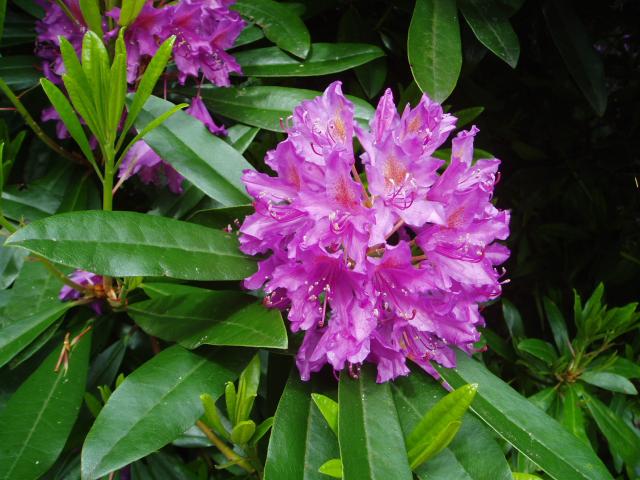 Rhododendron
A vast group of shrubs and trees with showy blooms in many colours
🇳🇵 Nepal and 4 more · Wildflower
Rhododendron
A vast group of shrubs and trees with showy blooms in many colours
🇳🇵 Nepal and 4 more · Wildflower
 Erica
Evergreen shrubs with tiny needle leaves and nodding flowers, known as heaths or heathers
🇿🇦 South Africa and 1 more · Wildflower
Erica
Evergreen shrubs with tiny needle leaves and nodding flowers, known as heaths or heathers
🇿🇦 South Africa and 1 more · Wildflower
 Catawba rosebayRhododendron catawbiense
A spring-flowering rhododendron native to the southern Appalachian Mountains
🇺🇸 United States · Wildflower
Catawba rosebayRhododendron catawbiense
A spring-flowering rhododendron native to the southern Appalachian Mountains
🇺🇸 United States · Wildflower
 Common rhododendronRhododendron ponticum
A dense evergreen shrub with violet-purple flowers from Europe and the Caucasus
🇵🇹 Portugal and 6 more · Flowering shrub
Common rhododendronRhododendron ponticum
A dense evergreen shrub with violet-purple flowers from Europe and the Caucasus
🇵🇹 Portugal and 6 more · Flowering shrub