
Heliconia bihai
A tall tropical plant with upright, water-holding flowers
Heliconia bihai is a large, upright herb from the tropics of northern South America and the Caribbean. Its bright, cup-shaped flowers collect rainwater and draw birds and insects. People grow it as an ornamental in warm, humid climates, and it serves as a political symbol in the Caribbean.
- Grows taller than 1.5 meters
- Flowers collect rainwater for birds and insects
- Pollinated by bats and hummingbirds
- Used as a political symbol in Trinidad and Martinique
What does Heliconia bihai look like?
Heliconia bihai is a tall plant, often reaching more than 1.5 meters in height. Its strong, upright stems hold clusters of vivid, cup-like flowers that stand above the leaves. These flowers are shaped to catch and hold rainwater, making them a small reservoir for wildlife. The plant’s leaves are broad and lush, typical of tropical herbs.
Where does Heliconia bihai come from?
This species grows wild across the tropical regions of northern South America and the Caribbean islands. It is especially widespread in areas such as northern Brazil, the Guianas, and several Caribbean islands including Jamaica, Trinidad, and Puerto Rico. Over time, it has become a familiar sight in gardens and landscapes throughout warm, humid parts of the world.
When and how Heliconia bihai blooms
Heliconia bihai thrives in hot, moist environments and is usually grown outdoors in regions that do not experience frost. It is propagated from rhizomes and prefers rich, well-drained soil. The plant’s flowers stand upright, and their structure helps collect rainwater. Bats and hummingbirds are the main pollinators, drawn by the flower’s shape and nectar.


How Heliconia bihai is used
People often plant Heliconia bihai in gardens for its bold, tropical look. Its flowers are valued for attracting birds and insects, and the plant is a common ornamental in suitable climates. In Trinidad and Tobago and Martinique, the plant’s image is used as a symbol by political parties, giving it a role beyond the garden.
Kinds of Heliconia bihai
Heliconia bihai is one of many species in the Heliconia genus, which includes a range of plants with similar upright, colorful flowers. While the sources do not list specific varieties, the genus is known for its diversity in flower form and color.
What Heliconia bihai means
In the Caribbean, Heliconia bihai has taken on symbolic meaning. It represents the People's National Movement in Trinidad and Tobago and the Martinique Progressive Party. Its striking form and presence in the landscape make it a familiar emblem in these regions.
Where Heliconia bihai is used and seen


Questions people ask about Heliconia bihai
Where does Heliconia bihai come from?
It is found in the tropical regions of northern South America and the Caribbean, including places like Brazil, Trinidad, Jamaica, and Puerto Rico.
What is Heliconia bihai used for?
People grow it as an ornamental plant in warm, humid climates. It is also used as a symbol by political parties in Trinidad and Tobago and Martinique.
How does Heliconia bihai help wildlife?
Its upright flowers act as small cups, holding rainwater that birds and insects use. The plant is also pollinated by bats and hummingbirds.
What are some other names for Heliconia bihai?
It is also called macawflower, red palulu, and balisier.
Does Heliconia bihai have any special meaning?
Yes, it is a political symbol for parties in Trinidad and Tobago and Martinique.
Good reading and sources
- USDA Plants DatabaseUS Department of Agriculture, Article
- Plants of the World OnlineRoyal Botanic Gardens, Kew, Plant database
- Where it has been recordedGBIF, Plant database
- Sightings and photos by naturalistsiNaturalist, Plant database
- Heliconia bihai on WikipediaEncyclopedia
- More photos on Wikimedia CommonsPhotos
- Wikidata recordOpen data
The facts on this page come from the Wikipedia article "Heliconia bihai", written by its contributors and used under the CC BY-SA 4.0 licence, and from its Wikidata record (CC0). Phool rewrote the text in its own words, with AI assistance, and compares every page with the article to make sure no passage is copied. It may be reused under the same CC BY-SA 4.0 licence with a link back.
It may contain mistakes. It is not medical or foraging advice: many flowers are poisonous, and traditional uses are reported, not recommended. If something is wrong, tell us. Last refreshed 2026-10-03.
Others in the family Heliconiaceae
The whole family Parakeet flowerHeliconia psittacorum
A tropical plant with upright red and yellow flowers
🇧🇷 Brazil and 6 more · Wildflower
Parakeet flowerHeliconia psittacorum
A tropical plant with upright red and yellow flowers
🇧🇷 Brazil and 6 more · Wildflower
 Heliconia
Tropical plants with bold, colorful bracts and banana-like leaves
Heliconia · Wildflower
Heliconia
Tropical plants with bold, colorful bracts and banana-like leaves
Heliconia · Wildflower
 Heliconia rostrata
A tropical plant with hanging red and yellow bracts, native to South America
🇧🇴 Bolivia and 7 more · Wildflower
Heliconia rostrata
A tropical plant with hanging red and yellow bracts, native to South America
🇧🇴 Bolivia and 7 more · Wildflower
More from Brazil
All the flowers of Brazil CactusCactaceae
Succulent plants with spines, native to the Americas
🇲🇽 Mexico and 7 more · Wildflower
CactusCactaceae
Succulent plants with spines, native to the Americas
🇲🇽 Mexico and 7 more · Wildflower
 Eucalyptus
The tall, aromatic trees and shrubs known as gum trees or eucalypts
🇦🇺 Australia and 7 more · Flowering tree
Eucalyptus
The tall, aromatic trees and shrubs known as gum trees or eucalypts
🇦🇺 Australia and 7 more · Flowering tree
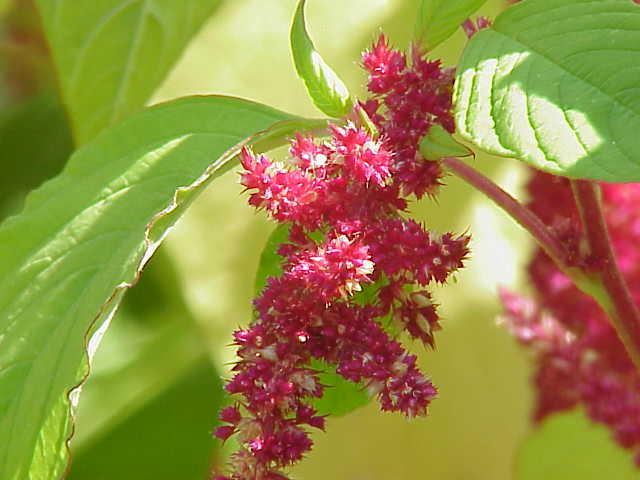 AmaranthAmaranthus
A tall, colourful plant grown for its flowers, leaves and edible seeds
🇲🇽 Mexico and 7 more · Wildflower
AmaranthAmaranthus
A tall, colourful plant grown for its flowers, leaves and edible seeds
🇲🇽 Mexico and 7 more · Wildflower
 Sensitive PlantMimosa pudica
A touch-sensitive plant whose leaves fold up when disturbed
🇧🇷 Brazil and 8 more · Wildflower
Sensitive PlantMimosa pudica
A touch-sensitive plant whose leaves fold up when disturbed
🇧🇷 Brazil and 8 more · Wildflower