
Field scabious
Knautia arvensis, family Caprifoliaceae
A wildflower with pale blue heads found in meadows and on roadsides
Field scabious is a perennial wildflower in the honeysuckle family, growing in grassy places and meadows, especially on chalky soils. Its flat-topped blue or lilac flower heads bloom from late spring through summer, attracting insects and serving as food for some moth caterpillars.
- Flat-topped blue flower heads bloom from May to August
- Found in meadows, field edges, and on chalky soils
- Host plant for the narrow-bordered bee hawk-moth caterpillar
- Historically used for skin conditions like scabies
What does Field scabious look like?
Field scabious is a perennial herb with upright, hairy stems and a rosette of spear-shaped leaves at the base. Its flower heads are made up of many small blue or lilac florets, forming a flat cluster on top of long stalks. The lower leaves are much longer than the upper ones, and the plant produces small, hairy, cylindrical fruits. The stems are covered in stiff hairs that point downward.
Where does Field scabious come from?
This plant is native to open grassy areas, meadows, and field edges, especially where the soil is dry and chalky. It avoids heavy soils. The genus name, Knautia, honours Christian Knaut, a botanist from Germany in the 1600s. The common name 'scabious' comes from its former use in treating skin problems, with the word tracing back to the Latin for 'scratch.'
When and how Field scabious blooms
Field scabious blooms from late spring into summer, with flowers appearing from May to August. It grows from a tap root, and its seeds develop in small, nut-like fruits. The plant thrives in dry, well-drained soils and is often found in natural grasslands, meadows, and along roadsides. It is not typically cultivated in gardens.


How Field scabious is used
Historically, field scabious was used in folk remedies for skin conditions such as scabies and sores. Today, it is valued in the wild for supporting pollinators and as a food source for certain moth caterpillars, including the narrow-bordered bee hawk-moth. It is not commonly grown for ornamental or culinary use.
Kinds of Field scabious
Field scabious is related to other species like devil's bit scabious and small scabious, which have similar but more rounded flower heads. The heads of field scabious are flatter than those of its relatives. Its other common names include 'Bluebuttons' and 'gipsy rose.'
What Field scabious means
The plant's name reflects its historical use in treating skin ailments. While it no longer plays a major role in medicine, it remains important in the ecosystem as a food source for insects. The genus commemorates a German botanist, and the plant is a familiar sight in European meadows and along country roads.
Questions people ask about Field scabious
Where does field scabious grow naturally?
Field scabious is found in grassy meadows, field margins, and along roadsides, especially in areas with dry, chalky soils.
What does field scabious look like?
It has upright, hairy stems, a basal rosette of spear-shaped leaves, and flat heads of small blue or lilac flowers.
What is field scabious used for?
In the past, it was used in folk medicine for treating skin problems such as scabies and sores.
What wildlife relies on field scabious?
Its leaves are eaten by the caterpillars of the narrow-bordered bee hawk-moth, and it attracts various pollinating insects.
How did field scabious get its name?
The name comes from its use in treating scabies, with 'scabious' linked to the Latin word for 'scratch.'
Good reading and sources
- USDA Plants DatabaseUS Department of Agriculture, Article
- Knautia arvensisRoyal Horticultural Society, Article
- Plants of the World OnlineRoyal Botanic Gardens, Kew, Plant database
- Where it has been recordedGBIF, Plant database
- Sightings and photos by naturalistsiNaturalist, Plant database
- Knautia arvensis on WikipediaEncyclopedia
- More photos on Wikimedia CommonsPhotos
- Wikidata recordOpen data
The facts on this page come from the Wikipedia article "Knautia arvensis", written by its contributors and used under the CC BY-SA 4.0 licence, and from its Wikidata record (CC0). Phool rewrote the text in its own words, with AI assistance, and compares every page with the article to make sure no passage is copied. It may be reused under the same CC BY-SA 4.0 licence with a link back.
It may contain mistakes. It is not medical or foraging advice: many flowers are poisonous, and traditional uses are reported, not recommended. If something is wrong, tell us. Last refreshed 2026-10-03.
Others in the family Caprifoliaceae
The whole family HoneysuckleLonicera
Twining vines and shrubs with sweet-scented tubular flowers and edible nectar
Lonicera · Wildflower
HoneysuckleLonicera
Twining vines and shrubs with sweet-scented tubular flowers and edible nectar
Lonicera · Wildflower
 Common ValerianValeriana officinalis
Tall, sweet-scented wildflower with pale pink blooms and a long history in herbal lore
🇮🇸 Iceland and 8 more · Wildflower
Common ValerianValeriana officinalis
Tall, sweet-scented wildflower with pale pink blooms and a long history in herbal lore
🇮🇸 Iceland and 8 more · Wildflower
 Lomelosia comosa
A perennial wildflower and Mongolia's national flower
🇲🇳 Mongolia and 1 more · Wildflower
Lomelosia comosa
A perennial wildflower and Mongolia's national flower
🇲🇳 Mongolia and 1 more · Wildflower
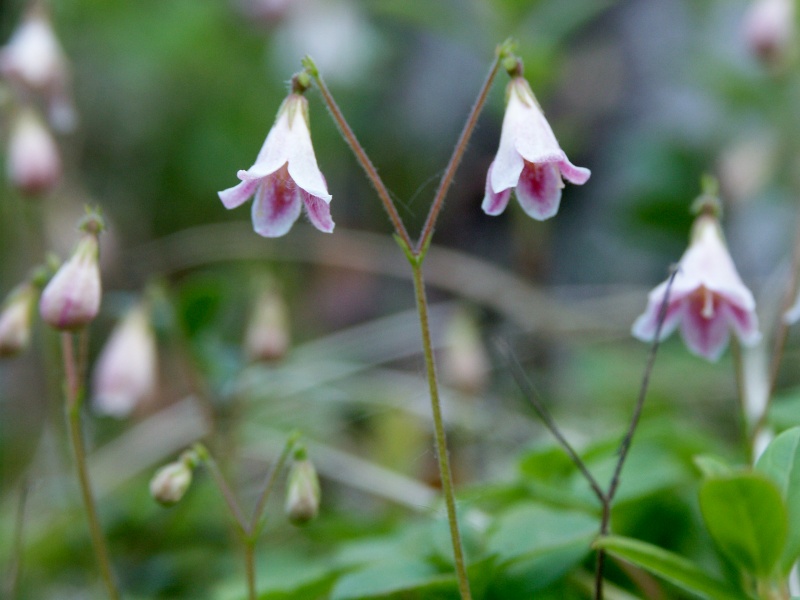 TwinflowerLinnaea borealis
A small woodland plant with paired pale pink flowers, named for Carl Linnaeus
🇺🇸 United States and 2 more · Wildflower
TwinflowerLinnaea borealis
A small woodland plant with paired pale pink flowers, named for Carl Linnaeus
🇺🇸 United States and 2 more · Wildflower