
Lomelosia comosa
A perennial wildflower and Mongolia's national flower
Lomelosia comosa is a perennial wildflower from the honeysuckle family, native to parts of East and Central Asia. It grows in dry, open places and is recognized as the national flower of Mongolia.
- National flower of Mongolia
- Native to parts of Asia including Mongolia and China
- Grows in dry, open habitats like grasslands and sandy slopes
What does Lomelosia comosa look like?
This plant is a perennial herb that usually stands between 30 and 80 centimeters tall. It belongs to the honeysuckle family and is known for its upright growth. Lomelosia comosa is found in open, dry habitats, such as sandy areas and grasslands. Its flowers and leaves are adapted to survive in places with little water and can be seen growing on gentle hills and plains.
Where does Lomelosia comosa come from?
Lomelosia comosa grows naturally in regions of East and Central Asia, including Mongolia, parts of China, Korea, and areas of Siberia. It is most often found in open, dry landscapes, such as sandy soils and grassland slopes. Over time, it has become a familiar sight in these environments, and its presence is especially significant in Mongolia, where it is honored as a national symbol.
When and how Lomelosia comosa blooms
This wildflower thrives in dry, well-drained soils and is most commonly seen in open, sunlit areas. It grows from seed and can be found scattered across grasslands and sandy slopes. The plant is perennial, meaning it returns each year without needing to be replanted, and it is well suited to the natural climate of its native regions.

How Lomelosia comosa is used
Lomelosia comosa is most notable for its role as the national flower of Mongolia. It is valued as a symbol in that country, representing the natural heritage of the region. While it is not widely used for decoration or in gardens, its importance lies in its cultural and national significance.
Kinds of Lomelosia comosa
The plant is sometimes referred to by its synonym, Scabiosa comosa, in scientific literature. It is also known as northeastern scabious. There are no widely recognized cultivated varieties or subspecies mentioned in the sources.
What Lomelosia comosa means
Chosen as the national flower of Mongolia, Lomelosia comosa holds a special place in the country's identity. Its selection reflects the plant's abundance in the Mongolian landscape and its resilience in challenging environments. The flower stands as a symbol of the nation's natural beauty and endurance.
Questions people ask about Lomelosia comosa
Where does Lomelosia comosa come from?
It is native to regions in East and Central Asia, including Mongolia, parts of China, Korea, and Siberia.
What kind of places does this plant grow in?
It grows in dry, open areas such as grasslands, sandy soils, and gentle slopes, often at moderate elevations.
Why is Lomelosia comosa important in Mongolia?
It is the national flower of Mongolia and is valued as a symbol of the country's natural landscape and heritage.
What family does Lomelosia comosa belong to?
It is a member of the honeysuckle family, Caprifoliaceae.
Good reading and sources
The facts on this page come from the Wikipedia article "Lomelosia comosa", written by its contributors and used under the CC BY-SA 4.0 licence, and from its Wikidata record (CC0). Phool rewrote the text in its own words, with AI assistance, and compares every page with the article to make sure no passage is copied. It may be reused under the same CC BY-SA 4.0 licence with a link back.
It may contain mistakes. It is not medical or foraging advice: many flowers are poisonous, and traditional uses are reported, not recommended. If something is wrong, tell us. Last refreshed 2026-10-03.
Others in the family Caprifoliaceae
The whole family HoneysuckleLonicera
Twining vines and shrubs with sweet-scented tubular flowers and edible nectar
Lonicera · Wildflower
HoneysuckleLonicera
Twining vines and shrubs with sweet-scented tubular flowers and edible nectar
Lonicera · Wildflower
 Common ValerianValeriana officinalis
Tall, sweet-scented wildflower with pale pink blooms and a long history in herbal lore
🇮🇸 Iceland and 8 more · Wildflower
Common ValerianValeriana officinalis
Tall, sweet-scented wildflower with pale pink blooms and a long history in herbal lore
🇮🇸 Iceland and 8 more · Wildflower
 Patrinia scabiosifolia
A yellow-flowered perennial of East Asian meadows and gardens
🇨🇳 China and 4 more · Wildflower
Patrinia scabiosifolia
A yellow-flowered perennial of East Asian meadows and gardens
🇨🇳 China and 4 more · Wildflower
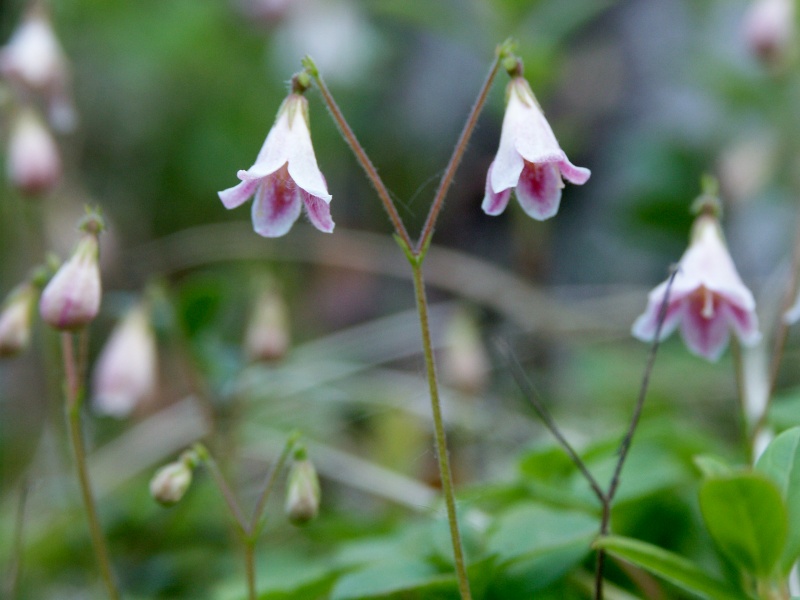 TwinflowerLinnaea borealis
A small woodland plant with paired pale pink flowers, named for Carl Linnaeus
🇺🇸 United States and 2 more · Wildflower
TwinflowerLinnaea borealis
A small woodland plant with paired pale pink flowers, named for Carl Linnaeus
🇺🇸 United States and 2 more · Wildflower
More from Mongolia
All the flowers of Mongolia BirchBetula
Slender trees with papery bark found across the northern world
🇨🇳 China and 7 more · Wildflower
BirchBetula
Slender trees with papery bark found across the northern world
🇨🇳 China and 7 more · Wildflower
 Orchis
A group of wild orchids with tuberous roots from Europe, North Africa and Asia
🇹🇷 Turkey and 7 more · Wildflower
Orchis
A group of wild orchids with tuberous roots from Europe, North Africa and Asia
🇹🇷 Turkey and 7 more · Wildflower
 Paeonia anomala
A wild peony with finely divided leaves and magenta-red flowers from northern Eurasia
🇷🇺 Russia and 4 more · Wildflower
Paeonia anomala
A wild peony with finely divided leaves and magenta-red flowers from northern Eurasia
🇷🇺 Russia and 4 more · Wildflower
 Siberian columbineAquilegia sibirica
A hardy lilac-blue and white columbine from Siberia and Central Asia
🇲🇳 Mongolia and 3 more · Wildflower
Siberian columbineAquilegia sibirica
A hardy lilac-blue and white columbine from Siberia and Central Asia
🇲🇳 Mongolia and 3 more · Wildflower