
Magnolia family
Magnoliaceae, family Magnoliaceae
An ancient flowering plant family with spiral blooms and bright seeds
The Magnoliaceae are an old lineage of flowering plants, made up mainly of the genera Magnolia and Liriodendron. They grow across parts of Asia and the Americas, bearing large, fragrant flowers with undifferentiated petals and sepals, and distinctive red or orange seeds.
- Flowers have spiral arrangements of stamens and pistils, a primitive trait
- Petals and sepals are not clearly distinct, they’re called tepals
- Seeds are bright red or orange and dispersed by birds
- Most species are pollinated by beetles, not bees or butterflies
- China uses magnolia bark medicinally for digestion and respiratory issues
What does Magnolia family look like?
Plants in the Magnolia family typically have large, showy flowers that are often fragrant. Their petals and sepals look alike and are called tepals. The stamens and pistils are arranged in spirals on a cone-shaped base. Leaves are simple and alternate, sometimes lobed. The fruit is an aggregate of follicles that split open to reveal brightly colored red or orange seeds.
Where does Magnolia family come from?
Magnoliaceae is one of the earliest lineages of flowering plants. Its current distribution, split between Asia and the Americas, is the result of ancient geological changes like continental drift and ice ages. Fossil evidence shows this family has existed for millions of years, retaining primitive floral traits such as spiral organ arrangement and undifferentiated perianth parts.
When and how Magnolia family blooms
These plants bloom as solitary flowers, usually bisexual and radially symmetrical. Most are pollinated by beetles, except Liriodendron, which bees visit. The carpels are thick-walled to protect against beetle damage. After flowering, woody fruits develop and open to expose fleshy-coated seeds that attract birds, which disperse them through their droppings.


How Magnolia family is used
Magnolias are widely grown as ornamental trees in gardens and parks. In China, the bark of Magnolia officinalis has been used traditionally for digestive issues, while flower buds like those of Magnolia liliiflora treat respiratory conditions. The wood of some species, such as Liriodendron tulipifera, is valued for fine woodworking and sold as 'yellow poplar'.
Kinds of Magnolia family
The family includes two widely accepted genera: Magnolia, with hundreds of species, and Liriodendron, with just two, both tall trees with lobed leaves and greenish-yellow flowers. Some botanists recognize up to 17 genera, but recent DNA studies often merge most into Magnolia, dividing it into sections like Yulania, Talauma, and Oyama.
What Magnolia family means
Magnolias hold cultural importance in China, where they appear in traditional medicine texts dating back thousands of years. Though not tied to specific religious rites in the sources, they are celebrated in horticulture worldwide. Several species are threatened, prompting conservation efforts like the Red List of Magnoliaceae.
Questions people ask about Magnolia family
Where does the magnolia family come from?
It grows wild across temperate and tropical Asia, including China, Japan, and the Himalayas, and in the Americas from southern Canada through Mexico to Brazil and the West Indies.
What makes magnolia flowers different from other flowers?
Their stamens and pistils spiral around a cone-like base, and their petals and sepals look alike (called tepals), unlike most modern flowers that have whorled, distinct parts.
Are magnolias used for anything besides decoration?
Yes. In Chinese tradition, bark from Magnolia officinalis treats stomach pain and nausea, and flower buds help with lung congestion. Some species also yield valuable timber known as yellow poplar.
How are magnolia seeds spread?
Birds eat the fleshy, brightly colored red or orange seeds and disperse them through their droppings, a process called endozoochory.
Why are magnolias considered ancient plants?
Their flower structure resembles fossil plants and lacks features of more evolved angiosperms, suggesting they branched off early in flowering plant evolution.
Good reading and sources
- Encyclopaedia BritannicaArticle
- Liriodendron tulipiferaUS Department of Agriculture, Article
- Plants of the World OnlineRoyal Botanic Gardens, Kew, Plant database
- Where it has been recordedGBIF, Plant database
- Sightings and photos by naturalistsiNaturalist, Plant database
The facts on this page come from the Wikipedia article "Magnoliaceae", written by its contributors and used under the CC BY-SA 4.0 licence, and from its Wikidata record (CC0). EveryPhool rewrote the text in its own words, with AI assistance, and compares every page with the article to make sure no passage is copied. It may be reused under the same CC BY-SA 4.0 licence with a link back.
It may contain mistakes. It is not medical or foraging advice: many flowers are poisonous, and traditional uses are reported, not recommended. If something is wrong, tell us. Last refreshed 2026-10-04.
Others in the family Magnoliaceae
The whole family ChampakMagnolia champaca
A tall tree with fragrant yellow to orange flowers, prized in South and Southeast Asia
🇲🇲 Myanmar and 7 more · Flowering tree
ChampakMagnolia champaca
A tall tree with fragrant yellow to orange flowers, prized in South and Southeast Asia
🇲🇲 Myanmar and 7 more · Flowering tree
 Campbell's MagnoliaMagnolia campbellii
A Himalayan tree with large pink or white flowers blooming before the leaves
🇨🇳 China and 3 more · Flowering tree
Campbell's MagnoliaMagnolia campbellii
A Himalayan tree with large pink or white flowers blooming before the leaves
🇨🇳 China and 3 more · Flowering tree
 Magnolia sieboldii
A summer-blooming magnolia with white, cup-shaped flowers from East Asia
🇨🇳 China and 3 more · Flowering tree
Magnolia sieboldii
A summer-blooming magnolia with white, cup-shaped flowers from East Asia
🇨🇳 China and 3 more · Flowering tree
 Tulip treeLiriodendron tulipifera
A towering North American tree with tulip-shaped yellow-green flowers
🇺🇸 United States and 1 more · Flowering tree
Tulip treeLiriodendron tulipifera
A towering North American tree with tulip-shaped yellow-green flowers
🇺🇸 United States and 1 more · Flowering tree
More from China
All the flowers of China RoseRosa
Prickly flowering shrubs grown across the world for fragrant blossoms and rose hips
🇨🇳 China and 7 more · Flowering shrub
RoseRosa
Prickly flowering shrubs grown across the world for fragrant blossoms and rose hips
🇨🇳 China and 7 more · Flowering shrub
 PeachPrunus persica
A flowering fruit tree from China, grown for its pink blossoms and sweet fruit
🇨🇳 China and 7 more · Flowering tree
PeachPrunus persica
A flowering fruit tree from China, grown for its pink blossoms and sweet fruit
🇨🇳 China and 7 more · Flowering tree
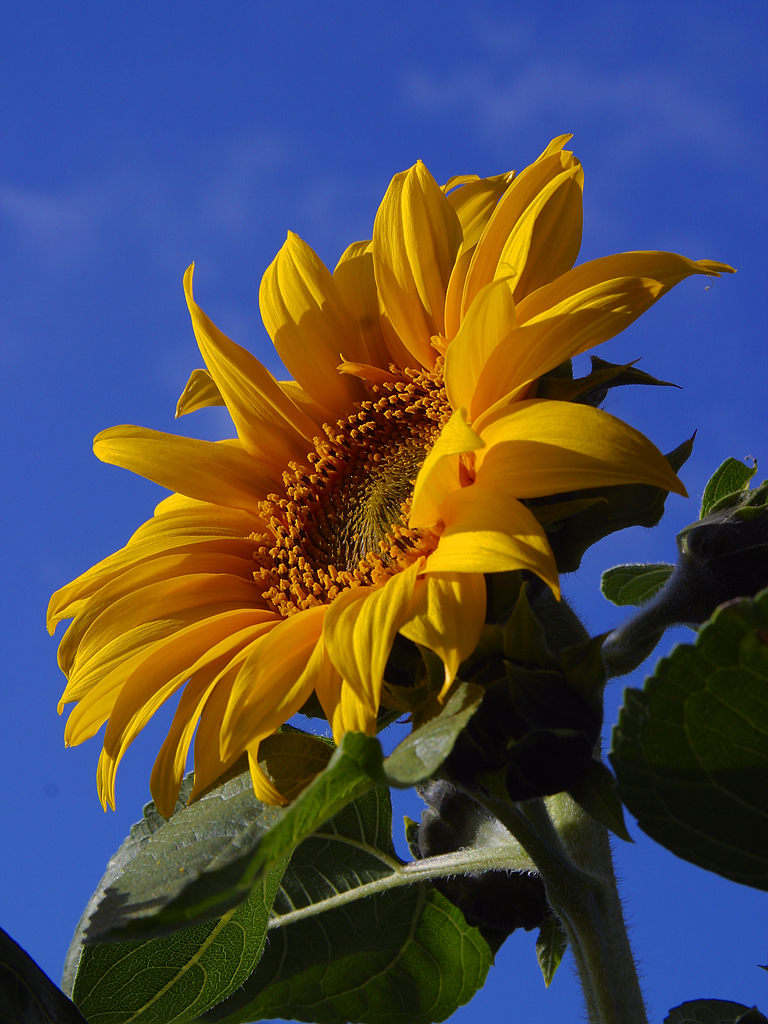 Common sunflowerHelianthus annuus
A tall annual plant grown for its large yellow flower heads and edible seeds
🇨🇦 Canada and 4 more · Wildflower
Common sunflowerHelianthus annuus
A tall annual plant grown for its large yellow flower heads and edible seeds
🇨🇦 Canada and 4 more · Wildflower
 PomegranatePunica granatum
A shrub with bright red flowers and a fruit full of edible seeds
🇮🇷 Iran and 9 more · Flowering shrub
PomegranatePunica granatum
A shrub with bright red flowers and a fruit full of edible seeds
🇮🇷 Iran and 9 more · Flowering shrub