
Grape hyacinth
Muscari, family Asparagaceae
Small spring bulbs with blue, grape-like flower clusters
Grape hyacinths (Muscari) are spring-flowering bulbs that form tight clusters of blue, urn-shaped blooms. Native to parts of Europe, North Africa, and Asia, they are popular in gardens for their early color and ability to spread. The flowers resemble miniature bunches of grapes and can also be found in white or pink forms.
- Produces dense spikes of blue, grape-like flowers in spring
- Native to Europe, North Africa, and parts of Asia
- Easily spreads and naturalizes in gardens
- Includes rare pink and white cultivars
- Named for a musk scent in some species
What does Grape hyacinth look like?
Grape hyacinths are small perennial plants that grow from bulbs. Their leaves are narrow and grass-like, sprouting from the base. In spring, they send up short stems topped with dense spikes of tiny, urn-shaped flowers. The blooms are most often deep blue but can range from pale blue to nearly black, with some varieties showing white, pink, or even cream shades. The flower clusters look like small bunches of grapes, and sometimes the uppermost flowers differ in color or shape from the lower ones.
Where does Grape hyacinth come from?
Muscari species come from regions stretching across Europe, North Africa, and western to southwest Asia. They have a long history in gardens and were named by botanists in the 18th century, with the name 'muscari' referring to a musk-like scent in some species. Over time, these plants have spread beyond their native habitats and are now found naturalized in places such as Northern Europe and the United States.
When and how Grape hyacinth blooms
Grape hyacinths are grown from bulbs planted in autumn. They thrive in well-drained, sandy soils that are not too rich, preferring sun or light shade. Once established, they multiply easily and can form large patches in lawns, borders, or rock gardens. They bloom early in the spring and require little care after flowering, needing minimal watering or feeding during summer.

How Grape hyacinth is used
These bulbs are valued in gardens for their early spring display and ability to spread naturally. They are often planted in groups for a striking effect and can be grown in containers as well. While mainly used for ornamental purposes, some species are also found in the wild in meadows and woodlands.
Kinds of Grape hyacinth
There are around 85 accepted species of Muscari, with some confusion in naming among gardeners. The group includes several subgenera, and new species continue to be described, such as one recently found in Turkey. Cultivars like 'Pink Sunrise' offer unusual flower colors, such as pale pink, expanding the range beyond the typical blues.
What Grape hyacinth means
Grape hyacinths are among the first flowers to bloom in spring gardens and are appreciated for their vibrant color. They are not to be confused with true hyacinths, despite the similar name. Collections of Muscari are maintained by enthusiasts, such as the National Collection in Norfolk, UK. Their cheerful appearance makes them a favorite for naturalizing in gardens.
Traditions that use it
Where to see Grape hyacinth

Questions people ask about Grape hyacinth
Where do grape hyacinths come from?
Grape hyacinths are native to regions across Europe, North Africa, and western to southwest Asia. They have also become established in other areas, including Northern Europe and the United States.
What do grape hyacinths look like?
They are small plants with narrow leaves and short flower spikes. The flowers are tightly packed, urn-shaped, and most often blue, resembling clusters of grapes. Some varieties can be white, pink, or cream.
How are grape hyacinths used?
They are mainly grown as ornamental plants in gardens, borders, lawns, and containers. Their early spring blooms and ability to spread make them popular for naturalizing.
Are there different types of grape hyacinths?
Yes, there are about 85 species, with several subgenera and many cultivars. Some have unusual colors, such as pale pink, in addition to the common blue.
Do grape hyacinths have any special meaning or symbolism?
The sources do not mention any specific symbolism or cultural meaning for grape hyacinths.
Good reading and sources
- Encyclopaedia BritannicaArticle
- USDA Plants DatabaseUS Department of Agriculture, Article
- Plants of the World OnlineRoyal Botanic Gardens, Kew, Plant database
- Where it has been recordedGBIF, Plant database
- Sightings and photos by naturalistsiNaturalist, Plant database
The facts on this page come from the Wikipedia article "Muscari", written by its contributors and used under the CC BY-SA 4.0 licence, and from its Wikidata record (CC0). Phool rewrote the text in its own words, with AI assistance, and compares every page with the article to make sure no passage is copied. It may be reused under the same CC BY-SA 4.0 licence with a link back.
It may contain mistakes. It is not medical or foraging advice: many flowers are poisonous, and traditional uses are reported, not recommended. If something is wrong, tell us. Last refreshed 2026-10-03.
Others in the family Asparagaceae
The whole family Lily-of-the-valleyConvallaria majalis
A woodland plant with sweet-scented white bell flowers in late spring
🇫🇮 Finland and 4 more · Wildflower
Lily-of-the-valleyConvallaria majalis
A woodland plant with sweet-scented white bell flowers in late spring
🇫🇮 Finland and 4 more · Wildflower
 HyacinthHyacinthus
A spring-blooming bulb with fragrant, colourful flower spikes
🇹🇷 Turkey and 7 more · Bulb flower
HyacinthHyacinthus
A spring-blooming bulb with fragrant, colourful flower spikes
🇹🇷 Turkey and 7 more · Bulb flower
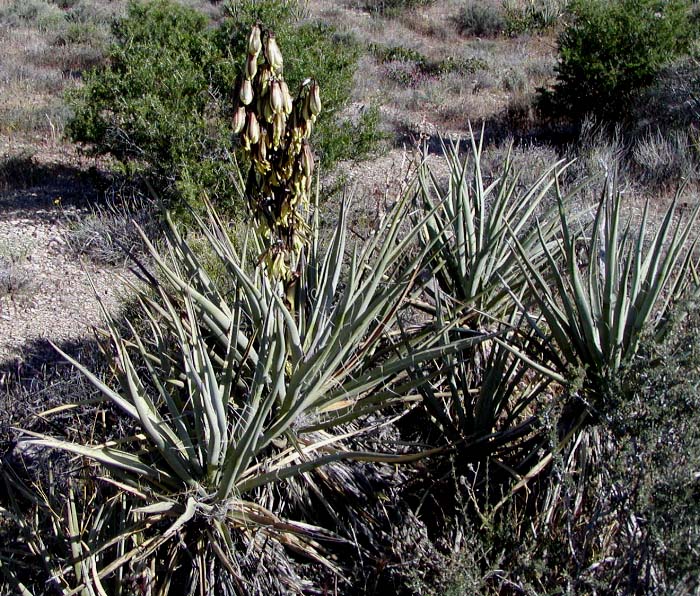 Yucca
Dry-climate plants with pointed leaves and clusters of creamy white flowers
🇲🇽 Mexico and 4 more · Wildflower
Yucca
Dry-climate plants with pointed leaves and clusters of creamy white flowers
🇲🇽 Mexico and 4 more · Wildflower
 Ornithogalum thyrsoides
A white, long-lasting bulb flower from South Africa’s Cape Province
🇿🇦 South Africa · Bulb flower
Ornithogalum thyrsoides
A white, long-lasting bulb flower from South Africa’s Cape Province
🇿🇦 South Africa · Bulb flower