
Star-of-Bethlehem
Ornithogalum, family Asparagaceae
Bulbous plants with white star-shaped flowers from Europe, Africa, and Asia
Ornithogalum, or Star-of-Bethlehem, is a group of perennial bulb plants mostly from southern Europe and southern Africa, with some species in temperate Asia. These plants have slender stems and clusters of star-shaped white flowers, and are grown for gardens and as cut flowers, though some species are toxic.
- Ornithogalum flowers are usually white and star-shaped
- Some species are grown as cut flowers and garden plants
- Certain species are toxic to animals
- The genus includes about 50 to 300 species
- Name means 'bird's milk' in Greek
What does Star-of-Bethlehem look like?
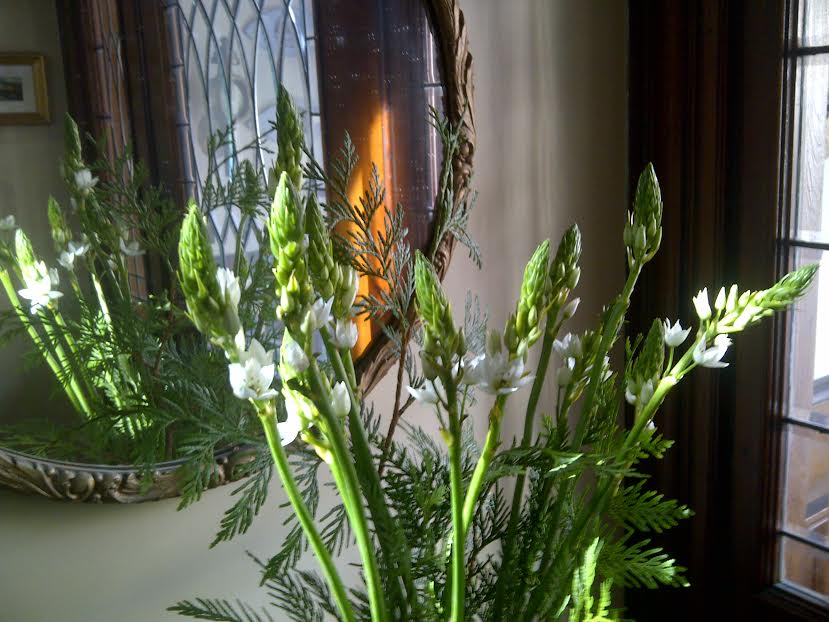
Ornithogalum species are perennial plants that grow from bulbs. The leaves are long, narrow, and often have a white stripe along the upper side. From the base rises a slender stalk, up to 30 cm tall, topped with a cluster of star-shaped flowers. Most flowers are white, sometimes with a green stripe on the back of each petal, though some species have yellow blooms. The flowers are typically arranged in a flat or slightly rounded cluster. The plant forms a capsule fruit with round, net-patterned seeds.
Where does Star-of-Bethlehem come from?
Most Ornithogalum species are native to southern Europe and southern Africa, with some found as far as Afghanistan and Madagascar. The genus was first described by Linnaeus in 1753. Over time, botanists have debated how many species belong in Ornithogalum, with numbers ranging from about 50 to 300, depending on how broadly the group is defined. The name comes from Greek words for 'bird' and 'milk', likely referring to the white flowers. Some species have spread widely and can be invasive in places like North America.
When and how Star-of-Bethlehem blooms
Ornithogalum grows from bulbs planted in the ground. The plants send up leaves from the base, followed by a flower stalk in the growing season. They prefer well-drained soil and moderate climates. Flowers appear in clusters, and after blooming, the plant forms seed capsules. Some species are grown for gardens or as cut flowers, especially those with showy blooms.


How Star-of-Bethlehem is used
Several Ornithogalum species are popular as ornamental garden plants and are often sold as cut flowers, such as O. arabicum and O. thyrsoides. Some species have edible parts and are used as vegetables, while others are toxic and can harm animals. Ornithogalum is also one of the plants used in Bach flower remedies, a form of alternative medicine, though there is no scientific proof of its effectiveness.
Kinds of Star-of-Bethlehem
The genus includes well-known species like O. umbellatum (garden star-of-Bethlehem), O. saundersiae (giant chincherinchee), O. dubium (sun star), and O. thyrsoides (chincherinchee). Some species formerly placed in the genus Galtonia are now considered part of Ornithogalum by some botanists. The number of species and their classification varies depending on the authority.
What Star-of-Bethlehem means
The star-shaped flowers inspired the common name 'Star-of-Bethlehem', referring to the biblical star. Some species are valued for their beauty in gardens and floral arrangements. However, their toxicity is a concern for grazing animals. The plant is included in Bach flower remedies, but these uses are not supported by scientific evidence.
Questions people ask about Star-of-Bethlehem
Where does Ornithogalum come from?
Most species of Ornithogalum are native to southern Europe and southern Africa, with some found in temperate parts of Asia, such as Afghanistan, and on Madagascar.
What does the Star-of-Bethlehem flower look like?
It has a slender stalk up to 30 cm tall with clusters of star-shaped white flowers, often with a green stripe on the back of each petal. Some species have yellow flowers.
Is Ornithogalum poisonous?
Yes, some Ornithogalum species contain toxic alkaloids and steroids, which can be harmful or fatal to grazing animals. Not all species are toxic, but caution is advised.
How is Ornithogalum used?
It is grown as an ornamental garden plant and sold as a cut flower. Some species are edible, while others are used in alternative medicine, though there is no scientific proof for medicinal effects.
What does Ornithogalum symbolise?
The common name 'Star-of-Bethlehem' refers to the biblical star, and the flower is often associated with purity and hope due to its white, star-like appearance.
Good reading and sources
- Encyclopaedia BritannicaArticle
- USDA Plants DatabaseUS Department of Agriculture, Article
- Plants of the World OnlineRoyal Botanic Gardens, Kew, Plant database
- Where it has been recordedGBIF, Plant database
- Sightings and photos by naturalistsiNaturalist, Plant database
The facts on this page come from the Wikipedia article "Ornithogalum", written by its contributors and used under the CC BY-SA 4.0 licence, and from its Wikidata record (CC0). Phool rewrote the text in its own words, with AI assistance, and compares every page with the article to make sure no passage is copied. It may be reused under the same CC BY-SA 4.0 licence with a link back.
It may contain mistakes. It is not medical or foraging advice: many flowers are poisonous, and traditional uses are reported, not recommended. If something is wrong, tell us. Last refreshed 2026-10-03.
Others in the family Asparagaceae
The whole family Lily-of-the-valleyConvallaria majalis
A woodland plant with sweet-scented white bell flowers in late spring
🇫🇮 Finland and 4 more · Wildflower
Lily-of-the-valleyConvallaria majalis
A woodland plant with sweet-scented white bell flowers in late spring
🇫🇮 Finland and 4 more · Wildflower
 HyacinthHyacinthus
A spring-blooming bulb with fragrant, colourful flower spikes
🇹🇷 Turkey and 7 more · Bulb flower
HyacinthHyacinthus
A spring-blooming bulb with fragrant, colourful flower spikes
🇹🇷 Turkey and 7 more · Bulb flower
 Yucca
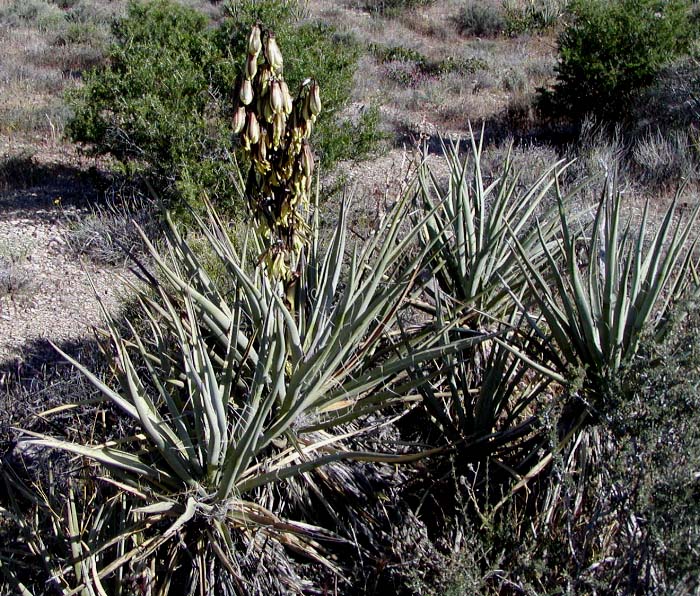
Dry-climate plants with pointed leaves and clusters of creamy white flowers
🇲🇽 Mexico and 4 more · Wildflower
Yucca
Dry-climate plants with pointed leaves and clusters of creamy white flowers
🇲🇽 Mexico and 4 more · Wildflower
 Ornithogalum thyrsoides
A white, long-lasting bulb flower from South Africa’s Cape Province
🇿🇦 South Africa · Bulb flower
Ornithogalum thyrsoides
A white, long-lasting bulb flower from South Africa’s Cape Province
🇿🇦 South Africa · Bulb flower