
Paper mulberry
Broussonetia papyrifera, family Moraceae
In its own language: 鹿仔樹
An East Asian tree prized across the Pacific for barkcloth and fine paper
Paper mulberry is a deciduous East Asian tree known for its textured leaves, greenish flower heads, and bright orange-red fruit clusters. Across Asia and the Pacific, communities cultivate it to beat soft barkcloth, produce resilient handmade paper, and harvest its edible parts.
- Ancient Pacific navigators transported root cuttings across Polynesia to produce traditional barkcloth.
- The inner bark yields raw fiber for traditional Korean hanji and Japanese washi papers.
- Separate male catkins and female spherical flower heads bloom on individual trees.
- A 751 AD Korean woodblock print, among the world's earliest, was printed on paper from this tree.
What does Paper mulberry look like?
Paper mulberry grows as a deciduous shrub or tree reaching between 10 and 20 metres in height, occasionally growing taller. Its leaves are rough to the touch, measuring up to 20 centimetres long, with pale, lightly hairy undersides and saw-toothed margins. A single branch can carry both lobed and undivided leaves. Because the tree is dioecious, individual specimens produce either male or female blooms. Male plants grow fuzzy catkins up to 8 centimetres in length. Female trees bear spherical green heads roughly 2 centimetres across, covered with long trailing styles. When pollinated, these round heads develop into bumpy, orange or red fruit clusters composed of many small drupes.
Where does Paper mulberry come from?
Native across East and Southeast Asia, paper mulberry wild ranges include mainland China, Taiwan, Japan, Korea, India, Hong Kong, and Myanmar. Prehistoric Austronesian seafarers carried root cuttings across the Pacific Ocean, making it the most broadly dispersed fiber crop of antiquity. Genetic studies connect Pacific trees back through Sulawesi and New Guinea to an origin in Taiwan, alongside secondary lineages from mainland Indochina. Polynesian navigators transported it to Samoa, Tonga, Easter Island, and New Zealand. In New Zealand, early Māori planted it from voyaging canoes, naming it aute, though these groves disappeared by the mid-nineteenth century before later reintroduction.
When and how Paper mulberry blooms
The species grows rapidly, gaining 3 to 4 metres of height within two seasons. It tolerates varied climates, spanning warm tropical regions and cool temperate zones. Because plants are separated into male and female individuals, fruit and seed set require both sexes nearby. Light male pollen travels long distances on the wind, while birds and insects scatter seeds from eaten fruit. In cultivation, people historically propagated the plant through root shoots and stem cuttings. The tree forms dense thickets with its creeping root network, allowing it to colonise disturbed forest clearings, roadside verges, and open ground.


How Paper mulberry is used
Communities throughout the Pacific beat the tree's inner bark into tapa cloth, working the material with grooved wood or stone tools called ike. Across East Asia, papermakers soak and pound the inner fibers into paste to produce long-lasting sheets, including Korean hanji and Japanese washi. Its timber provides raw material for light furniture and utensils, while roots are twisted into sturdy cordage. People cook the young leaves and harvest the vitamin-rich fruit for food. In rural Pakistan, where it is known as jangli toot, traditional healers prescribe the bark and fruit as a laxative and to lower fevers.
Kinds of Paper mulberry
Paper mulberry is botanically uniform across its broad range, but regional communities recognise distinct cultural forms. Polynesian peoples know the plant as tapa, aute, hiapo, or kapa, selecting vigorous shoots for textile making. In China, farmers nicknamed it the little deer tree because they gathered the foliage to feed sheep, cattle, and deer. Mainland Asian wild populations show substantial genetic variation compared to Pacific island clones. In Pakistan, urban and wild colonies thrive as an uncultivated tree, where it has adapted strongly to roadside and riverbank soils.
What Paper mulberry means
Barkcloth beaters found at Chinese archaeological sites like Guangxi date barkcloth production back nearly 7,900 years. Early Māori settlers used aute bark to craft white ear ornaments and headbands for high-status men. In Korea, the world's oldest surviving woodblock print from 751 AD was impressed on durable hanji made from this species. Because it spreads aggressively and sheds allergenic pollen that hospitalises thousands in Islamabad each March, many countries now treat it as a noxious weed, and the European Union prohibits its trade and cultivation.
Where Paper mulberry is used and seen

Questions people ask about Paper mulberry
Where does paper mulberry originate?
Paper mulberry is native to subtropical East and Southeast Asia, including China, Taiwan, Japan, Korea, Myanmar, and India. Ancient voyagers spread it throughout the Pacific Islands.
What are the main uses of paper mulberry?
People pound its inner bark into Polynesian tapa cloth and East Asian hanji and washi papers. The tree also provides edible fruit, cooked greens, cordage, furniture wood, and traditional folk remedies.
How do male and female paper mulberry trees differ?
The species is dioecious. Male trees bear fuzzy, hanging catkins that release pollen into the wind, while female trees produce round greenish flower heads that mature into bumpy, spherical orange-red fruit clusters.
Why is paper mulberry considered an invasive weed in some areas?
It spreads rapidly through aggressive root shoots and windborne pollen, easily taking over clearings. In cities like Islamabad, heavy springtime pollen causes widespread respiratory allergies, leading authorities to restrict its planting.
Good reading and sources
- Encyclopaedia BritannicaArticle
- IUCN Red List of Threatened SpeciesIUCN Red List, Article
- USDA Plants DatabaseUS Department of Agriculture, Article
- Plants of the World OnlineRoyal Botanic Gardens, Kew, Plant database
- Where it has been recordedGBIF, Plant database
- Sightings and photos by naturalistsiNaturalist, Plant database
- Paper mulberry on WikipediaEncyclopedia
- More photos on Wikimedia CommonsPhotos
- Wikidata recordOpen data
The facts on this page come from the Wikipedia article "Paper mulberry", written by its contributors and used under the CC BY-SA 4.0 licence, and from its Wikidata record (CC0). EveryPhool rewrote the text in its own words, with AI assistance, and compares every page with the article to make sure no passage is copied. It may be reused under the same CC BY-SA 4.0 licence with a link back.
It may contain mistakes. It is not medical or foraging advice: many flowers are poisonous, and traditional uses are reported, not recommended. If something is wrong, tell us. Last refreshed 2026-10-04.
Others in the family Moraceae
The whole family White mulberryMorus alba
A fast-growing tree with sweet fruit and leaves fed to silkworms
🇨🇳 China and 7 more · Flowering tree
White mulberryMorus alba
A fast-growing tree with sweet fruit and leaves fed to silkworms
🇨🇳 China and 7 more · Flowering tree
 Sacred figFicus religiosa
The large sacred tree under which the Buddha attained enlightenment
🇮🇳 India and 8 more · Flowering tree
Sacred figFicus religiosa
The large sacred tree under which the Buddha attained enlightenment
🇮🇳 India and 8 more · Flowering tree
 Indian banyanFicus benghalensis
A massive sacred fig tree of the Indian subcontinent
🇮🇳 India and 2 more · Flowering tree
Indian banyanFicus benghalensis
A massive sacred fig tree of the Indian subcontinent
🇮🇳 India and 2 more · Flowering tree
 Rubber plantFicus elastica
A large Asian banyan tree with glossy foliage, grown globally as a houseplant
🇮🇳 India and 7 more · Flowering tree
Rubber plantFicus elastica
A large Asian banyan tree with glossy foliage, grown globally as a houseplant
🇮🇳 India and 7 more · Flowering tree
More from China
All the flowers of China PeachPrunus persica
A flowering fruit tree from China, grown for its pink blossoms and sweet fruit
🇨🇳 China and 7 more · Flowering tree
PeachPrunus persica
A flowering fruit tree from China, grown for its pink blossoms and sweet fruit
🇨🇳 China and 7 more · Flowering tree
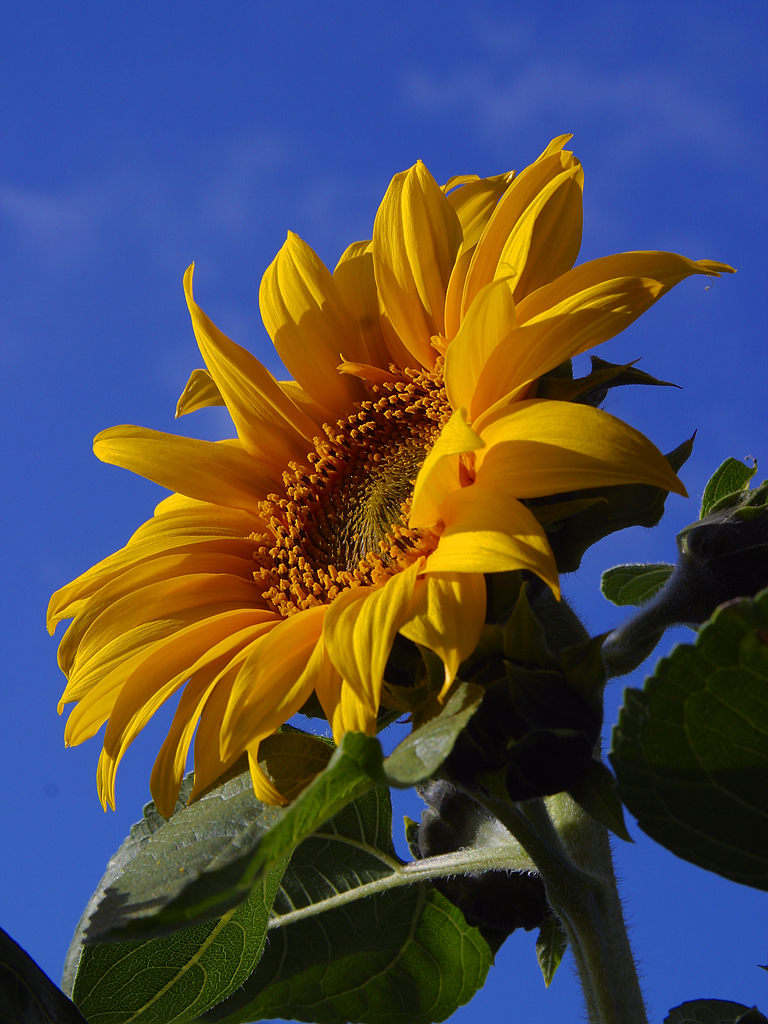 Common sunflowerHelianthus annuus
A tall annual plant grown for its large yellow flower heads and edible seeds
🇨🇦 Canada and 4 more · Wildflower
Common sunflowerHelianthus annuus
A tall annual plant grown for its large yellow flower heads and edible seeds
🇨🇦 Canada and 4 more · Wildflower
 BirchBetula
Slender trees with papery bark found across the northern world
🇨🇳 China and 7 more · Wildflower
BirchBetula
Slender trees with papery bark found across the northern world
🇨🇳 China and 7 more · Wildflower
 ApricotPrunus armeniaca
A small fruit tree with early white to pink blossoms and golden-orange fruit
🇨🇳 China and 6 more · Flowering tree
ApricotPrunus armeniaca
A small fruit tree with early white to pink blossoms and golden-orange fruit
🇨🇳 China and 6 more · Flowering tree