
Leadwort Family
Plumbaginaceae, family Plumbaginaceae
A global plant family known for sea pinks, leadworts, and salt-marsh blooms
Plumbaginaceae is a widespread family of flowering perennials, shrubs, and climbers found worldwide from arctic shores to tropical zones. Often thriving in salty marshes and coastal steppes, many species are cultivated in gardens for their showy blooms.
- Found across the globe in habitats ranging from arctic tundra to tropical coastlines.
- Specialized chalk glands allow many species to thrive in saline steppes and coastal marshes.
- Encompasses around 725 species across genera such as Armeria, Limonium, and Plumbago.
What does Leadwort Family look like?
The leadwort family, Plumbaginaceae, consists primarily of perennial herbs, though certain members develop as climbing vines or woody shrubs. Their flowers are structurally complete, containing both male and female organs, and rely on insects for pollination. A defining anatomical characteristic of the family is the presence of specialized chalk glands on the foliage. Across its different genera, these plants produce dense clusters of appealing blossoms that make them prominent in coastal landscapes and cultivated borders alike. Familiar garden and wild types include thrifts, sea lavenders, and plumbagos.
Where does Leadwort Family come from?
Plants in this family are distributed across every continent. They have adapted to an extraordinary range of environments, surviving in cold arctic conditions as well as hot tropical zones. They are especially common in saline landscapes, such as coastal dunes, tidal marshes, and mineral-heavy inland steppes. Modern botanical classification places the family in the order Caryophyllales, comprising approximately 20 to 30 accepted genera and around 725 separate species worldwide.


How Leadwort Family is used
Gardeners frequently cultivate multiple species from the leadwort family as ornamentals, valuing them for their appealing flowers. Because wild members of the family naturally thrive in wind-swept maritime habitats and mineral-laden soils, they serve as resilient additions to rocky beds, coastal landscapes, and flower borders. In domestic gardens and natural reserves alike, their nectar-rich blossoms attract and support various insect pollinators.
Kinds of Leadwort Family
Taxonomists divide the family into about twenty accepted genera. Among the most familiar are Armeria, commonly called sea pinks or thrifts, and Limonium, frequently referred to as sea lavenders or statice. The genera Plumbago and Ceratostigma are both known as leadworts and are widely recognized for their garden value. Other distinctive members include cushion-forming Acantholimon and the coastal genus Aegialitis.
Questions people ask about Leadwort Family
Where does the leadwort family grow naturally?
Members of this family have a worldwide distribution. They flourish in varied climates from arctic cold to tropical heat, especially along sea coasts, salt marshes, and saline steppes.
What kinds of plants belong to Plumbaginaceae?
Most species are perennial herbs, though some grow as shrubs or climbing vines. Well-known members include sea pinks, sea lavenders, and plumbagos.
How are plants in this family used?
Several species are popular garden ornamentals cultivated for their attractive blooms. They also serve an ecological role by feeding pollinating insects.
Good reading and sources
- Encyclopaedia BritannicaArticle
- Plants of the World OnlineRoyal Botanic Gardens, Kew, Plant database
- Where it has been recordedGBIF, Plant database
- Sightings and photos by naturalistsiNaturalist, Plant database
- Plumbaginaceae on WikipediaEncyclopedia
- More photos on Wikimedia CommonsPhotos
- Wikidata recordOpen data
The facts on this page come from the Wikipedia article "Plumbaginaceae", written by its contributors and used under the CC BY-SA 4.0 licence, and from its Wikidata record (CC0). EveryPhool rewrote the text in its own words, with AI assistance, and compares every page with the article to make sure no passage is copied. It may be reused under the same CC BY-SA 4.0 licence with a link back.
It may contain mistakes. It is not medical or foraging advice: many flowers are poisonous, and traditional uses are reported, not recommended. If something is wrong, tell us. Last refreshed 2026-10-04.
Others in the family Plumbaginaceae
The whole family Plumbago
A group of shrubs and herbs with blue, white, or pink flowers
Plumbago · Wildflower
Plumbago
A group of shrubs and herbs with blue, white, or pink flowers
Plumbago · Wildflower
 Sea lavenderLimonium
Salt-tolerant wildflowers with papery blooms, known as statice or sea lavender
Limonium · Wildflower
Sea lavenderLimonium
Salt-tolerant wildflowers with papery blooms, known as statice or sea lavender
Limonium · Wildflower
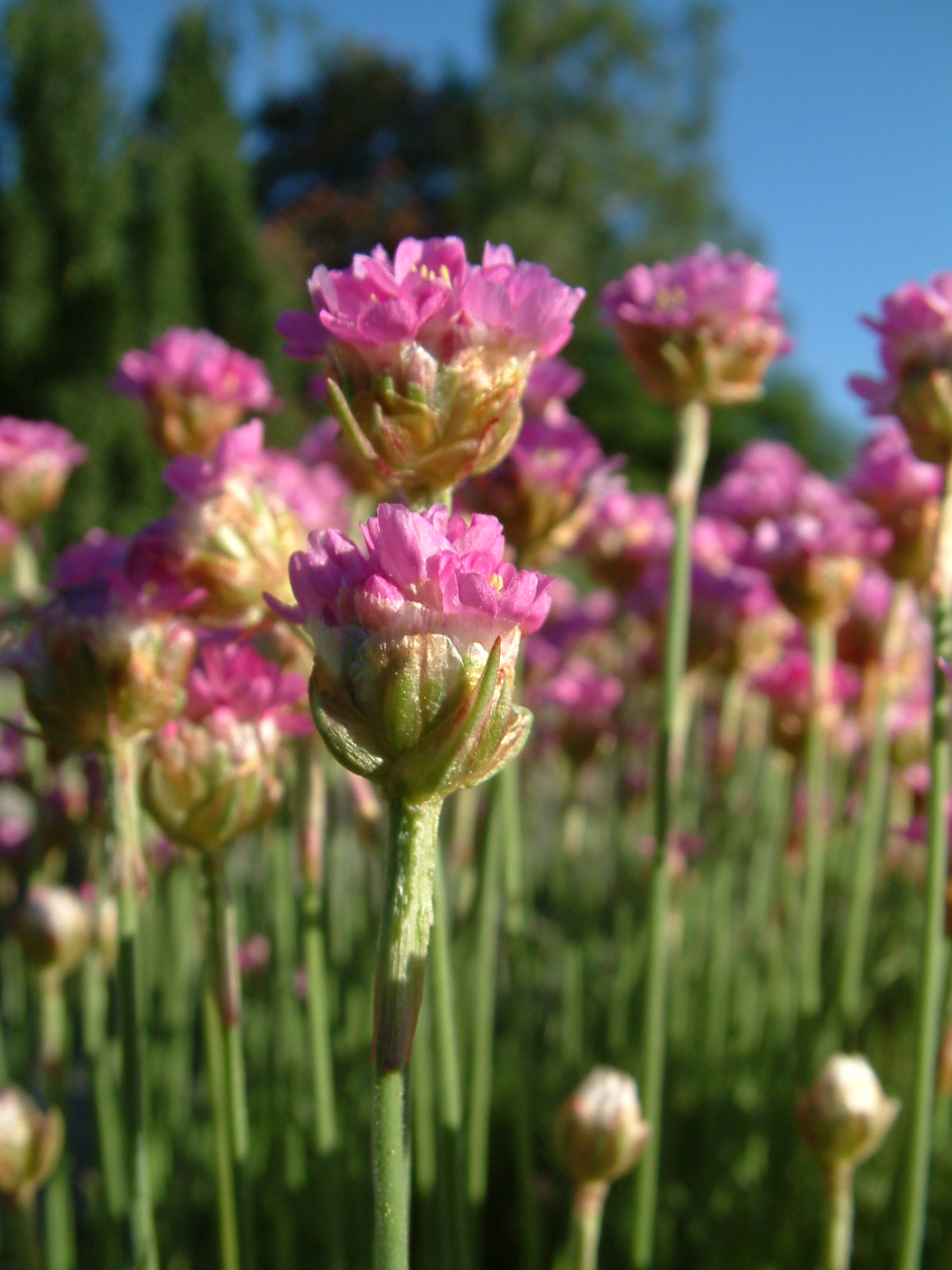 ThriftArmeria maritima
A low-growing perennial with pink globe-shaped blooms found near coasts and in gardens
🇨🇳 China and 7 more · Wildflower
ThriftArmeria maritima
A low-growing perennial with pink globe-shaped blooms found near coasts and in gardens
🇨🇳 China and 7 more · Wildflower
 Cape leadwortPlumbago auriculata
A climbing shrub with blue or white flowers from southern Africa
🇿🇦 South Africa and 2 more · Wildflower
Cape leadwortPlumbago auriculata
A climbing shrub with blue or white flowers from southern Africa
🇿🇦 South Africa and 2 more · Wildflower