Thrift
Armeria maritima, family Plumbaginaceae
A low-growing perennial with pink globe-shaped blooms found near coasts and in gardens
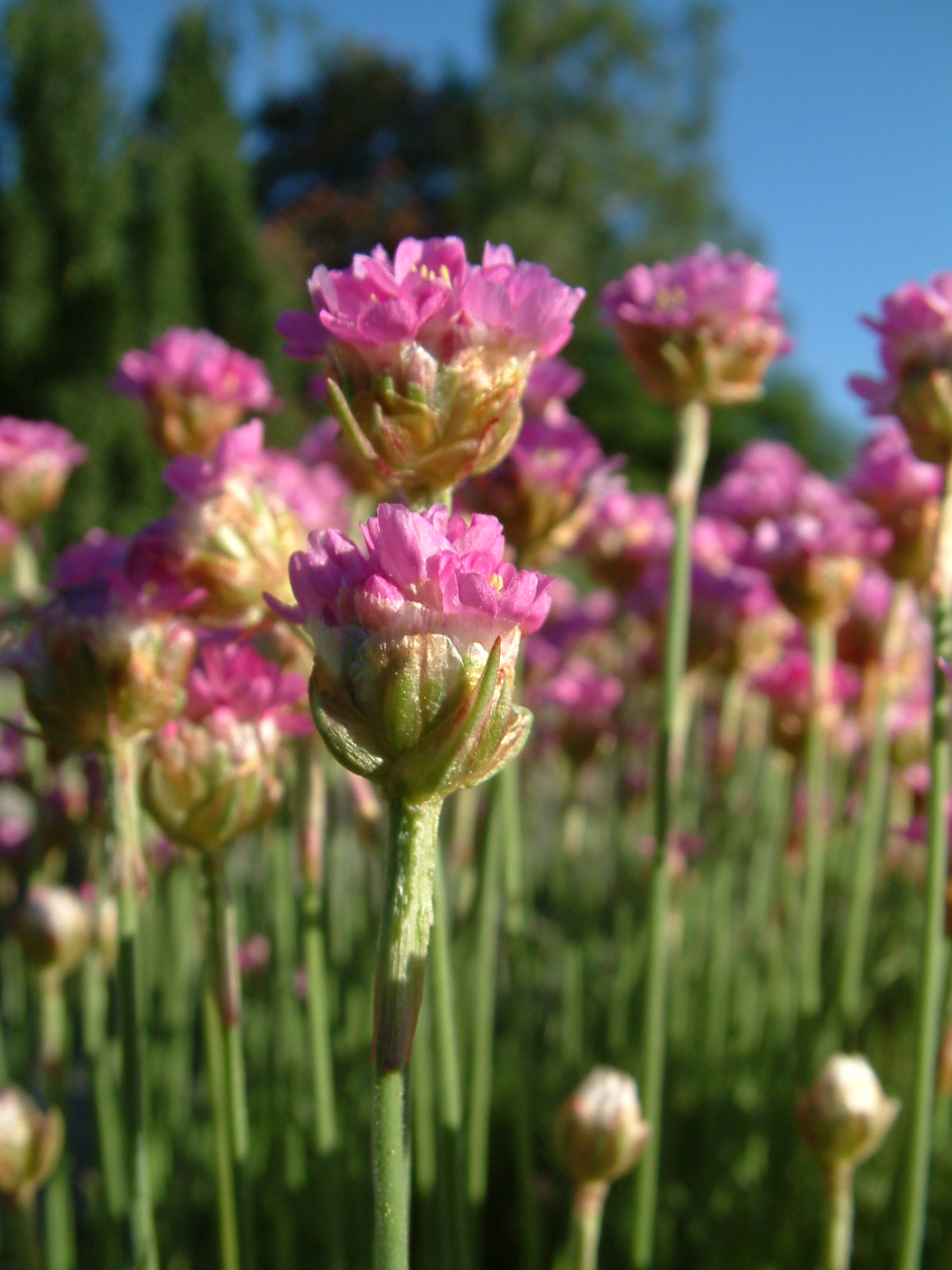
Thrift is a small perennial plant that forms dense clumps and sends up slender stems topped with round clusters of pink flowers, sometimes white, purple, or red. Native to coastal and mountainous regions in the Northern Hemisphere, it thrives in dry, salty soils and is a favorite in rock and seaside gardens.
- Forms low clumps with globe-shaped pink flowers on tall stems
- Grows wild on coasts and mountains across the Northern Hemisphere
- Tolerates salty and copper-rich soils
- Featured on the British threepence coin (1937–1952)
- Twelve subspecies adapted to different regions
What does Thrift look like?
Thrift is a compact evergreen perennial that grows in low, grassy clumps. Its slender, leafless stems rise above the foliage, each topped with a rounded cluster of small flowers. Most often, the blooms are a bright pink, but white, purple, and red forms also exist. The plant stays low to the ground and is well suited to rocky or sandy places, especially near the sea.
Where does Thrift come from?
Thrift is found along coastlines and in mountainous regions throughout the Northern Hemisphere, including parts of Europe, Asia, and North America. It naturally grows in salty, sandy, or rocky soils, often near the sea or on cliffs, but can also be seen inland on mountains. Its name, maritima, refers to its connection with the sea. Over time, it has been introduced to gardens around the world.
When and how Thrift blooms
Thrift blooms from spring through autumn, especially in places like the UK where it flowers from April to October. It is adapted to dry, well-drained soils and can handle high salt and copper levels, making it suitable for coastal gardens and rockeries. Gardeners often grow it from seed or by dividing clumps, and it is valued for its resilience and long flowering season.


How Thrift is used
People grow thrift in gardens for its neat appearance and colorful flowers, especially in rock gardens and seaside plantings. Its blooms are also used as cut flowers. In Britain, the plant has appeared on coins and is recognized as a floral emblem for certain regions. Some forms are valued for their ability to grow in tough, salty, or copper-rich soils.
Kinds of Thrift
There are twelve recognized subspecies of thrift, each adapted to specific regions, from the Azores to Siberia and California. Some, like the Tall Thrift, are found inland and have conservation status in parts of England. The 'Vindictive' cultivar is known for its garden performance.
What Thrift means
Thrift has cultural ties in the UK, where it was featured on the threepence coin from 1937 to 1952, symbolizing carefulness with resources. It is also a floral emblem for the Isles of Scilly. The plant’s ability to thrive in harsh conditions has made it a symbol of resilience and frugality.
Questions people ask about Thrift
Where does thrift come from?
Thrift is native to coastal and mountainous areas in the Northern Hemisphere, including parts of Europe, Asia, and North America. It grows in salty, sandy, or rocky soils near the sea and on mountains.
What does thrift look like?
Thrift grows as a low evergreen clump with slender stems topped by round heads of small flowers, usually pink but sometimes white, purple, or red.
How is thrift used?
Thrift is popular in gardens, especially in rockeries and coastal plantings. Its flowers are also used for cutting, and it is valued for its ability to grow in tough, salty, or copper-rich soils.
Does thrift have any cultural significance?
In the UK, thrift appeared on the threepence coin from 1937 to 1952 and is a floral symbol for the Isles of Scilly, representing resilience and frugality.
Are there different types of thrift?
Yes, there are twelve subspecies of thrift, each found in different regions, from the Azores to Siberia and California. Some are adapted to inland or coastal habitats.
Good reading and sources
- Armeria maritima 'Vindictive'Royal Horticultural Society, Article
- Lady Bird Johnson Wildflower CenterLady Bird Johnson Wildflower Center, Article
- Plants of the World OnlineRoyal Botanic Gardens, Kew, Plant database
- Where it has been recordedGBIF, Plant database
- Sightings and photos by naturalistsiNaturalist, Plant database
- Armeria maritima on WikipediaEncyclopedia
- More photos on Wikimedia CommonsPhotos
- Wikidata recordOpen data
The facts on this page come from the Wikipedia article "Armeria maritima", written by its contributors and used under the CC BY-SA 4.0 licence, and from its Wikidata record (CC0). Phool rewrote the text in its own words, with AI assistance, and compares every page with the article to make sure no passage is copied. It may be reused under the same CC BY-SA 4.0 licence with a link back.
It may contain mistakes. It is not medical or foraging advice: many flowers are poisonous, and traditional uses are reported, not recommended. If something is wrong, tell us. Last refreshed 2026-10-03.
Others in the family Plumbaginaceae
The whole family Plumbago
A group of shrubs and herbs with blue, white, or pink flowers
Plumbago · Wildflower
Plumbago
A group of shrubs and herbs with blue, white, or pink flowers
Plumbago · Wildflower
 Sea lavenderLimonium
Salt-tolerant wildflowers with papery blooms, known as statice or sea lavender
Limonium · Wildflower
Sea lavenderLimonium
Salt-tolerant wildflowers with papery blooms, known as statice or sea lavender
Limonium · Wildflower
 Cape leadwortPlumbago auriculata
A climbing shrub with blue or white flowers from southern Africa
🇿🇦 South Africa and 2 more · Wildflower
Cape leadwortPlumbago auriculata
A climbing shrub with blue or white flowers from southern Africa
🇿🇦 South Africa and 2 more · Wildflower
More from China
All the flowers of China PeachPrunus persica
A flowering fruit tree from China, grown for its pink blossoms and sweet fruit
🇨🇳 China and 7 more · Flowering tree
PeachPrunus persica
A flowering fruit tree from China, grown for its pink blossoms and sweet fruit
🇨🇳 China and 7 more · Flowering tree
 Common sunflowerHelianthus annuus
A tall annual plant grown for its large yellow flower heads and edible seeds
🇨🇦 Canada and 4 more · Wildflower
Common sunflowerHelianthus annuus
A tall annual plant grown for its large yellow flower heads and edible seeds
🇨🇦 Canada and 4 more · Wildflower
 PomegranatePunica granatum
A shrub with bright red flowers and a fruit full of edible seeds
🇮🇷 Iran and 9 more · Flowering shrub
PomegranatePunica granatum
A shrub with bright red flowers and a fruit full of edible seeds
🇮🇷 Iran and 9 more · Flowering shrub
 BirchBetula
Slender trees with papery bark found across the northern world
🇨🇳 China and 7 more · Wildflower
BirchBetula
Slender trees with papery bark found across the northern world
🇨🇳 China and 7 more · Wildflower