![A Cluster of Plumbago Flowers Republic of Singapore Img by Calvin Teo [May 2006]](https://thumb.wikimedia.org/wikipedia/commons/thumb/4/45/Plumbago.jpg/1280px-Plumbago.jpg)
Plumbago
A group of shrubs and herbs with blue, white, or pink flowers
Plumbago is a genus of about 24 flowering plant species in the Plumbaginaceae family, found in warm temperate and tropical regions. These plants can be shrubs or herbs, with simple leaves and clusters of tubular flowers in blue, white, pink, purple, or red, often grown for their colourful blooms.
- Plumbago flowers can be blue, white, pink, purple, or red
- The plant's calyx has sticky hairs that can trap insects
- Leaves often have a natural white chalky residue underneath
- The genus includes about 24 species of shrubs and herbs
What does Plumbago look like?
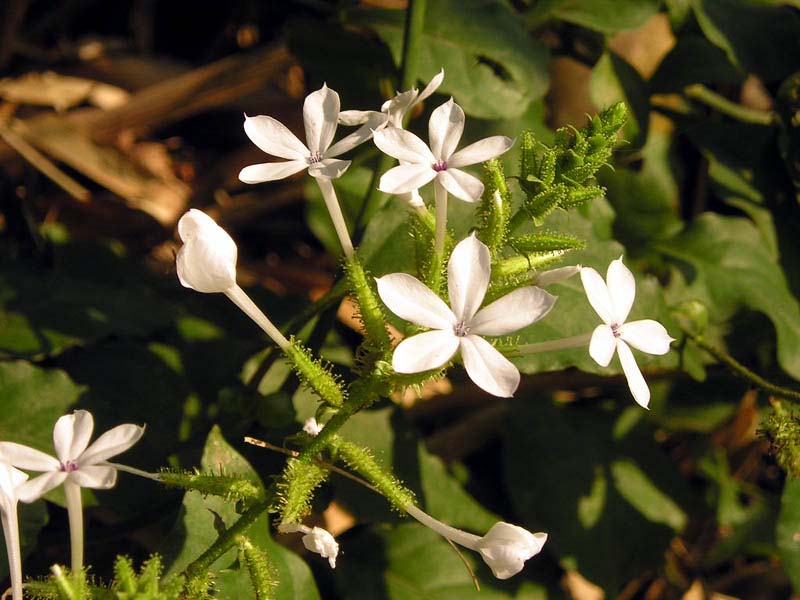
Plumbago plants can be either shrubs or herbaceous, growing from half a metre to two metres tall. Their leaves are simple, spirally arranged, and can range from half a centimetre to twelve centimetres long, often with a hairy edge. The flowers grow in clusters called racemes and have a tubular base with five petal-like lobes. Flower colours include blue, white, pink, purple, and red. The calyx, which is the outer part of the flower, has sticky hairs that can trap small insects. Mature leaves often show a white residue underneath, which is a natural chalky exudate.
Where does Plumbago come from?
Plumbago is native to warm temperate and tropical areas around the world. The name comes from the Latin 'plumbāgō', meaning 'leadwort', which may refer to the blue colour of some flowers, the sap's ability to stain skin, or an ancient belief that it could cure lead poisoning. The genus was mentioned by Pliny the Elder and Dioscorides in classical texts. Today, species of Plumbago are found in many regions, including Chile, China, Ecuador, and Pakistan.
When and how Plumbago blooms
Plumbago species grow in warm climates, thriving in gardens and wild areas with enough sunlight. They can be grown as shrubs or herbaceous plants, and their flowers appear in clusters on the ends of stems. The plants are usually propagated from cuttings or seeds. The sticky hairs on the flower calyx and the chalky residue on the leaves are natural features of the plant.



How Plumbago is used
Plumbago is mainly grown as a garden plant for its colourful and abundant flowers. Its attractive blooms make it a popular choice for borders, hedges, and ornamental plantings. The white chalky residue on the leaves can sometimes confuse gardeners, but it is a natural trait. There are no specific traditional or ceremonial uses mentioned in the sources.
Kinds of Plumbago
There are about 24 accepted species in the Plumbago genus, with differences in size, flower colour, and growth habit. Some species are more commonly grown in gardens for their blue or white flowers, while others may have pink, purple, or red blooms. The name 'leadwort' is also used for plants in the related genus Ceratostigma.
What Plumbago means
The name Plumbago has roots in ancient Roman and Greek texts, and its meaning is linked to the colour and properties of the plant. While some legends suggest medicinal uses, these are historical beliefs rather than established practices. Plumbago is valued today mainly for its ornamental qualities in gardens.
Questions people ask about Plumbago
Where does Plumbago come from?
Plumbago is native to warm temperate and tropical regions around the world, with species found in places such as Chile, China, Ecuador, and Pakistan.
What does Plumbago look like?
Plumbago plants can be shrubs or herbs, with simple, spirally arranged leaves and clusters of tubular flowers in blue, white, pink, purple, or red.
Why is there a white residue on Plumbago leaves?
The white residue on the underside of Plumbago leaves is a natural chalky exudate from glands, not a disease or chemical deposit.
What is Plumbago used for?
Plumbago is mainly grown as a garden plant for its colourful flowers and is used in ornamental plantings.
Does Plumbago have any symbolic meaning?
The name 'leadwort' may refer to the blue colour of some flowers or ancient beliefs about the plant, but no specific symbolism is mentioned in the sources.
Good reading and sources
- Encyclopaedia BritannicaArticle
- USDA Plants DatabaseUS Department of Agriculture, Article
- Plants of the World OnlineRoyal Botanic Gardens, Kew, Plant database
- Where it has been recordedGBIF, Plant database
- Sightings and photos by naturalistsiNaturalist, Plant database
The facts on this page come from the Wikipedia article "Plumbago", written by its contributors and used under the CC BY-SA 4.0 licence, and from its Wikidata record (CC0). EveryPhool rewrote the text in its own words, with AI assistance, and compares every page with the article to make sure no passage is copied. It may be reused under the same CC BY-SA 4.0 licence with a link back.
It may contain mistakes. It is not medical or foraging advice: many flowers are poisonous, and traditional uses are reported, not recommended. If something is wrong, tell us. Last refreshed 2026-10-03.
Others in the family Plumbaginaceae
The whole family Sea lavenderLimonium
Salt-tolerant wildflowers with papery blooms, known as statice or sea lavender
Limonium · Wildflower
Sea lavenderLimonium
Salt-tolerant wildflowers with papery blooms, known as statice or sea lavender
Limonium · Wildflower
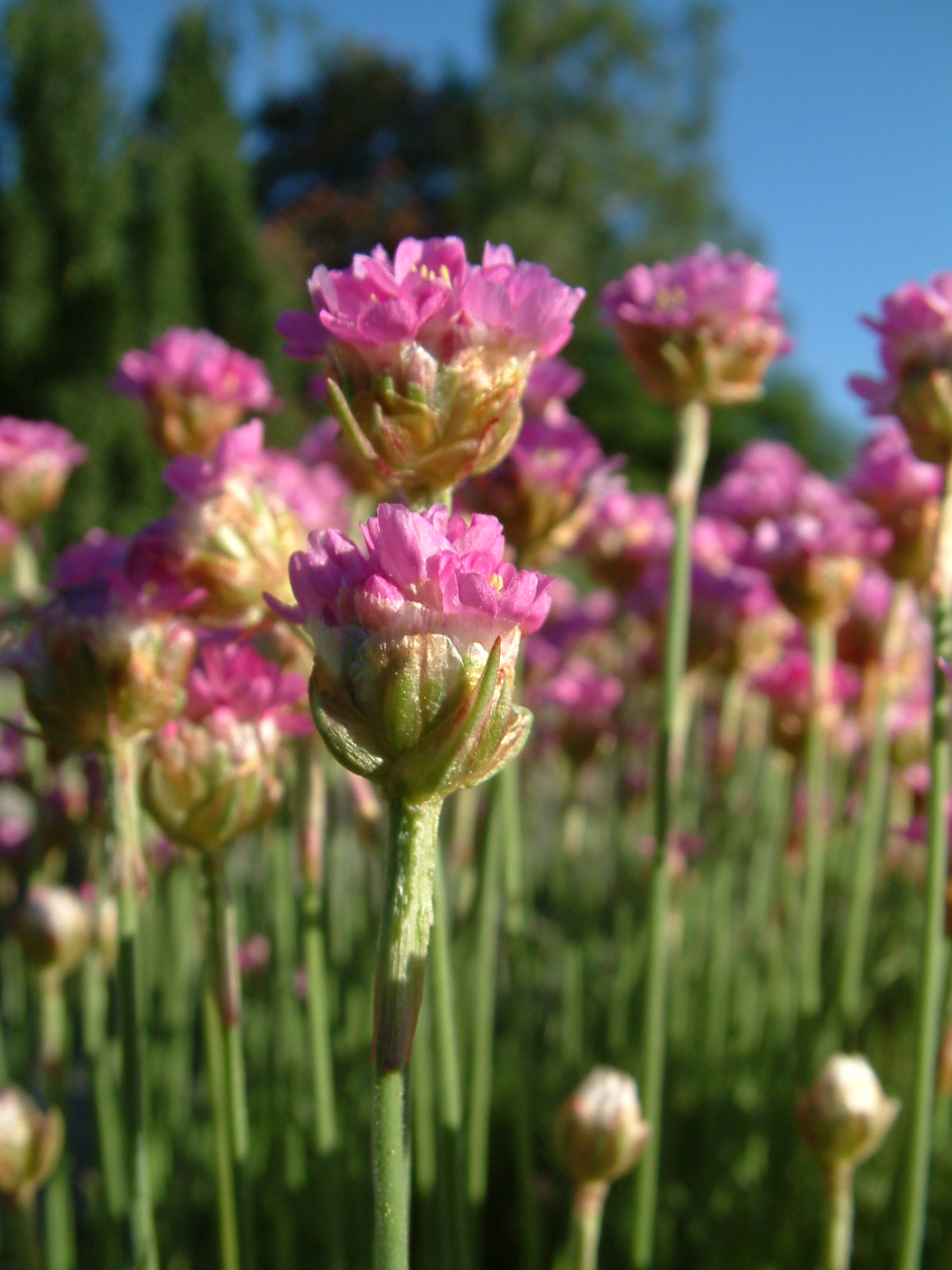 ThriftArmeria maritima
A low-growing perennial with pink globe-shaped blooms found near coasts and in gardens
🇨🇳 China and 7 more · Wildflower
ThriftArmeria maritima
A low-growing perennial with pink globe-shaped blooms found near coasts and in gardens
🇨🇳 China and 7 more · Wildflower
 Cape leadwortPlumbago auriculata
A climbing shrub with blue or white flowers from southern Africa
🇿🇦 South Africa and 2 more · Wildflower
Cape leadwortPlumbago auriculata
A climbing shrub with blue or white flowers from southern Africa
🇿🇦 South Africa and 2 more · Wildflower
 Leadwort FamilyPlumbaginaceae
A global plant family known for sea pinks, leadworts, and salt-marsh blooms
Plumbaginaceae · Wildflower
Leadwort FamilyPlumbaginaceae
A global plant family known for sea pinks, leadworts, and salt-marsh blooms
Plumbaginaceae · Wildflower