
Primula capitata
A Himalayan primrose with globe-shaped clusters of purple flowers
Primula capitata is a perennial plant from the Himalayas, growing in moist alpine places in Tibet, Bhutan, and Sikkim. It has pale green, powdery leaves and produces dark purple, tube-shaped flowers grouped in round heads on tall stems.
- Grows wild in Tibet, Bhutan, and Sikkim
- Produces round clusters of dark purple flowers
- Leaves have a white, powdery underside
- Subspecies sphaerocephala is prized in gardens
What does Primula capitata look like?
This primrose forms low, spreading rosettes of pale green leaves that are dusted with a white, powdery coating underneath. The leaves are narrow and have small teeth along the edges. In bloom, it sends up stems about 40 cm tall, topped with a cluster of small, dark purple flowers. Each flower is tubular, with petals that are slightly divided at the tip, and the whole cluster forms a nearly round, flattened ball.
Where does Primula capitata come from?
Primula capitata grows wild in the high mountain regions of Tibet, Bhutan, and Sikkim. It thrives in damp, cool alpine meadows. The species belongs to a group of primroses native to the Himalayas, where the climate is moist and cool. Over time, it has been introduced to gardens outside its native range, especially in places interested in alpine plants.
When and how Primula capitata blooms
This plant blooms in cool, moist conditions, typical of alpine environments. It grows from seed or division, preferring damp, well-drained soil and partial shade. The powdery coating on its leaves and stems helps it cope with the humidity and temperature swings of its mountain home. Gardeners grow it for its unusual flower heads and its ability to thrive in rock gardens or shaded beds.

How Primula capitata is used
Primula capitata is mainly grown as an ornamental plant in gardens, especially in collections of alpine or Himalayan species. Its striking purple flower heads make it a favorite for rock gardens and shaded borders. In its native regions, it is part of the natural alpine flora, but there is no mention of traditional or ceremonial uses.
Kinds of Primula capitata
A subspecies called Primula capitata subsp. sphaerocephala has been recognized for its garden value. This form is noted for its performance in cultivation and has received recognition from gardening societies.
What Primula capitata means
While not tied to any particular symbolism or ceremony, Primula capitata is valued by gardeners for its unique appearance and adaptability to cool, moist gardens. Its subspecies sphaerocephala has been awarded for its qualities as a garden plant.
Where Primula capitata is used and seen


Questions people ask about Primula capitata
Where does Primula capitata come from?
Primula capitata is native to alpine regions of Tibet, Bhutan, and Sikkim in the eastern Himalayas.
What does Primula capitata look like?
It has pale green, mealy leaves and tall stems topped with round heads of small, dark purple, tubular flowers.
How is Primula capitata used?
It is mainly grown as an ornamental plant in gardens, especially in rock gardens and shaded areas.
Are there different forms of Primula capitata?
Yes, the subspecies sphaerocephala is recognized for its performance in gardens and has received awards.
Good reading and sources
- Primula capitata (Ca) | round-headed Himalayan primroseRoyal Horticultural Society, Article
- Plants of the World OnlineRoyal Botanic Gardens, Kew, Plant database
- Where it has been recordedGBIF, Plant database
- Sightings and photos by naturalistsiNaturalist, Plant database
- Primula capitata on WikipediaEncyclopedia
- More photos on Wikimedia CommonsPhotos
- Wikidata recordOpen data
The facts on this page come from the Wikipedia article "Primula capitata", written by its contributors and used under the CC BY-SA 4.0 licence, and from its Wikidata record (CC0). Phool rewrote the text in its own words, with AI assistance, and compares every page with the article to make sure no passage is copied. It may be reused under the same CC BY-SA 4.0 licence with a link back.
It may contain mistakes. It is not medical or foraging advice: many flowers are poisonous, and traditional uses are reported, not recommended. If something is wrong, tell us. Last refreshed 2026-10-03.
Others in the family Primulaceae
The whole family Primula
A large genus of spring-blooming wild and garden flowers from cool and mountain regions
🇨🇳 China and 5 more · Wildflower
Primula
A large genus of spring-blooming wild and garden flowers from cool and mountain regions
🇨🇳 China and 5 more · Wildflower
 Cyclamen
Tubered Mediterranean flowers with upswept petals and patterned leaves
Cyclamen · Wildflower
Cyclamen
Tubered Mediterranean flowers with upswept petals and patterned leaves
Cyclamen · Wildflower
 Japanese primrosePrimula japonica
A spring-flowering primrose from damp places in Japan
🇯🇵 Japan · Wildflower
Japanese primrosePrimula japonica
A spring-flowering primrose from damp places in Japan
🇯🇵 Japan · Wildflower
 SowbreadCyclamen hederifolium
A hardy Mediterranean cyclamen with ivy-shaped, patterned leaves and autumn blooms
🇫🇷 France and 2 more · Wildflower
SowbreadCyclamen hederifolium
A hardy Mediterranean cyclamen with ivy-shaped, patterned leaves and autumn blooms
🇫🇷 France and 2 more · Wildflower
More from Bhutan
All the flowers of Bhutan Iris tectorum鸢尾
A blue or white iris once grown on rooftops in China and Japan
🇨🇳 China and 5 more · Wildflower
Iris tectorum鸢尾
A blue or white iris once grown on rooftops in China and Japan
🇨🇳 China and 5 more · Wildflower
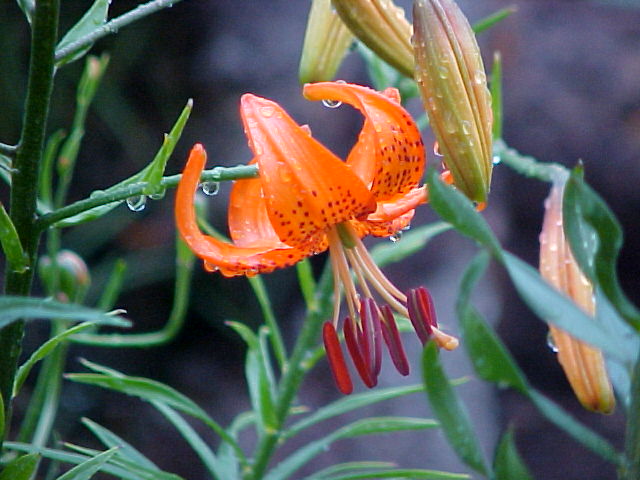 Lilium davidii
A tall Asian lily with edible bulbs and orange recurved flowers
🇨🇳 China and 1 more · Wildflower
Lilium davidii
A tall Asian lily with edible bulbs and orange recurved flowers
🇨🇳 China and 1 more · Wildflower
 StelleraStellera chamaejasme
A poisonous alpine flower of Central and East Asia, grown for its showy heads
🇨🇳 China and 5 more · Wildflower
StelleraStellera chamaejasme
A poisonous alpine flower of Central and East Asia, grown for its showy heads
🇨🇳 China and 5 more · Wildflower
 Prickly blue poppyMeconopsis horridula
A spiny blue poppy from the high Himalayas and western China
🇮🇳 India and 4 more · Wildflower
Prickly blue poppyMeconopsis horridula
A spiny blue poppy from the high Himalayas and western China
🇮🇳 India and 4 more · Wildflower