
French rose
Rosa gallica, family Rosaceae
A fragrant old rose with deep pink blooms, once central to European gardens
The French rose is a deciduous shrub native from southern and central Europe to Turkey and the Caucasus. Its fragrant, deep pink flowers appear in clusters, and it has been grown since ancient times for its beauty and scent. Many modern roses trace their ancestry to this species, which also has notable cultivars.
- Native from southern and central Europe to Turkey and the Caucasus
- Strongly fragrant deep pink flowers bloom in summer
- Parent to many modern European rose varieties
- Apothecary's rose is the county flower of Lancashire
- Cultivated since Greek and Roman times
What does French rose look like?
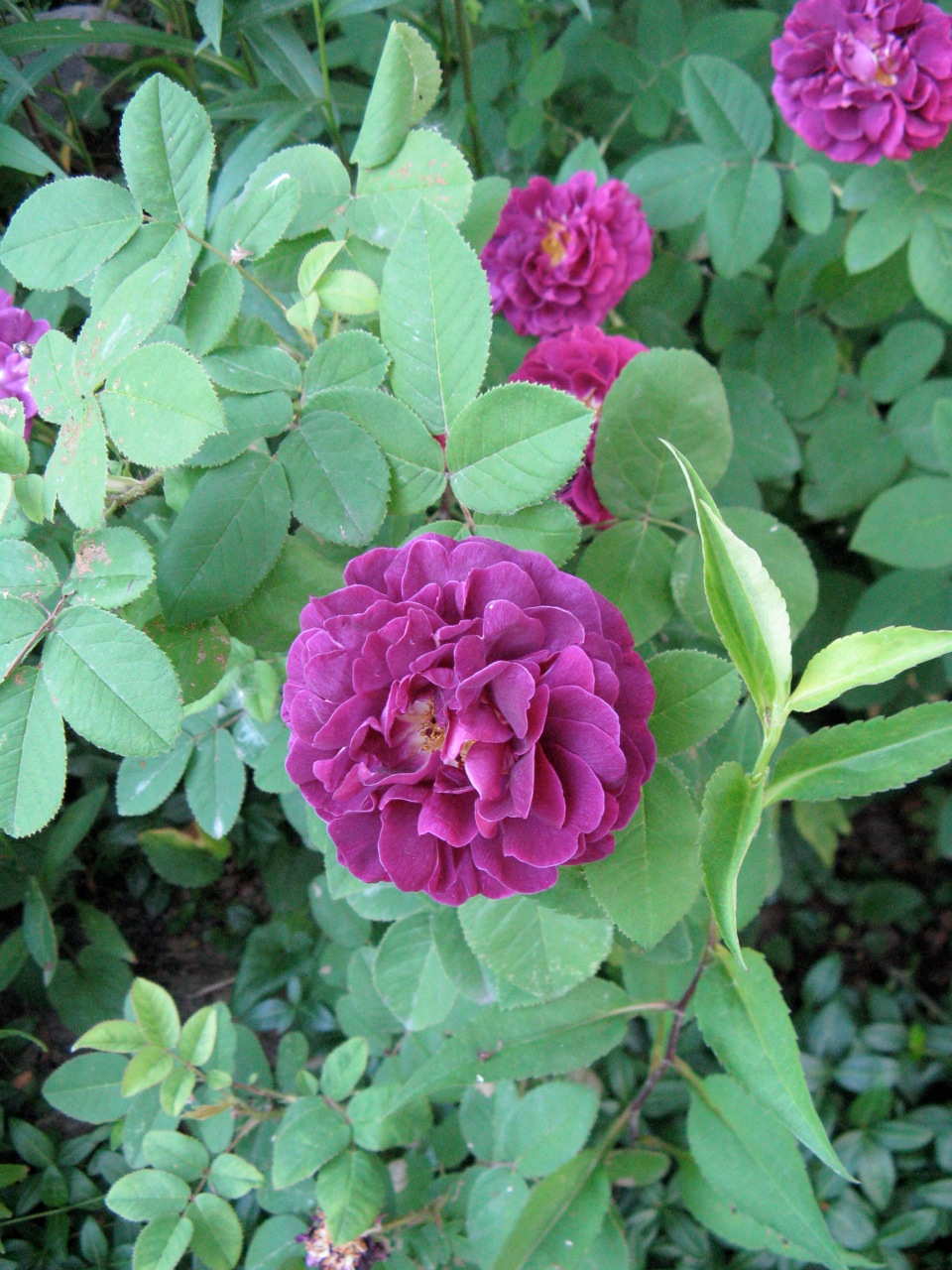
The French rose is a shrub that loses its leaves in winter and forms broad, spreading patches. Its stems have straight, slender prickles of varying size. The leaves are bluish-green and divided into three to seven leaflets. Flowers grow in small clusters, each with five or more petals, sometimes doubled, and are strongly scented and deep pink. The fruit, called a hip, is round to oval and turns orange to brownish as it matures.
Where does French rose come from?
Rosa gallica grows wild from southern and central Europe east to Turkey and the Caucasus. It is one of the earliest roses to be cultivated in central Europe, with records of its use by the Greeks and Romans. By the Middle Ages, it was common in European gardens and remained the most important cultivated rose species until the 19th century. Many modern European rose varieties have some ancestry from this species.
When and how French rose blooms
The French rose blooms once in summer, producing clusters of fragrant flowers. It thrives in well-drained soil and can grow in full sun or partial shade. The plant is hardy and can survive cold winters down to −25 °C. It is usually grown from cuttings or by dividing suckers, and is valued for its ease of cultivation.


How French rose is used
People have long grown the French rose for its attractive, fragrant flowers in gardens and as cut blooms. Extracts from its petals have been studied for their properties in food science. The apothecary's rose, a form of this species, is the county flower of Lancashire. Its cultivars are popular in historic and modern gardens.
Kinds of French rose
The Gallica Group includes many cultivars and hybrids with similar traits. Flowers may be single, double, or semidouble, and range in color from white (rare) to pink and deep purple. Notable forms include the apothecary's rose (deep pink, semidouble), 'Rosa mundi' (striped pink), and 'Charles de Mills'. Some cultivars have been recognized for their garden merit.
What French rose means
The apothecary's rose, a form of Rosa gallica, is known as the red rose of Lancaster and serves as the county flower of Lancashire. This species played a key role in the development of European roses. Its strong fragrance and vivid blooms have made it a favorite in gardens and a symbol in regional culture.
Traditions that use it
Questions people ask about French rose
Where does the French rose come from?
The French rose is native to southern and central Europe, extending eastwards to Turkey and the Caucasus. It has also been widely cultivated across Europe since ancient times.
What does the French rose look like?
It is a deciduous shrub with bluish-green leaves and clusters of fragrant, deep pink flowers. The flowers may have single or double petals, and the plant produces orange to brownish hips.
What is the French rose used for?
People grow it for its beautiful, scented flowers in gardens and as cut blooms. Some forms, like the apothecary's rose, have cultural significance and are used as emblems.
Are there different types of French rose?
Yes, there are many cultivars and hybrids in the Gallica Group, with flowers ranging from white to deep purple and forms from single to double blooms.
What does the French rose symbolise?
The apothecary's rose, a variety of French rose, is the county flower of Lancashire and is known as the red rose of Lancaster.
Good reading and sources
- Search for plants in the RHS Horticultural Database / RHS GardeningRoyal Horticultural Society, Article
- BBC - Gardening: Plant FinderBBC, Article
- USDA Plants DatabaseUS Department of Agriculture, Article
- Plants of the World OnlineRoyal Botanic Gardens, Kew, Plant database
- Where it has been recordedGBIF, Plant database
- Sightings and photos by naturalistsiNaturalist, Plant database
The facts on this page come from the Wikipedia article "Rosa gallica", written by its contributors and used under the CC BY-SA 4.0 licence, and from its Wikidata record (CC0). Phool rewrote the text in its own words, with AI assistance, and compares every page with the article to make sure no passage is copied. It may be reused under the same CC BY-SA 4.0 licence with a link back.
It may contain mistakes. It is not medical or foraging advice: many flowers are poisonous, and traditional uses are reported, not recommended. If something is wrong, tell us. Last refreshed 2026-10-03.
Others in the family Rosaceae
The whole family RoseRosa
Woody perennial plants with showy, often fragrant flowers in many colours
Rosa · Wildflower
RoseRosa
Woody perennial plants with showy, often fragrant flowers in many colours
Rosa · Wildflower
 PeachPrunus persica
A flowering fruit tree from China, grown for its pink blossoms and sweet fruit
🇨🇳 China and 7 more · Flowering tree
PeachPrunus persica
A flowering fruit tree from China, grown for its pink blossoms and sweet fruit
🇨🇳 China and 7 more · Flowering tree
 AlmondPrunus amygdalus
A Mediterranean tree grown for its fragrant spring flowers and edible seeds
🇮🇷 Iran and 6 more · Flowering tree
AlmondPrunus amygdalus
A Mediterranean tree grown for its fragrant spring flowers and edible seeds
🇮🇷 Iran and 6 more · Flowering tree
 ApricotPrunus armeniaca
A small fruit tree with early white to pink blossoms and golden-orange fruit
🇨🇳 China and 6 more · Flowering tree
ApricotPrunus armeniaca
A small fruit tree with early white to pink blossoms and golden-orange fruit
🇨🇳 China and 6 more · Flowering tree