
Rudbeckia
North American yellow coneflowers with a dark central disc
Rudbeckia is a group of herbaceous plants from North America, known for their yellow or gold daisy-like flowers with a raised dark center. Grown in gardens and used in prairie restoration, these plants bloom from mid to late summer and are valued for their showy heads and resilience.
- Native to North America and common in prairies
- Known for yellow or gold petals and a dark cone-shaped center
- Popular in gardens for long summer blooming
- Used in prairie restoration and as forage for livestock
- Deer and rabbit resistant
What does Rudbeckia look like?
Rudbeckia plants are mostly perennials, though some are annual or biennial, and grow from about half a meter to three meters tall. Their leaves are arranged in a spiral and can be entire or deeply lobed. The flowers have a daisy-like look, with bright yellow or orange petals that point outward and downward from a prominent, raised cone-shaped center in shades of black, brown, or green. The overall effect is a bold, showy flower that stands out in gardens and wild prairies.
Where does Rudbeckia come from?
Rudbeckia is native to North America, where it grows wild in prairies and open spaces. The genus was named by Carl Linnaeus to honor Olof Rudbeck the Younger and his father, both notable Swedish botanists. Linnaeus saw the plant as a tribute to their stature and contributions to science and botany. Over time, Rudbeckia species have been cultivated in gardens across Europe and other regions for their ornamental value.
When and how Rudbeckia blooms
Rudbeckia blooms in mid to late summer. These plants thrive in open, sunny locations and are often grown from seed. They are commonly used in prairie restoration projects and as ornamental flowers in gardens. The flowers develop on simple or branched stems, and their long flowering period makes them a favorite for gardeners seeking lasting color.


How Rudbeckia is used
People grow Rudbeckia for its bright, attractive flowers in home gardens and for restoring native prairies. The plants are also used as forage for livestock and are indicators of healthy rangeland. Their resistance to deer and rabbits makes them a reliable garden choice. Some species, like black-eyed susan, are especially popular for their long blooming season.
Kinds of Rudbeckia
There are many accepted Rudbeckia species, such as R. hirta (black-eyed susan), R. fulgida, and R. laciniata, each with its own varieties and cultivars. Some species previously included in Rudbeckia, like Echinacea and Ratibida, are now placed in other genera. Gardeners often select cultivars for flower size, color, and blooming time.
What Rudbeckia means
Rudbeckia has symbolic value as a garden favorite and is sometimes used as an emblem of regions or healthy prairies. Linnaeus dedicated the genus to the Rudbeck family, linking it to the history of botany in Sweden. Its showy flowers and resilience have made it a staple in both wild and cultivated landscapes.
Questions people ask about Rudbeckia
Where does Rudbeckia come from?
Rudbeckia is native to North America, where it grows wild in prairies and open areas. It has since been cultivated in gardens in other parts of the world.
What does Rudbeckia look like?
Rudbeckia plants have daisy-like flowers with yellow or orange petals that point outward and downward, surrounding a raised, dark central cone. The plants can grow from 0.5 to 3 meters tall.
How is Rudbeckia used?
Rudbeckia is grown in home gardens for its showy flowers and is used in prairie restoration projects. It also serves as forage for livestock and is valued for being resistant to deer and rabbits.
What is the meaning behind the name Rudbeckia?
The genus was named by Carl Linnaeus to honor Olof Rudbeck the Younger and his father, both prominent Swedish botanists, as a tribute to their contributions to science.
Are there different types of Rudbeckia?
Yes, there are many species and varieties, including popular ones like black-eyed susan (R. hirta) and R. fulgida. Some related plants were once included in the genus but are now classified separately.
Good reading and sources
- Encyclopaedia BritannicaArticle
- USDA Plants DatabaseUS Department of Agriculture, Article
- Plants of the World OnlineRoyal Botanic Gardens, Kew, Plant database
- Where it has been recordedGBIF, Plant database
- Sightings and photos by naturalistsiNaturalist, Plant database
The facts on this page come from the Wikipedia article "Rudbeckia", written by its contributors and used under the CC BY-SA 4.0 licence, and from its Wikidata record (CC0). Phool rewrote the text in its own words, with AI assistance, and compares every page with the article to make sure no passage is copied. It may be reused under the same CC BY-SA 4.0 licence with a link back.
It may contain mistakes. It is not medical or foraging advice: many flowers are poisonous, and traditional uses are reported, not recommended. If something is wrong, tell us. Last refreshed 2026-10-03.
Others in the family Asteraceae
The whole family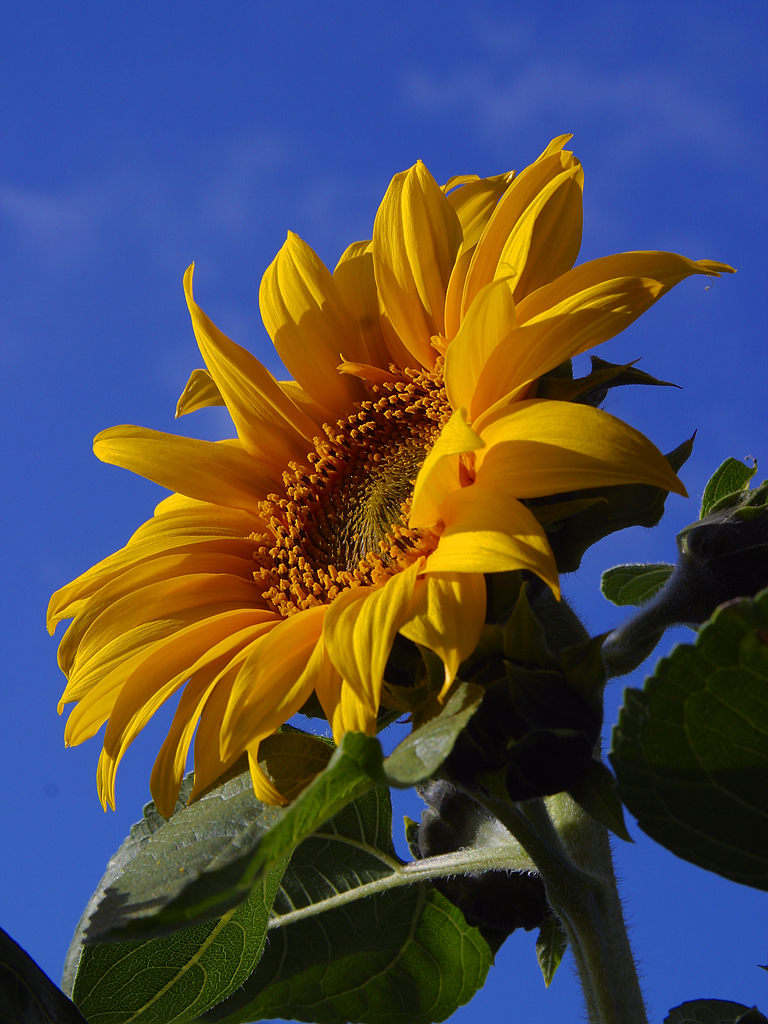 Common sunflowerHelianthus annuus
A tall annual plant grown for its large yellow flower heads and edible seeds
🇨🇦 Canada and 4 more · Wildflower
Common sunflowerHelianthus annuus
A tall annual plant grown for its large yellow flower heads and edible seeds
🇨🇦 Canada and 4 more · Wildflower
 Chrysanthemum菊花
Autumn-blooming flower with thousands of varieties, cherished in East Asia and beyond
🇨🇳 China and 6 more · Wildflower
Chrysanthemum菊花
Autumn-blooming flower with thousands of varieties, cherished in East Asia and beyond
🇨🇳 China and 6 more · Wildflower
 Asteraceae
The vast family of daisies, asters, and sunflowers with star-like flower heads
Asteraceae · Wildflower
Asteraceae
The vast family of daisies, asters, and sunflowers with star-like flower heads
Asteraceae · Wildflower
 DandelionTaraxacum
A yellow-flowered perennial found in fields, lawns, and gardens worldwide
Taraxacum · Wildflower
DandelionTaraxacum
A yellow-flowered perennial found in fields, lawns, and gardens worldwide
Taraxacum · Wildflower