
Scabiosa
Soft blue or cream flower heads known as pincushions, native to Africa, Europe and Asia
Scabiosa is a group of flowering plants in the honeysuckle family, found wild in Africa, Europe, and Asia. Its flower heads, often soft blue, lilac, or creamy white, attract butterflies and are grown in gardens. Some are annuals, others perennials, and they are known as pincushion flowers for their spiky seed heads.
- Scabiosa flowers are often soft blue, lilac, or creamy white.
- The flower heads become spiky balls after blooming, like pincushions.
- Scabiosa is native to Africa, Europe, and Asia.
- The flowers attract butterflies and moths.
- Some species are grown as garden plants.
What does Scabiosa look like?
Scabiosa plants can be annual or perennial, with some having woody bases and others being herbaceous. Their leaves are usually hairy and lobed, though some are smooth or simple. The flowers grow in rounded heads made up of many small florets, each with a saucer-shaped bract. Most flowers are soft lavender blue, lilac, or creamy white. After blooming, the heads become spiky balls, which is why they are called pincushion flowers.
Where does Scabiosa come from?
Scabiosa is native to Africa, Europe, and Asia, and has been known since at least the 18th century. The name 'scabious' comes from Latin, reflecting its use in folk medicine for treating skin conditions like scabies. Some plants once included in Scabiosa are now placed in related genera. The genus was first described in 1753 in Species Plantarum.
When and how Scabiosa blooms
Scabiosa species bloom from heads held singly on tall stems, with each head made up of many small florets. They grow in a range of habitats, from mountain cliffs to open fields. Garden cultivars have been developed from wild species such as S. columbaria and S. atropurpurea. Plants are grown from seed or by dividing established clumps.


How Scabiosa is used
Gardeners value Scabiosa for its attractive flowers and ability to draw butterflies and moths. In the past, the plant was used in folk medicine to treat skin ailments. The nectar-rich flowers are important for pollinators, and the plants serve as food for the larvae of some moths and butterflies.
Kinds of Scabiosa
There are many species within Scabiosa, with differences in flower color and growth habit. Some, like Scabiosa solymica, are adapted to grow in rocky mountain crevices. Gardeners often grow selected cultivars of small scabious and Mediterranean sweet scabious for their ornamental value.
What Scabiosa means
Scabiosa has inspired botanists and mountaineers, especially in the Alps. Its common name and historical use in folk medicine reflect its place in traditional European culture. The flowers are valued for their beauty and for supporting insect life in gardens and wild habitats.
Questions people ask about Scabiosa
Where does Scabiosa come from?
Scabiosa is native to Africa, Europe, and Asia, and grows in a variety of habitats including fields and mountain cliffs.
What do Scabiosa flowers look like?
The flowers grow in rounded heads made up of many small florets, usually in soft blue, lilac, or creamy white shades. After flowering, the heads turn into spiky balls.
Why are they called pincushion flowers?
After the flowers drop, the remaining bracts and calyces form a spiky ball that resembles a pincushion, giving the plant its common name.
What are Scabiosa flowers used for?
They are grown in gardens for their attractive flowers and ability to attract butterflies. Traditionally, they were used in folk medicine to treat skin conditions.
What do Scabiosa flowers symbolise?
The sources do not mention a specific symbolism for Scabiosa flowers.
Good reading and sources
- Encyclopaedia BritannicaArticle
- USDA Plants DatabaseUS Department of Agriculture, Article
- Plants of the World OnlineRoyal Botanic Gardens, Kew, Plant database
- Where it has been recordedGBIF, Plant database
- Sightings and photos by naturalistsiNaturalist, Plant database
The facts on this page come from the Wikipedia article "Scabiosa", written by its contributors and used under the CC BY-SA 4.0 licence, and from its Wikidata record (CC0). Phool rewrote the text in its own words, with AI assistance, and compares every page with the article to make sure no passage is copied. It may be reused under the same CC BY-SA 4.0 licence with a link back.
It may contain mistakes. It is not medical or foraging advice: many flowers are poisonous, and traditional uses are reported, not recommended. If something is wrong, tell us. Last refreshed 2026-10-03.
Others in the family Caprifoliaceae
The whole family HoneysuckleLonicera
Twining vines and shrubs with sweet-scented tubular flowers and edible nectar
Lonicera · Wildflower
HoneysuckleLonicera
Twining vines and shrubs with sweet-scented tubular flowers and edible nectar
Lonicera · Wildflower
 Common ValerianValeriana officinalis
Tall, sweet-scented wildflower with pale pink blooms and a long history in herbal lore
🇮🇸 Iceland and 8 more · Wildflower
Common ValerianValeriana officinalis
Tall, sweet-scented wildflower with pale pink blooms and a long history in herbal lore
🇮🇸 Iceland and 8 more · Wildflower
 Lomelosia comosa
A perennial wildflower and Mongolia's national flower
🇲🇳 Mongolia and 1 more · Wildflower
Lomelosia comosa
A perennial wildflower and Mongolia's national flower
🇲🇳 Mongolia and 1 more · Wildflower
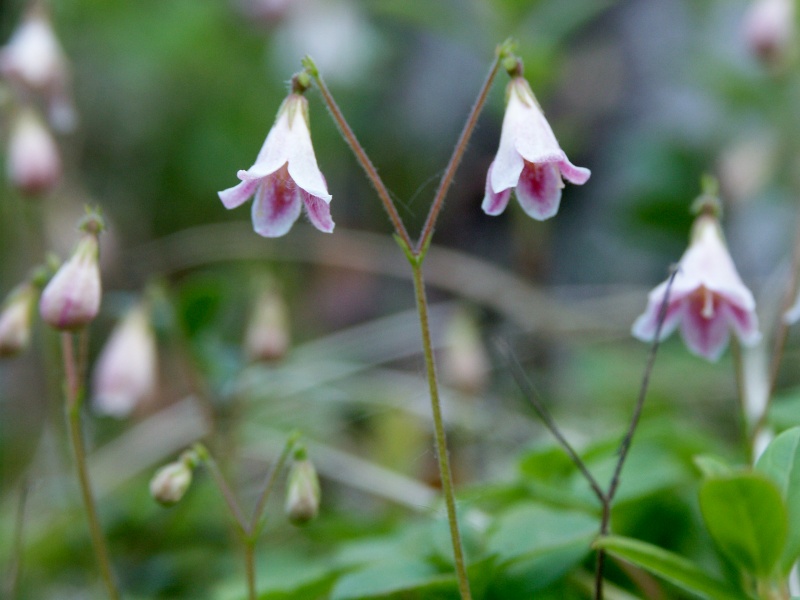 TwinflowerLinnaea borealis
A small woodland plant with paired pale pink flowers, named for Carl Linnaeus
🇺🇸 United States and 2 more · Wildflower
TwinflowerLinnaea borealis
A small woodland plant with paired pale pink flowers, named for Carl Linnaeus
🇺🇸 United States and 2 more · Wildflower