
Scilla
Bulb-forming perennials with blue to purple spring flowers
Scilla is a group of bulbous perennial plants, often called squills, found in woodlands, meadows, and seashores from Europe and Africa to the Middle East. Their flowers, mostly blue but sometimes white, pink, or purple, appear mainly in early spring. Many species are grown in gardens for their ornamental value.
- Most Scilla flowers are blue, but some are white, pink, or purple.
- Native to woodlands and meadows from Europe to Africa and the Middle East.
- Many species bloom in early spring; a few flower in autumn.
- Scilla has been known since ancient Greek and Roman times.
- Some species are widely grown as ornamental garden plants.
What does Scilla look like?
Scilla plants grow from bulbs and produce slender, upright stems with clusters of star-shaped flowers. Most species have blue blossoms, though some can be white, pink, or purple. The flowers are usually small and delicate, with six petals, and appear in loose clusters or spikes. The leaves are narrow and grass-like, emerging from the base. These plants are low-growing and often form carpets in woodlands or gardens.
Where does Scilla come from?
Scilla is native to regions across Europe, Africa, and the Middle East, especially in Mediterranean climates. The genus has been known since ancient times, with Greek and Roman writers describing its species. Over time, Scilla has been classified in various plant families, reflecting changes in botanical understanding. The name comes from ancient Greek and Latin words for the plant. Some species have become naturalized in places like Australia, New Zealand, and North America.
When and how Scilla blooms
Scilla bulbs are planted in well-drained soil, often in autumn, to flower in early spring. They thrive in woodland settings, meadows, or garden borders, preferring cool to temperate climates. The plants multiply by producing new bulbs and sometimes self-seed, forming dense patches over time. Most species bloom in spring, but a few flower in autumn.


How Scilla is used
Many Scilla species are grown as ornamental plants in gardens for their early spring flowers. They are valued for bringing color to gardens after winter and are often planted in groups for a naturalized effect. In the wild, they can be found carpeting woodland floors or meadows. There is a long tradition of appreciating Scilla for its beauty, but the sources do not mention other uses.
Kinds of Scilla
The genus includes between 30 and 80 species, depending on how botanists define it. Some well-known garden species are Scilla siberica and those formerly placed in the genus Chionodoxa. Flower color and blooming time can vary among species, with most flowering in spring and a few in autumn. The group has a complex taxonomic history, and some related plants have been moved in and out of the genus.
What Scilla means
Scilla has been recognized since classical antiquity, mentioned by Greek and Roman writers for both its appearance and medicinal properties. The name 'squill' has also been used for other similar plants. Today, Scilla is mainly valued for its ornamental flowers in gardens and parks. The sources do not mention any special symbolism or festival associations.
Where Scilla is used and seen

Questions people ask about Scilla
Where does Scilla come from?
Scilla is native to woodlands, meadows, and seashores across Europe, Africa, and the Middle East, especially in Mediterranean regions. Some species have also become naturalized in Australia, New Zealand, and North America.
What does Scilla look like?
Scilla plants grow from bulbs and have narrow leaves with clusters of small, star-shaped flowers. Most are blue, but some species have white, pink, or purple flowers. The plants are low-growing and often form carpets in gardens or wild areas.
When does Scilla flower?
Most Scilla species flower in early spring, bringing color to gardens and woodlands after winter. A few species bloom in autumn.
How is Scilla used?
Scilla is mainly grown as an ornamental plant in gardens for its attractive early spring flowers. It is valued for naturalizing in lawns, borders, and woodland gardens.
Does Scilla have any special meaning or symbolism?
The sources mention that Scilla has been known since ancient times and was noted for its medicinal properties, but do not describe any particular symbolism or festival associations.
Good reading and sources
- Encyclopaedia BritannicaArticle
- USDA Plants DatabaseUS Department of Agriculture, Article
- Plants of the World OnlineRoyal Botanic Gardens, Kew, Plant database
- Where it has been recordedGBIF, Plant database
- Sightings and photos by naturalistsiNaturalist, Plant database
The facts on this page come from the Wikipedia article "Scilla", written by its contributors and used under the CC BY-SA 4.0 licence, and from its Wikidata record (CC0). Phool rewrote the text in its own words, with AI assistance, and compares every page with the article to make sure no passage is copied. It may be reused under the same CC BY-SA 4.0 licence with a link back.
It may contain mistakes. It is not medical or foraging advice: many flowers are poisonous, and traditional uses are reported, not recommended. If something is wrong, tell us. Last refreshed 2026-10-03.
Others in the family Asparagaceae
The whole family Lily-of-the-valleyConvallaria majalis
A woodland plant with sweet-scented white bell flowers in late spring
🇫🇮 Finland and 4 more · Wildflower
Lily-of-the-valleyConvallaria majalis
A woodland plant with sweet-scented white bell flowers in late spring
🇫🇮 Finland and 4 more · Wildflower
 HyacinthHyacinthus
A spring-blooming bulb with fragrant, colourful flower spikes
🇹🇷 Turkey and 7 more · Bulb flower
HyacinthHyacinthus
A spring-blooming bulb with fragrant, colourful flower spikes
🇹🇷 Turkey and 7 more · Bulb flower
 Yucca
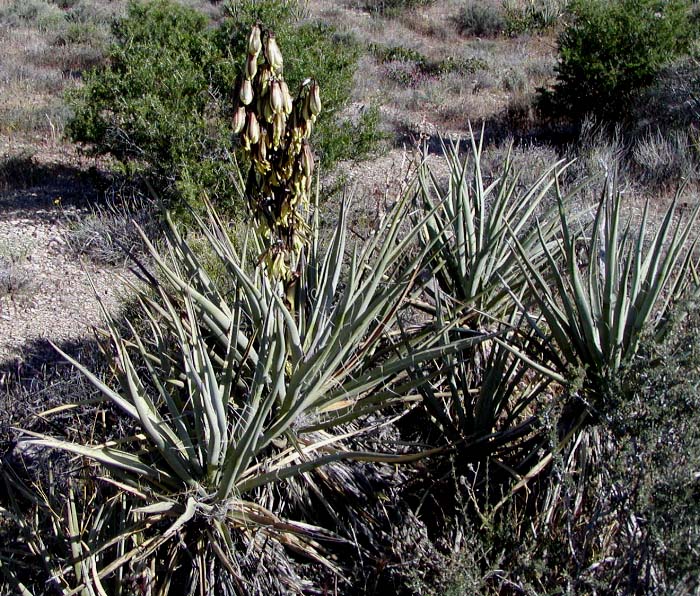
Dry-climate plants with pointed leaves and clusters of creamy white flowers
🇲🇽 Mexico and 4 more · Wildflower
Yucca
Dry-climate plants with pointed leaves and clusters of creamy white flowers
🇲🇽 Mexico and 4 more · Wildflower
 Ornithogalum thyrsoides
A white, long-lasting bulb flower from South Africa’s Cape Province
🇿🇦 South Africa · Bulb flower
Ornithogalum thyrsoides
A white, long-lasting bulb flower from South Africa’s Cape Province
🇿🇦 South Africa · Bulb flower