
Senna spectabilis
A fast-growing tree with bright yellow summer flowers, native to South America
Senna spectabilis is a shrub or deciduous tree reaching 15–20 feet tall, with dense, rounded crowns and showy yellow flower clusters. Native to parts of South and Central America, it is grown ornamentally but has become invasive in Africa and southern India.
- Bright yellow summer flowers in clusters up to 50 cm long
- Leaves fold shut each night due to nyctinasty
- Grows rapidly and tolerates many soil types
- Used in traditional medicine for epilepsy and skin infections
- Now invasive in parts of Africa and southern India
What does Senna spectabilis look like?
This plant grows as a shrub or small deciduous tree, typically 15 to 20 feet high and wide, with a symmetrical, vase-shaped crown. Its leaves are evergreen, arranged alternately, and made up of 4 to 15 pairs of leaflets that close at night. In summer, it bears long clusters of bright yellow flowers, each with five uneven petals, followed by long, dry seed pods.
Where does Senna spectabilis come from?
Senna spectabilis originates from eastern tropical Brazil and coastal Ecuador. From there, it spread through Central America and the West Indies, thriving in rainforests, dry forests, and montane areas up to 2,000 meters. It was later introduced elsewhere for firewood, shade, and soil restoration, but has since become invasive in parts of Africa and southern India.
When and how Senna spectabilis blooms
It blooms in summer with striking yellow inflorescences. The tree grows quickly and prefers full sun and well-drained soils, tolerating clay, sand, loam, acidic or alkaline conditions, but struggles in salty air. It shows no known diseases and can establish itself easily in disturbed areas, often outcompeting native species.


How Senna spectabilis is used
People grow it as an ornamental in yards, parks, and along buildings for its vivid flowers. Its wood serves for tool handles, furniture, and charcoal, while leaves and extracts are used in traditional medicine for skin conditions, epilepsy, constipation, and anxiety. In Tamil Nadu, its invasive biomass is now being turned into paper.
Kinds of Senna spectabilis
Two varieties are sometimes recognized: var. excelsa and var. micans. The species has been classified under many names in the past, including Cassia excelsa and Cassia spectabilis, and was once grouped in genera like Cathartocarpus and Pseudocassia before settling in Senna.
What Senna spectabilis means
Though valued for its beauty and utility, Senna spectabilis is now considered a problematic invader in ecosystems from East Africa to southern India. It suppresses native tree regeneration and dominates forest edges. Despite this, it remains useful for agroforestry, honey production, and as a source of medicinal compounds like anthraquinones and terpenoids.
Where Senna spectabilis is used and seen

Questions people ask about Senna spectabilis
Where does Senna spectabilis come from?
It is native to eastern tropical Brazil and coastal Ecuador, and later spread through Central America and the West Indies.
Why is it considered invasive?
After introduction for firewood and land restoration, it spreads aggressively in Africa and southern India, overtaking native trees and blocking their regrowth.
What are its medicinal uses?
Traditional healers use it for ringworm, epilepsy, constipation, insomnia, and anxiety; lab studies show antifungal and anticonvulsant effects.
When does it flower?
It blooms during the summer months, producing showy clusters of bright yellow flowers.
Is it grown for anything besides looks?
Yes, it provides firewood, charcoal, timber for tools and furniture, fodder, mulch, and is used to make paper in Tamil Nadu.
Good reading and sources
- USDA Plants DatabaseUS Department of Agriculture, Article
- IUCN Red List of Threatened SpeciesIUCN Red List, Article
- Plants of the World OnlineRoyal Botanic Gardens, Kew, Plant database
- Where it has been recordedGBIF, Plant database
- Sightings and photos by naturalistsiNaturalist, Plant database
- Senna spectabilis on WikipediaEncyclopedia
- More photos on Wikimedia CommonsPhotos
- Wikidata recordOpen data
The facts on this page come from the Wikipedia article "Senna spectabilis", written by its contributors and used under the CC BY-SA 4.0 licence, and from its Wikidata record (CC0). Phool rewrote the text in its own words, with AI assistance, and compares every page with the article to make sure no passage is copied. It may be reused under the same CC BY-SA 4.0 licence with a link back.
It may contain mistakes. It is not medical or foraging advice: many flowers are poisonous, and traditional uses are reported, not recommended. If something is wrong, tell us. Last refreshed 2026-10-03.
Others in the family Fabaceae
The whole family Acacia
Shrubs and trees with golden or cream puffball flowers, native mostly to Australia
🇦🇺 Australia and 6 more · Wildflower
Acacia
Shrubs and trees with golden or cream puffball flowers, native mostly to Australia
🇦🇺 Australia and 6 more · Wildflower
 Black locustRobinia pseudoacacia
A tall, fragrant-flowered tree native to eastern North America
🇺🇸 United States and 7 more · Flowering tree
Black locustRobinia pseudoacacia
A tall, fragrant-flowered tree native to eastern North America
🇺🇸 United States and 7 more · Flowering tree
 LupinLupinus
Tall, spiky-flowered legumes grown for gardens, food, and soil health
🇺🇸 United States and 7 more · Wildflower
LupinLupinus
Tall, spiky-flowered legumes grown for gardens, food, and soil health
🇺🇸 United States and 7 more · Wildflower
 White cloverTrifolium repens
A low-growing, mat-forming clover with white flower heads
🇨🇳 China and 7 more · Wildflower
White cloverTrifolium repens
A low-growing, mat-forming clover with white flower heads
🇨🇳 China and 7 more · Wildflower
More from Brazil
All the flowers of Brazil CactusCactaceae
Succulent plants with spines, native to the Americas
🇲🇽 Mexico and 7 more · Wildflower
CactusCactaceae
Succulent plants with spines, native to the Americas
🇲🇽 Mexico and 7 more · Wildflower
 Eucalyptus
The tall, aromatic trees and shrubs known as gum trees or eucalypts
🇦🇺 Australia and 7 more · Flowering tree
Eucalyptus
The tall, aromatic trees and shrubs known as gum trees or eucalypts
🇦🇺 Australia and 7 more · Flowering tree
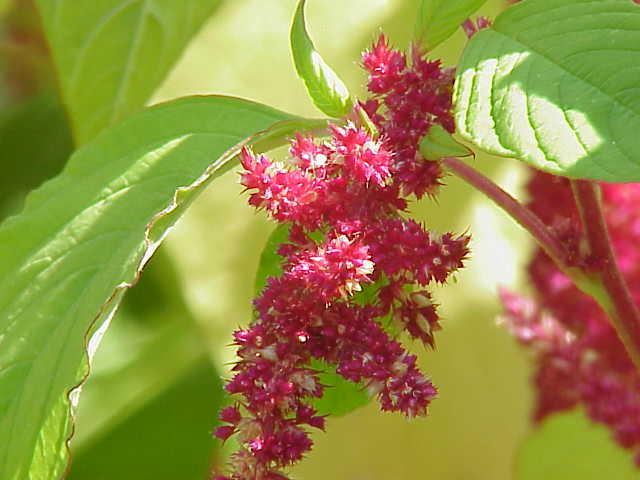 AmaranthAmaranthus
A tall, colourful plant grown for its flowers, leaves and edible seeds
🇲🇽 Mexico and 7 more · Wildflower
AmaranthAmaranthus
A tall, colourful plant grown for its flowers, leaves and edible seeds
🇲🇽 Mexico and 7 more · Wildflower
 Sensitive PlantMimosa pudica
A touch-sensitive plant whose leaves fold up when disturbed
🇧🇷 Brazil and 8 more · Wildflower
Sensitive PlantMimosa pudica
A touch-sensitive plant whose leaves fold up when disturbed
🇧🇷 Brazil and 8 more · Wildflower