
Showy chalicevine
Solandra grandiflora, family Solanaceae
A climbing nightshade of the tropics, grown for its big trumpet flowers
Solandra grandiflora is a climbing nightshade from Central America and the north of South America, widely grown in the tropics for its large trumpet-shaped flowers. Its green parts are highly toxic and have caused deaths, while the flesh of the ripe fruit is said to be edible and tastes of apple or melon.
- A climbing nightshade with large trumpet-shaped flowers, grown in the tropics.
- Native to Central America and northern South America.
- Its green parts are highly toxic and have caused deaths from poisoning.
- The flesh of the ripe fruit is said to be edible; unripe fruit and seeds are not.
- Fruits are round, can weigh a kilogram and taste of apple or melon.
What does Showy chalicevine look like?
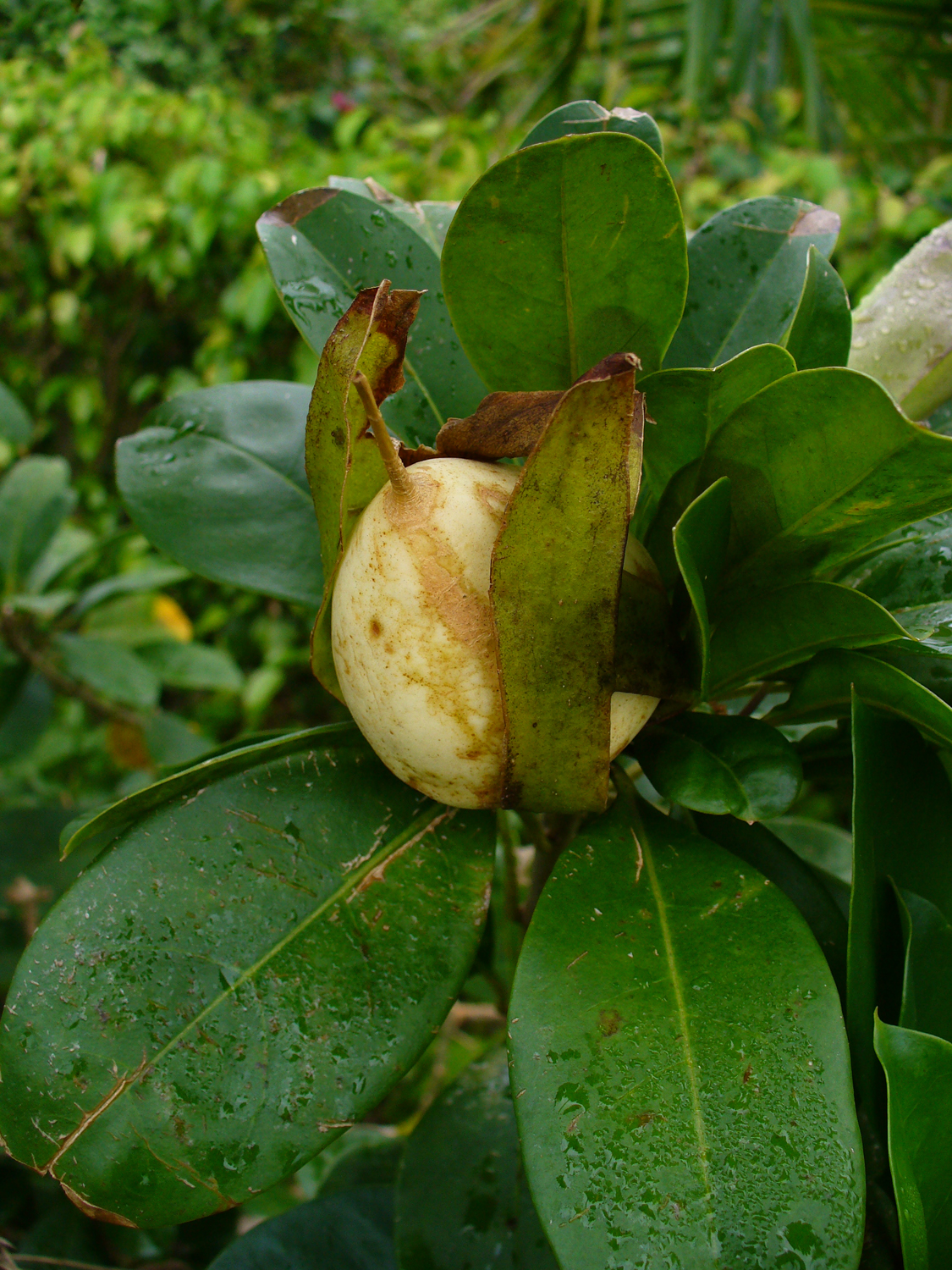
Showy chalicevine is a climbing plant in Solandra, a genus of the nightshade family, Solanaceae. It scrambles upward instead of standing on its own. Its flowers are large and shaped like trumpets, and that flower is the reason the plant is grown in warm countries. After flowering it forms a round fruit held inside a calyx, the cup of sepals at the base of a flower, which swells as the fruit grows, so the fruit sits mostly enclosed. One fruit can weigh as much as a kilogram. Its ripe flesh has been described as tasting of apple or melon. Every green part of the plant is poisonous.
Where does Showy chalicevine come from?
The species grows wild in Central America and the north of South America. From there it has travelled widely, because it suits tropical climates and is planted as an ornamental, so it now appears in gardens well outside its original range. It belongs to Solandra, a small group of nightshades whose members share the climbing habit and the large trumpet-shaped flower. English speakers call it showy chalicevine, and also papaturra.
When and how Showy chalicevine blooms
Grown in the tropics, showy chalicevine is a climber, so it needs something to grow up, such as a tree, a wall or a frame. Its reward is the big trumpet-shaped flower, followed by a round fruit sitting inside an enlarged calyx and sometimes reaching a kilogram in weight. That fruit has to ripen fully before its flesh is eaten, since the unripe fruit and the seeds are not. The plant is kept as an ornamental rather than for its fruit.
How Showy chalicevine is used
The plant is grown mainly as an ornamental in tropical gardens, on walls and over other plants. The flesh of its ripe fruit is said to be edible and has been compared in taste to apple or melon, but the unripe fruit and the seeds are not. The green parts are highly toxic and contain tropane alkaloids; they have caused deaths from anticholinergic poisoning. Chewing even pieces of flowers has brought on a dry throat, headache, weakness, fever, delirium, hallucinations and, in the worst cases, failure of circulation and breathing.
Kinds of Showy chalicevine
Solandra grandiflora is one of a small genus of climbing nightshades, and the sources describe the whole genus as sharing the climbing habit and the large trumpet-shaped flowers, rather than naming separate cultivated varieties of this species. Both showy chalicevine and papaturra are English names in use for it. The fruit itself varies in size, reported as reaching about a kilogram, and its ripe flesh has been likened to apple or to melon.
What Showy chalicevine means
The plant is known as much for its danger as for its flowers. Its tissues hold tropane alkaloids, and eating any green part can cause anticholinergic poisoning, which has killed people. Small doses are described as hallucinogenic and as producing delirium. Reported symptoms include a dry throat, headache, weakness, fever, delirium, hallucinations, and possibly fatal failure of circulation and breathing. Because the climber is planted so widely in warm countries, that risk travels with it.
Questions people ask about Showy chalicevine
Where does showy chalicevine come from?
It grows wild in Central America and the north of South America. From there it has been carried into tropical gardens around the world, where it is grown as an ornamental climber. It is a nightshade, placed in the genus Solandra, within the family Solanaceae.
Is the plant poisonous?
Yes. Every green part is highly toxic and holds tropane alkaloids, and eating any of it has caused deaths from anticholinergic poisoning. Chewing even fragments of the flowers can bring on a dry throat, headache, weakness, fever, delirium and hallucinations, and the poisoning can end in fatal circulatory and respiratory failure.
Can the fruit be eaten?
Only the flesh of a fully ripe fruit is said to be edible, and its taste has been described as apple-like or melon-like. The unripe fruit and the seeds are not edible. A ripe fruit can weigh as much as a kilogram and sits largely inside its swollen calyx.
What do the flowers look like?
They are large and trumpet-shaped, which is what makes the plant worth growing in warm climates. The sources do not describe their colour or scent. They appear on a climbing plant that scrambles over whatever support it finds, like the other members of the genus Solandra.
What is its scientific name and family?
It is Solandra grandiflora, in the genus Solandra, within the nightshade family Solanaceae. Its English common names are showy chalicevine and papaturra. It belongs to a small group of climbing nightshades that all carry the same large trumpet-shaped flowers.
Good reading and sources
- USDA Plants DatabaseUS Department of Agriculture, Article
- Plants of the World OnlineRoyal Botanic Gardens, Kew, Plant database
- Where it has been recordedGBIF, Plant database
- Sightings and photos by naturalistsiNaturalist, Plant database
- Solandra grandiflora on WikipediaEncyclopedia
- More photos on Wikimedia CommonsPhotos
- Wikidata recordOpen data
The facts on this page come from the Wikipedia article "Solandra grandiflora", written by its contributors and used under the CC BY-SA 4.0 licence, and from its Wikidata record (CC0). Phool rewrote the text in its own words, with AI assistance, and compares every page with the article to make sure no passage is copied. It may be reused under the same CC BY-SA 4.0 licence with a link back.
It may contain mistakes. It is not medical or foraging advice: many flowers are poisonous, and traditional uses are reported, not recommended. If something is wrong, tell us. Last refreshed 2026-10-03.
Others in the family Solanaceae
The whole family Thorn-appleDatura stramonium
A poisonous, night-blooming plant with trumpet-shaped white or violet flowers
🇨🇳 China and 7 more · Wildflower
Thorn-appleDatura stramonium
A poisonous, night-blooming plant with trumpet-shaped white or violet flowers
🇨🇳 China and 7 more · Wildflower
 Datura
A group of trumpet-shaped, highly toxic flowering plants in the nightshade family
🇲🇽 Mexico and 7 more · Wildflower
Datura
A group of trumpet-shaped, highly toxic flowering plants in the nightshade family
🇲🇽 Mexico and 7 more · Wildflower
 Nicotiana
The tobacco plant genus, grown for leaves and garden flowers worldwide
Nicotiana · Wildflower
Nicotiana
The tobacco plant genus, grown for leaves and garden flowers worldwide
Nicotiana · Wildflower
 Petunia
A South American garden flower with trumpet-shaped blooms in many colours
Petunia · Garden flower
Petunia
A South American garden flower with trumpet-shaped blooms in many colours
Petunia · Garden flower
More from Cuba
All the flowers of Cuba Prickly pearOpuntia
Cactus with flat pads and edible fruit, native to the Americas
🇲🇽 Mexico and 7 more · Wildflower
Prickly pearOpuntia
Cactus with flat pads and edible fruit, native to the Americas
🇲🇽 Mexico and 7 more · Wildflower
 Datura metelधतूरा
A shrubby plant with trumpet-shaped flowers, grown for ornament and tradition
🇮🇳 India and 4 more · Garden flower
Datura metelधतूरा
A shrubby plant with trumpet-shaped flowers, grown for ornament and tradition
🇮🇳 India and 4 more · Garden flower
 Kalmia
Evergreen shrubs with star-shaped pink, white or purple flowers from North America and Cuba
🇨🇺 Cuba · Wildflower
Kalmia
Evergreen shrubs with star-shaped pink, white or purple flowers from North America and Cuba
🇨🇺 Cuba · Wildflower
 White garland-lilyHedychium coronarium
Tall, fragrant white flowers from the ginger family, grown and loved across continents
🇮🇳 India and 7 more · Wildflower
White garland-lilyHedychium coronarium
Tall, fragrant white flowers from the ginger family, grown and loved across continents
🇮🇳 India and 7 more · Wildflower