
Giant white bird of paradise
Strelitzia nicolai, family Strelitziaceae
A tall, banana-like plant with striking white and blue flowers
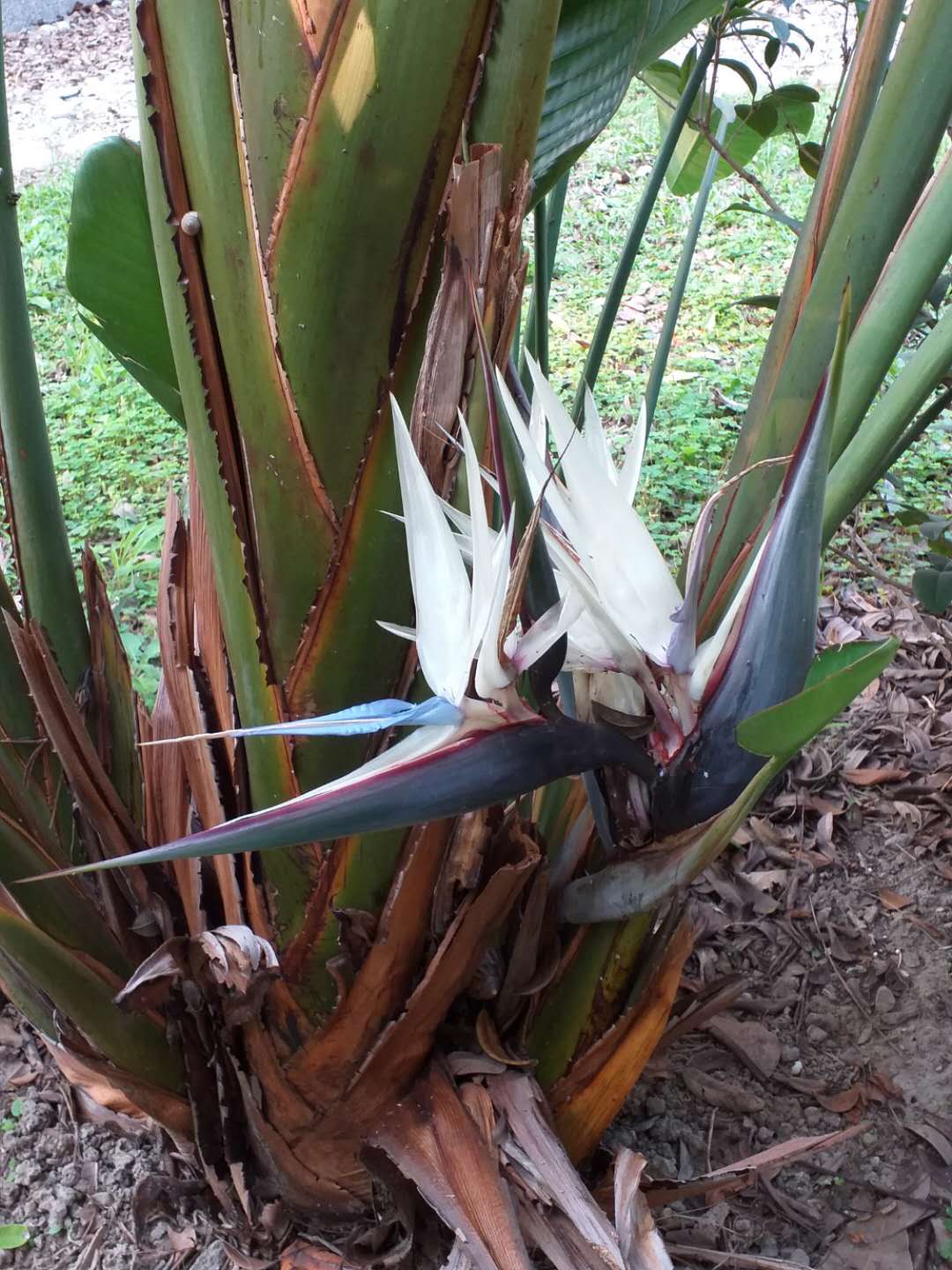
Giant white bird of paradise is a tall plant with fan-shaped grey-green leaves and large, white and blue flowers. Native to coastal forests of eastern South Africa and Mozambique, it is grown in warm climates worldwide for its dramatic foliage and blooms.
- Grows up to 8 meters tall with fan-shaped leaves
- Native to coastal forests of eastern South Africa and Mozambique
- Flowers have white sepals and a blue-purple center
- Naturalized in Mexico and Australia
- Contains the animal pigment bilirubin
What does Giant white bird of paradise look like?
This plant grows upright with sturdy, woody stems that can reach up to 8 meters tall. Its leaves are long, grey-green, and spread out in a fan pattern at the top of the stems, resembling those of a banana plant. The flowers are large, with a dark blue base, white upper parts, and a bluish-purple central section. Each bloom can be up to 45 cm long and sits just above the leaf fan. After flowering, it produces triangular seed pods.
Where does Giant white bird of paradise come from?
Giant white bird of paradise is native to the coastal forests and thickets of eastern South Africa, stretching from the Gonubie area north into southern Mozambique, as well as parts of Botswana and Zimbabwe. It has also become naturalized in places like eastern Mexico and coastal regions of Australia. The plant is one of the larger members of its genus, sharing its tree-like form with a few related species.
When and how Giant white bird of paradise blooms
This plant thrives in rich, moist, well-drained soils and prefers full sun to partial shade. It is usually propagated by dividing clumps or taking cuttings from side shoots, though it can also be grown from seed. Flowering takes several years, and mature plants can grow quite large. In suitable climates, it may self-seed and spread easily.



How Giant white bird of paradise is used
Giant white bird of paradise is widely planted as an ornamental in gardens and landscapes, especially in warm, frost-free areas. It is popular for its dramatic foliage and striking flowers, both outdoors and as a large indoor plant. Its roots can spread widely, so it is best kept away from buildings.
Kinds of Giant white bird of paradise
Within the Strelitzia genus, this species is one of three larger, tree-like types, alongside Strelitzia caudata and Strelitzia alba. The giant white bird of paradise is distinguished by its size and the color pattern of its flowers.
What Giant white bird of paradise means
This plant is notable for containing bilirubin, a pigment more commonly found in animals. While it is not tied to specific cultural or religious practices in the sources, it is valued for its bold appearance in gardens and landscapes across many regions.
Where Giant white bird of paradise is used and seen

Questions people ask about Giant white bird of paradise
Where does the giant white bird of paradise come from?
It is native to the coastal forests and thickets of eastern South Africa and southern Mozambique, and is also found in Botswana and Zimbabwe.
What does the giant white bird of paradise look like?
It has tall, woody stems, long grey-green leaves arranged like a fan, and large flowers with a dark blue base, white upper parts, and a bluish-purple center.
How is this plant used?
It is mainly grown as an ornamental plant in gardens and landscapes, valued for its dramatic foliage and striking flowers.
Is the giant white bird of paradise grown outside its native range?
Yes, it has become established in places like eastern Mexico and coastal Australia, and is widely cultivated in warm, frost-free regions.
Does it have any unusual features?
Yes, it is one of the few plants known to contain bilirubin, a pigment usually found in animals.
Good reading and sources
- USDA Plants DatabaseUS Department of Agriculture, Article
- Strelitzia nicolaiRoyal Horticultural Society, Article
- Plants of the World OnlineRoyal Botanic Gardens, Kew, Plant database
- Where it has been recordedGBIF, Plant database
- Sightings and photos by naturalistsiNaturalist, Plant database
- Strelitzia nicolai on WikipediaEncyclopedia
- More photos on Wikimedia CommonsPhotos
- Wikidata recordOpen data
The facts on this page come from the Wikipedia article "Strelitzia nicolai", written by its contributors and used under the CC BY-SA 4.0 licence, and from its Wikidata record (CC0). Phool rewrote the text in its own words, with AI assistance, and compares every page with the article to make sure no passage is copied. It may be reused under the same CC BY-SA 4.0 licence with a link back.
It may contain mistakes. It is not medical or foraging advice: many flowers are poisonous, and traditional uses are reported, not recommended. If something is wrong, tell us. Last refreshed 2026-10-03.
Others in the family Strelitziaceae
The whole family
More from South Africa
All the flowers of South Africa Eucalyptus
The tall, aromatic trees and shrubs known as gum trees or eucalypts
🇦🇺 Australia and 7 more · Flowering tree
Eucalyptus
The tall, aromatic trees and shrubs known as gum trees or eucalypts
🇦🇺 Australia and 7 more · Flowering tree
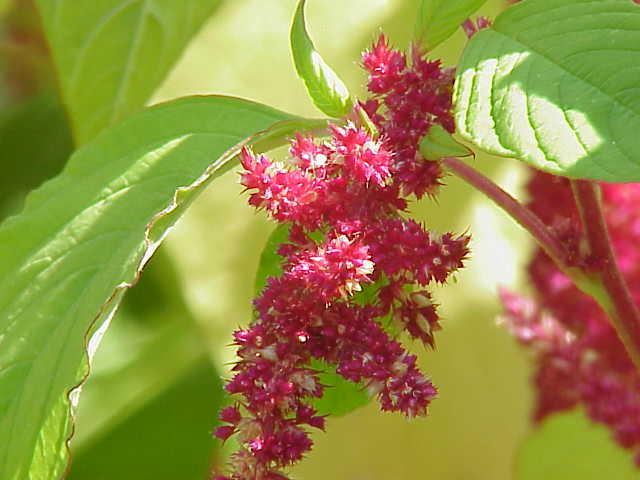 AmaranthAmaranthus
A tall, colourful plant grown for its flowers, leaves and edible seeds
🇲🇽 Mexico and 7 more · Wildflower
AmaranthAmaranthus
A tall, colourful plant grown for its flowers, leaves and edible seeds
🇲🇽 Mexico and 7 more · Wildflower
 Acacia
Shrubs and trees with golden or cream puffball flowers, native mostly to Australia
🇦🇺 Australia and 6 more · Wildflower
Acacia
Shrubs and trees with golden or cream puffball flowers, native mostly to Australia
🇦🇺 Australia and 6 more · Wildflower
 Sensitive PlantMimosa pudica
A touch-sensitive plant whose leaves fold up when disturbed
🇧🇷 Brazil and 8 more · Wildflower
Sensitive PlantMimosa pudica
A touch-sensitive plant whose leaves fold up when disturbed
🇧🇷 Brazil and 8 more · Wildflower