
Devil's-bit Scabious
Succisa pratensis, family Caprifoliaceae
A blue-violet wildflower of damp meadows and heaths in Europe and western Asia
Devil's-bit scabious is a perennial wildflower with blue to violet dome-shaped flower heads, found in damp grasslands and heaths across northern Europe and western Asia. It is valued for its nectar, supports butterflies like the marsh fritillary, and has a curious truncated root once linked to folklore and traditional remedies.
- Blue-violet dome-shaped flower heads bloom from summer to autumn
- Grows in damp, nutrient-poor meadows and heaths across Europe and western Asia
- Truncated root inspired folklore and the name 'devil's-bit'
- Important nectar source for butterflies, especially marsh fritillary
- Used in traditional medicine for skin conditions in Britain
What does Devil's-bit Scabious look like?
Devil's-bit scabious is a perennial herb that can reach up to 1 metre tall, though it is often much shorter in harsher environments. Its stems are upright, sometimes arching, and covered in rough hairs. The leaves are in opposite pairs, with larger, oval basal leaves and narrower, lance-shaped stem leaves. The flower heads are compact domes, 1.5–2.5 cm across, each packed with 30–50 small flowers in shades of blue, violet, sometimes pink or white. The roots are distinctive, ending abruptly as if bitten off.
Where does Devil's-bit Scabious come from?
This plant grows wild in northern Europe and western Asia, thriving in damp meadows, heaths, and grasslands with poor soil. It is absent from southern Europe and was not known to ancient Mediterranean herbalists. The name 'devil's-bit' refers to its truncated root, which inspired old beliefs about magical or medicinal powers. Linnaeus first named it Scabiosa succisa in 1753, but it was later placed in the genus Succisa. Its Latin name means 'cut down of the meadow.'
When and how Devil's-bit Scabious blooms
Devil's-bit scabious blooms from summer to autumn, producing flower heads at the ends of stems or in leaf axils. It prefers nutrient-poor, damp soils in open, sunny spots, and can be found from sea level up to high mountain pastures. The plant is usually grown from seed and is suited to wildflower meadows or naturalistic gardens. Its flowers are hermaphroditic and attract many pollinators.


How Devil's-bit Scabious is used
People have valued devil's-bit scabious for its traditional use in folk remedies, especially in Britain and the Isle of Man, where its root was thought to have antiseptic properties and was used for skin conditions. The plant is also grown in gardens for its attractive flowers and as a nectar source for insects, especially butterflies like the marsh fritillary.
Kinds of Devil's-bit Scabious
There are several described subspecies and varieties, but most are considered local forms rather than true varieties. Some regional forms, such as var. subcaulis in Cornwall and the Scottish isles, and var. ovalis in Oxfordshire, are mentioned but not widely accepted. No hybrids are recorded.
What Devil's-bit Scabious means
The truncated root led to legends that the devil bit it off out of spite, giving the plant its common name. In British folklore, it was believed to have magical and healing powers. The plant has been used in traditional medicine for skin ailments and swellings. It is not considered threatened and is listed as least concern in most areas.
Questions people ask about Devil's-bit Scabious
Where does devil's-bit scabious come from?
Devil's-bit scabious is native to northern Europe and western Asia, where it grows in damp grasslands, meadows, and heaths with poor soils.
What does devil's-bit scabious look like?
It is a perennial herb with upright, hairy stems and opposite leaves. The plant has compact, dome-shaped flower heads with 30–50 small blue to violet flowers, and sometimes pink or white blooms.
Why is it called 'devil's-bit'?
The name comes from its root, which ends abruptly as if bitten off. Folklore suggested the devil bit the root out of spite, and this feature led to beliefs in its magical and medicinal properties.
How is devil's-bit scabious used?
It has been used in traditional remedies for skin conditions and as an antiseptic, especially in Britain. It is also valued as a garden plant and for supporting butterflies and pollinators.
Is devil's-bit scabious threatened?
No, it is considered widespread and of least concern in most of its range, though it has declined locally in some areas due to changes in agriculture.
Good reading and sources
- Encyclopaedia BritannicaArticle
- USDA Plants DatabaseUS Department of Agriculture, Article
- Succisa pratensisRoyal Horticultural Society, Article
- Plants of the World OnlineRoyal Botanic Gardens, Kew, Plant database
- Where it has been recordedGBIF, Plant database
- Sightings and photos by naturalistsiNaturalist, Plant database
- Succisa pratensis on WikipediaEncyclopedia
- More photos on Wikimedia CommonsPhotos
- Wikidata recordOpen data
The facts on this page come from the Wikipedia article "Succisa pratensis", written by its contributors and used under the CC BY-SA 4.0 licence, and from its Wikidata record (CC0). Phool rewrote the text in its own words, with AI assistance, and compares every page with the article to make sure no passage is copied. It may be reused under the same CC BY-SA 4.0 licence with a link back.
It may contain mistakes. It is not medical or foraging advice: many flowers are poisonous, and traditional uses are reported, not recommended. If something is wrong, tell us. Last refreshed 2026-10-03.
Others in the family Caprifoliaceae
The whole family HoneysuckleLonicera
Twining vines and shrubs with sweet-scented tubular flowers and edible nectar
Lonicera · Wildflower
HoneysuckleLonicera
Twining vines and shrubs with sweet-scented tubular flowers and edible nectar
Lonicera · Wildflower
 Common ValerianValeriana officinalis
Tall, sweet-scented wildflower with pale pink blooms and a long history in herbal lore
🇮🇸 Iceland and 8 more · Wildflower
Common ValerianValeriana officinalis
Tall, sweet-scented wildflower with pale pink blooms and a long history in herbal lore
🇮🇸 Iceland and 8 more · Wildflower
 Lomelosia comosa
A perennial wildflower and Mongolia's national flower
🇲🇳 Mongolia and 1 more · Wildflower
Lomelosia comosa
A perennial wildflower and Mongolia's national flower
🇲🇳 Mongolia and 1 more · Wildflower
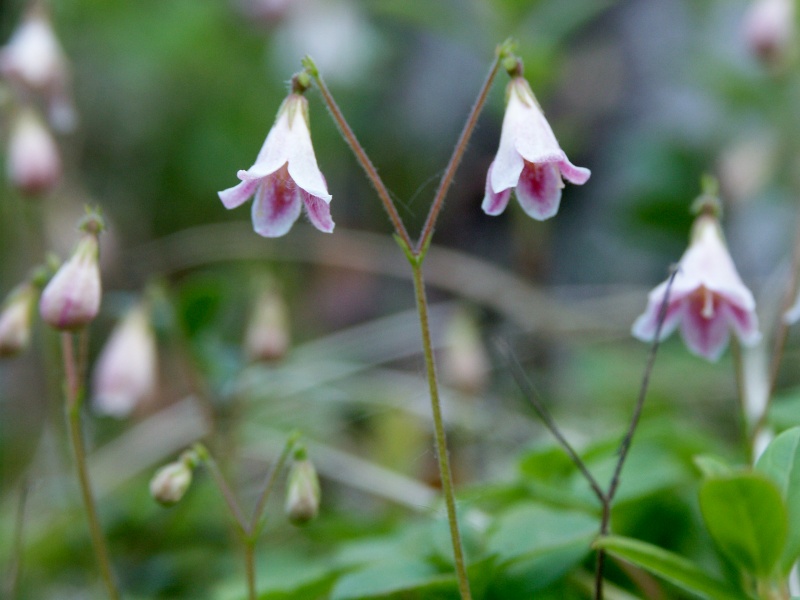 TwinflowerLinnaea borealis
A small woodland plant with paired pale pink flowers, named for Carl Linnaeus
🇺🇸 United States and 2 more · Wildflower
TwinflowerLinnaea borealis
A small woodland plant with paired pale pink flowers, named for Carl Linnaeus
🇺🇸 United States and 2 more · Wildflower